Ta Keo
Ta Keo, originally Hemaśṛṅgagiri, was begun under Jayavarman V as a five-towered Shaiva temple mountain and remained unfinished after work continued under later rulers
Understand sacred places, explore living traditions, and learn how to engage respectfully with Pilgrim Map.
Access has not been verified. Check current local guidance before planning a visit.
Siem Reap, Siem Reap, Cambodia
Read the sources
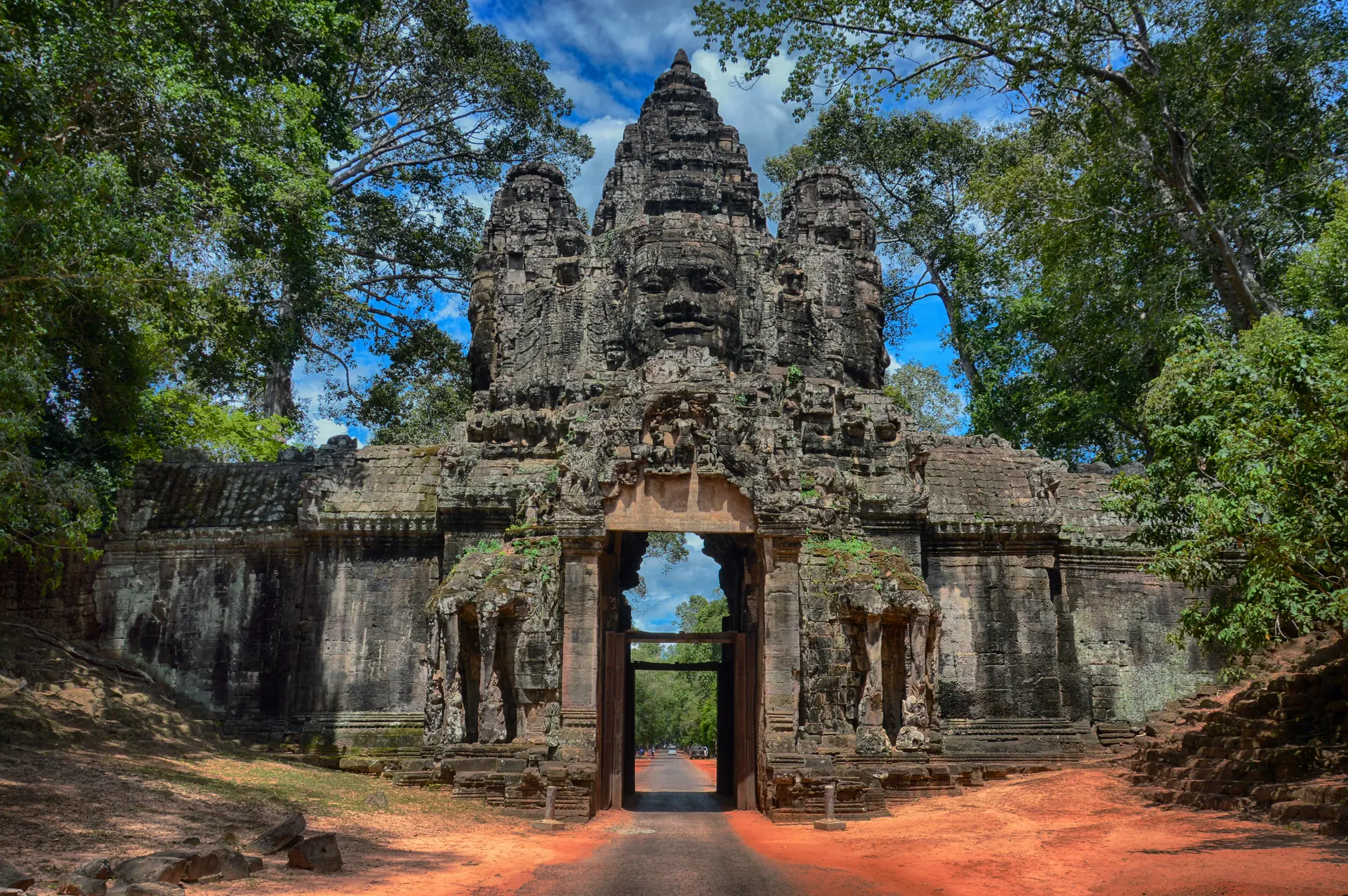
Ta Keo temple-mountain in Angkor, Cambodia. Image source · CC BY 4.0
Visit essentials
A quick read before you go
- Access
- Siem Reap, Siem Reap, Cambodia
- Etiquette
- Dress modestly, keep voices low around worship, and ask before photographing people or…
Overview
Ta Keo should be read at two scales: the named temple mountain and the wider cultural landscape that gives it meaning. Ta Keo, originally Hemaśṛṅgagiri, was begun under Jayavarman V as a five-towered Shaiva temple mountain and remained unfinished after work continued under later rulers. The reviewed boundary for this page is the unfinished sandstone temple mountain east of Angkor Thom. This boundary prevents nearby monuments, names, or archaeological features from being silently merged.
Why this place is sacred
The page represents the unfinished sandstone temple mountain east of Angkor Thom. It does not absorb neighboring temples or the entire regional landscape unless the name and evidence explicitly do so.
Experience and orientation
The bare geometry and very steep stairs make structure unusually legible, but climbing requires care and compliance with closures.
Context and lineage
Late 10th to early 11th century
Traditions and practice
Its Mount Meru plan and Shiva dedication are historically documented; the unfinished surfaces should not be used to support unsupported construction theories.
Quiet observation or prayer is appropriate only where current custodians permit it.
Hinduism
ActiveIts Mount Meru plan and Shiva dedication are historically documented; the unfinished surfaces should not be used to support unsupported construction theories.
Perspectives and open questions
This page separates source-supported archaeology, living Hinduism meaning, and modern personal interpretation. The first is tied to the cited evidence; the second is attributed to communities and traditions; the third is not presented as inherited teaching or scientific fact.
Scholarly perspective
Ta Keo, originally Hemaśṛṅgagiri, was begun under Jayavarman V as a five-towered Shaiva temple mountain and remained unfinished after work continued under later rulers. The primary reference for this release is APSARA National Authority, used for the exact identity and historical frame. Coppersmith's public corpus establishes only why Ta Keo entered this research batch; its alternative interpretations are not treated as archaeological evidence.
Living and traditional perspectives
Its Mount Meru plan and Shiva dedication are historically documented; the unfinished surfaces should not be used to support unsupported construction theories.
Alternative interpretations
Modern alternative-history interpretations are not presented as archaeological conclusions.
Open questions
Unresolved dates, functions, or ritual meanings remain explicitly uncertain.
Plan your visit
Access and arrival
Siem Reap, Siem Reap, Cambodia
Respectful visit
Modest clothing suitable for an active Cambodian sacred place.
Follow posted rules and ask before photographing worshippers.
Leave offerings only where local practice and custodians explicitly permit them.
Respect barriers, conservation closures, and drone restrictions.
Do not invent, stage, or imitate rites at archaeological structures.
Location
Map loads as you approach this section.
Pilgrim reflections
A portrait of encounter, not a score
Pilgrims describe what they felt, how present they could become, and whether the place would shape a journey. There are no stars and no ranking of traditions.
No reviewed reflections yet
The first pilgrims can help describe the character of being here.
Share a reflection
Available after an account-backed “Been there.” Every reflection is reviewed before publication.
Watch deeper
Films, episodes, and recorded talks for visitors who want more context before or after a visit. Speculative and alternative-history entries are labelled as perspectives, not as sources for established claims.
Nearby sacred places
Explore other sacred places in the region. Proximity does not establish access or travel time; check each place’s guidance.


References
Sources consulted for this page. Source categories describe the publication, not a guarantee that every claim is verified. Traditional accounts and outside interpretations may differ.
- 01Discover the History and Unique Features of Takeo Temple — APSARA National Authorityofficial
Photo gallery
6 curated photos
Share a photo
Help visitors recognize Ta Keo. Every submission is reviewed before publication.