Sito Archeologico Lu Brandali - Mostra di Archeologia Nuragica
A Bronze Age settlement where the living and the dead shared a granite promontory above the sea
Understand sacred places, explore living traditions, and learn how to engage respectfully with Pilgrim Map.
Access has not been verified. Check current local guidance before planning a visit.
Santa Teresa Gallura, Sassari, Italy
Read the sources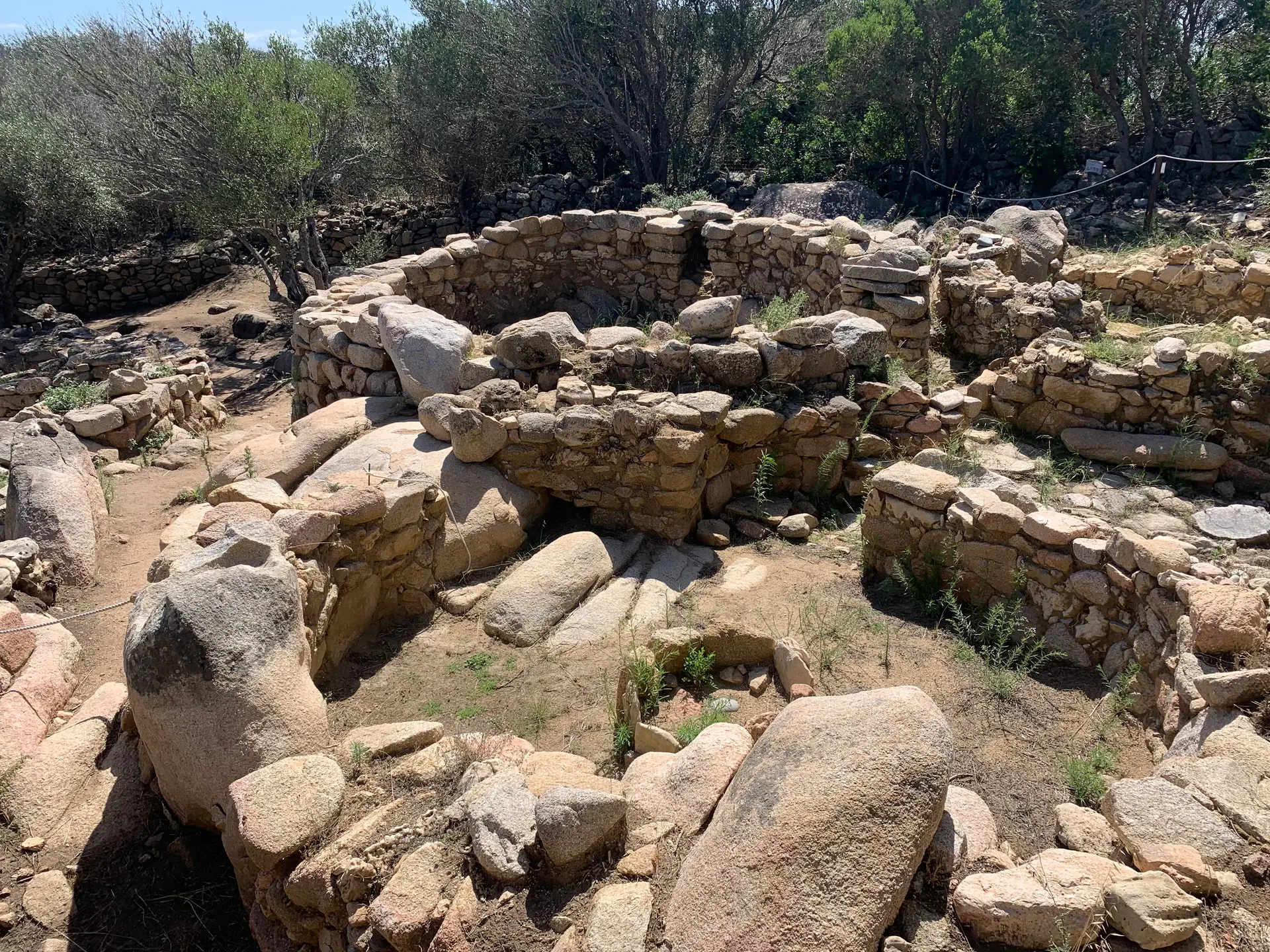
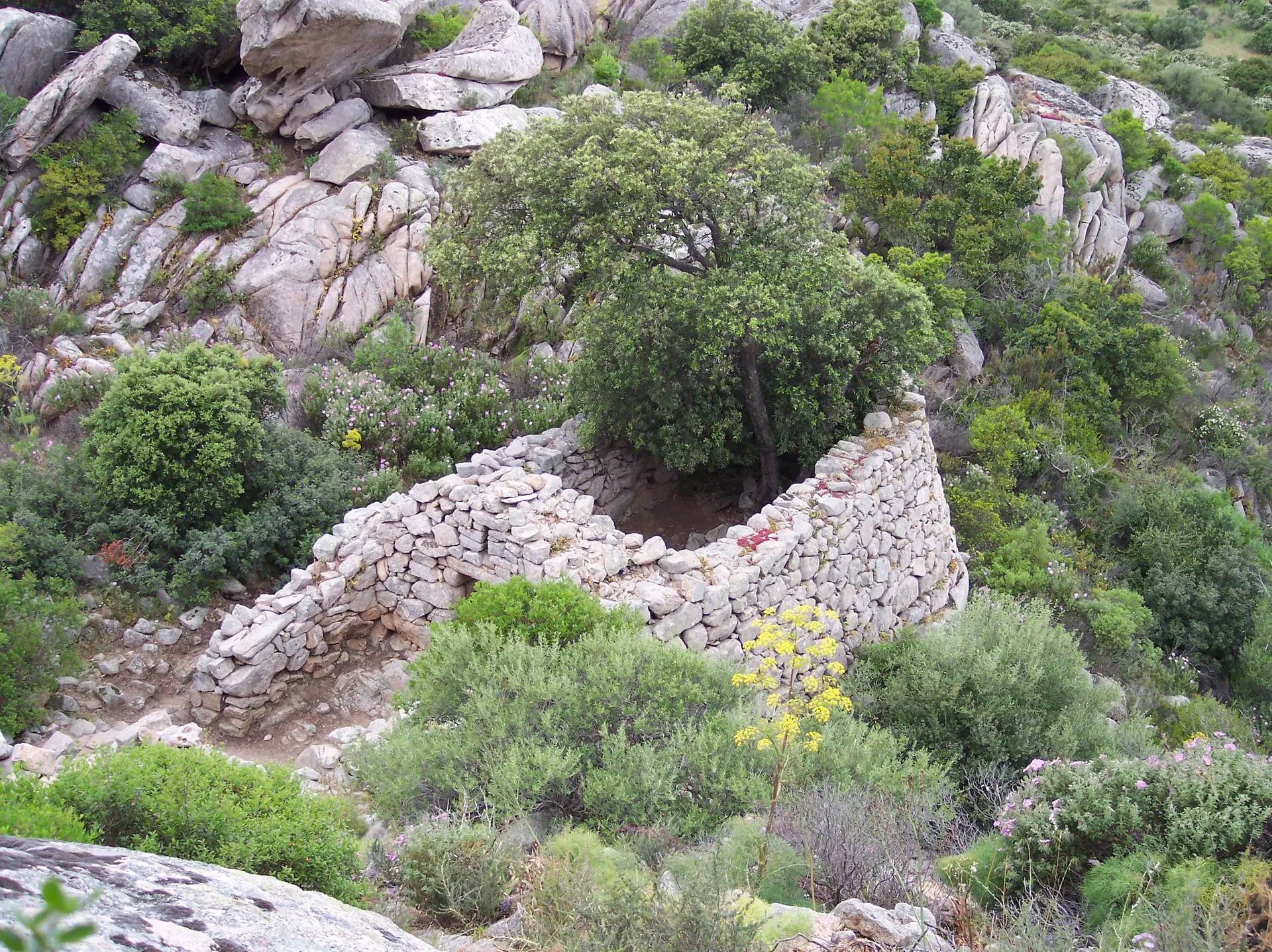
Image of Sito Archeologico Lu Brandali - Mostra di Archeologia Nuragica. Image source · CC-BY-4.0
Visit essentials
A quick read before you go
- Duration
- 1.5 to 2 hours including the multimedia exhibition
- Access
- Located on a granite promontory near the hamlet of Santa Reparata, within the municipality of…
Overview
On a granite promontory above the Strait of Bonifacio, Lu Brandali preserves a Bronze Age community that lived, worshipped, and buried its dead within the same weathered stone. Dating from the 14th to 10th century BC, the complex includes a fortified nuraghe tower, curvilinear village huts, a Giants' Tomb with approximately fifty burials, and tafoni—natural granite caves adapted for shelter and burial.
A few dozen meters from the village, the tomb corridor held men and women in primary deposition; older burials were pushed back for the newly dead. Communal funeral meals took place in its exedra, where used objects were ritually broken. Shared eating and deliberate destruction bound the living to ancestors.
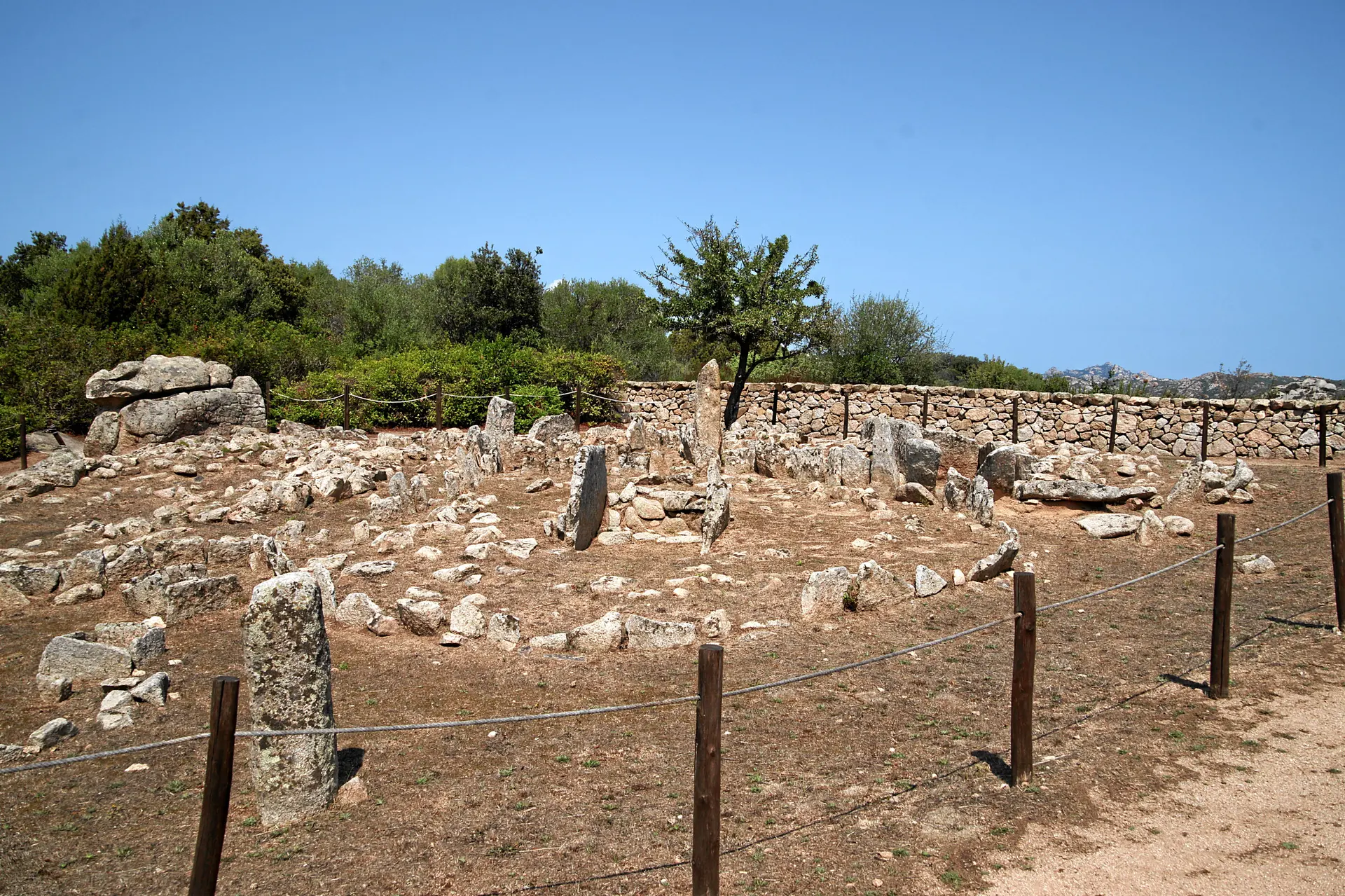
Between granite boulders, passages reach tafoni where villagers both lived and laid their dead to rest. Domestic and sacred ground dissolved into each other. Unlike later civilizations, Lu Brandali's nuragic people inhabited the same stone as their dead.
Why this place is sacred
Lu Brandali's thin-place quality emerges from its integration of domestic and funerary space within the same granite landscape. The tafoni — caves that served as both living quarters and burial sites — embody a worldview in which death was not elsewhere but present, housed within the same stone walls that sheltered daily life.
The Giants' Tomb, with its corridor of accumulated burials and its exedra for funeral feasting, created a threshold where the community regularly gathered at the edge between worlds. The promontory itself, elevated above the sea with views across the Strait of Bonifacio to Corsica, establishes a sense of being poised between earth, sea, and sky.
The site served as an integrated settlement combining defense (the nuraghe tower), habitation (the village huts), collective burial (the Giants' Tomb), and natural shelter-burial (the tafoni). Each function was woven into the granite landscape rather than imposed upon it.
First investigated in 1967 by Michele Careddu, with the Giants' Tomb excavated in the 1980s revealing its approximately fifty burials. Village excavations continue under archaeologist Angela Ruju. The site now operates as an archaeological park with a multimedia exhibition offering tactile and immersive engagement with the nuragic past.
Experience and orientation
Approaching Lu Brandali, the granite promontory rises from the Sardinian maquis, its boulders sculpted by wind into forms that seem to hover between the organic and the geological. The path leads first to the nuraghe tower at the highest point, where the builders used the natural rock levels to create a structure that grows from the landscape rather than sitting upon it.
Descending toward the village, the remains of curvilinear huts reveal themselves — walls of carefully placed granite blocks, floors of rammed earth, rock benches where families once sat. The huts cluster in small groups separated by narrow corridors, creating an intimate settlement scale.
The passage to the tafoni requires walking through a gap between boulders into a group of granite caves. Here the quality of attention shifts. These spaces held both the living and the dead. The stone overhead is the same stone that once sheltered sleeping children and held the bones of ancestors.
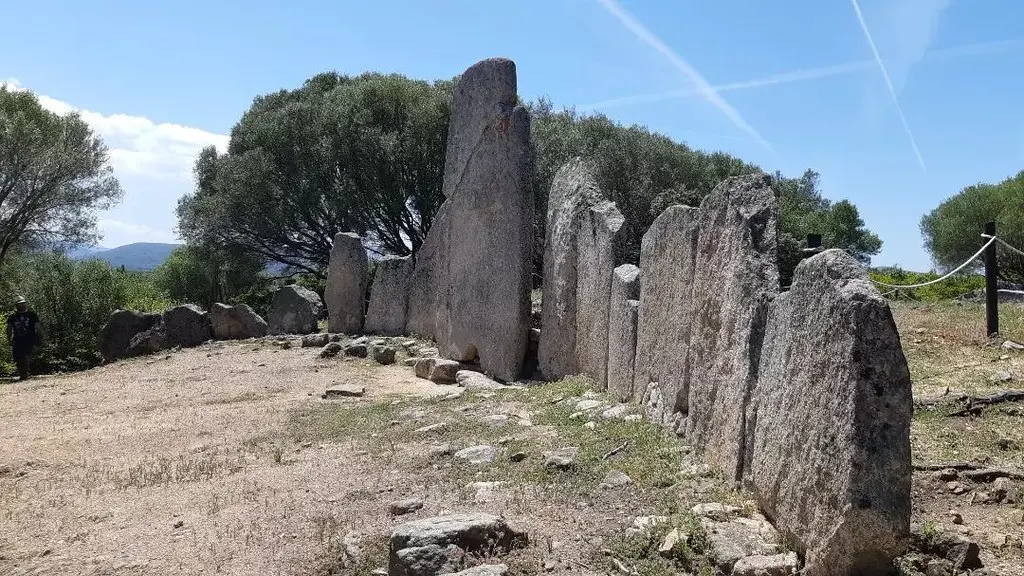
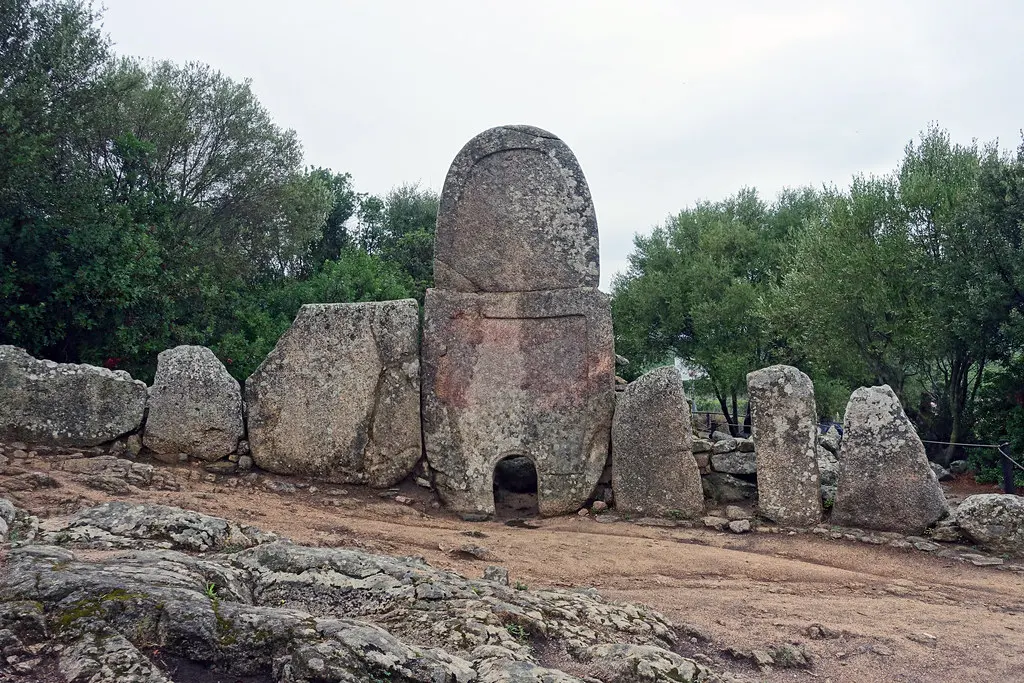
The Giants' Tomb lies a short walk from the village. Its foundation stones hint at the monument's original scale. Within this corridor, approximately fifty people were laid to rest over the centuries, their bodies accumulating in a communal act of memory. Before the tomb's entrance, the exedra once hosted funeral meals — the living eating in the presence of the dead, then breaking their vessels as a final offering.
Begin at the multimedia exhibition to understand the nuragic context, then walk to the nuraghe tower for the highest viewpoint. Descend through the village to the tafoni caves, allowing time in the passage between boulders. End at the Giants' Tomb, approaching it slowly as the nuragic mourners would have, carrying food and memory.
Context and lineage
The nuragic civilization of Sardinia remains one of the most distinctive and least fully understood Bronze Age cultures of the Mediterranean. Between roughly 1800 and 200 BC, its people built over 7,000 stone towers — the nuraghi — across the island, along with Giants' Tombs, sacred wells, and temple complexes. Lu Brandali, dating from the 14th to 10th century BC, represents a settlement of the civilization's mature phase, when communities had developed sophisticated building techniques, agricultural practices, and funerary traditions.
The Giants' Tomb tradition, found across Sardinia, reflects a distinctive approach to collective burial that scholars associate with ancestor veneration and communal identity.
The nuragic people maintained a spiritual system centered on a Mother Goddess, a Father God (Babai), and the linking of solar-masculine and water-feminine powers. Sacred wells, Giants' Tombs, and communal gathering places with stepped seating formed the infrastructure of their religious life. Lu Brandali's Giants' Tomb and tafoni burials belong to this broader pattern of ancestor-oriented worship.
Michele Careddu
First archaeologist to investigate the site
Angela Ruju
Archaeologist directing ongoing village excavations
Traditions and practice
The nuragic inhabitants of Lu Brandali practiced communal burial in the Giants' Tomb, laying their dead in a corridor where bodies accumulated over generations. Before the tomb entrance, in the curved exedra, funeral meals brought the community together at the threshold between the living and the dead. At the conclusion of these meals, used objects were deliberately broken — a ritual severance of the everyday that transformed ordinary vessels into offerings.
The tafoni caves served as both living and burial spaces, suggesting that the boundary between dwelling and tomb was permeable in nuragic thought.
The site operates as an archaeological park with guided tours available from March through October (advance reservation required). The multimedia exhibition 'Lu Brandali: Read, Touch and Listen' provides tactile reproductions, 3D headsets, and audio-tactile presentations designed for all visitors including those with visual impairments.
Walk the site slowly, allowing the transition from village to tafoni to Giants' Tomb to unfold as a journey through the nuragic understanding of life and death. In the tafoni passage, pause and consider what it meant to shelter among the bones of ancestors. At the Giants' Tomb, stand in the exedra and imagine the communal meal — the last shared act between the living and those about to become memory.
Nuragic Religion
HistoricalThe nuragic people maintained a complex spiritual system across Sardinia from roughly 1800 to 200 BC, centered on a Mother Goddess, water worship, solar-lunar symbolism, and collective ancestor veneration through Giants' Tombs.
Communal burial in Giants' Tombs, funeral feasting in exedra spaces, ritual breaking of objects, worship at sacred wells, seasonal gatherings at communal sacred sites with stepped seating.
Perspectives and open questions
Lu Brandali sits at the intersection of archaeological evidence and interpretive imagination, offering multiple lenses through which to understand a civilization that left no written records.
Scholarly perspective
Archaeological consensus identifies Lu Brandali as a well-preserved example of nuragic settlement integrating domestic, defensive, and funerary functions. The approximately fifty burials in the Giants' Tomb, excavated in the 1980s, provide significant evidence of communal burial practices. The settlement's economy, reconstructed from artifacts including obsidian sickle elements, milk-processing containers, and cheese-making molds, indicates a mixed agricultural-pastoral community. Ongoing excavations of the village continue to refine understanding of daily life and spatial organization.
Living and traditional perspectives
The nuragic civilization left no written texts, and its spiritual beliefs must be reconstructed from material evidence and comparative analysis. Scholars identify a Mother Goddess tradition, connections between solar-masculine and water-feminine principles, and the central role of collective burial and ancestor veneration. The Giants' Tombs, found across Sardinia, suggest a society that understood death as a communal rather than individual passage.
Alternative interpretations
Some visitors and writers connect nuragic towers and Giants' Tombs to speculative theories about energy channeling, advanced astronomical knowledge, or connections to other Mediterranean megalithic traditions. While these perspectives exceed the evidence, they reflect the genuine sense of mystery that the nuragic civilization inspires — a people sophisticated enough to build thousands of stone towers yet silent enough to leave their motives largely unknowable.
Open questions
Without written records, the nuragic civilization presents fundamental interpretive challenges. The exact nature of worship at Giants' Tombs, the meaning of ritual object-breaking, the relationship between the nuraghe towers and spiritual practice, and the identity of specific deities all remain open questions. Lu Brandali, with its integrated village-tomb-cave complex, offers material evidence but no final answers.
Plan your visit
Access and arrival
Located on a granite promontory near the hamlet of Santa Reparata, within the municipality of Santa Teresa Gallura. Accessible by car from Olbia (approximately 60 km, about 1 hour drive). Ferry connections from Bonifacio, Corsica. Combined ticket available with Longonsardo Tower.
Santa Teresa Gallura offers hotels, bed-and-breakfasts, and holiday rentals. The town is a popular summer resort with ferry connections to Corsica.
Respectful visit
Comfortable walking shoes with good grip for uneven granite surfaces. Sun protection recommended.
Permitted throughout the site and exhibition.
Not applicable to this archaeological site.
Stay on designated paths | Do not touch or climb archaeological structures | Book guided tours in advance (required March-October) | Wheelchair access limited to exhibition building only
The site involves walking on uneven terrain with natural granite formations. Wheelchair access is limited to the exhibition building.
Current practical details
Address
Via Capo Testa, 07028 Santa Teresa Gallura OT, Italy
Phone
Hours
Hours, fees, and access can change — verify on the official source before you travel. Practical details last checked Jun 2026.
Location
Map loads as you approach this section.
Pilgrim reflections
A portrait of encounter, not a score
Pilgrims describe what they felt, how present they could become, and whether the place would shape a journey. There are no stars and no ranking of traditions.
No reviewed reflections yet
The first pilgrims can help describe the character of being here.
Share a reflection
Available after an account-backed “Been there.” Every reflection is reviewed before publication.
Nearby sacred places
Explore other sacred places in the region. Proximity does not establish access or travel time; check each place’s guidance.
References
Sources consulted for this page. Source categories describe the publication, not a guarantee that every claim is verified. Traditional accounts and outside interpretations may differ.
- 01SardegnaCultura - Santa Teresa Gallura, Lu Brandali Complex — Regione SardegnaofficialOfficial regional cultural heritage description
- 02Lu Brandali - SardegnaTurismo — Regione SardegnaofficialOfficial tourism portal with visitor details
- 03Lu Brandali archaeological complex - La Sardegna verso l'Unesco — Sardegna verso UnescoSource contextUNESCO candidacy documentation with detailed archaeological description
- 04Giants' grave - Wikipedia — Wikipedia contributorsencyclopediaGeneral context on Giants' Tombs across Sardinia
- 05Santa Teresa Gallura - Archaeological Sites — Santa Teresa Gallura TurismoSource contextLocal tourism site with practical visitor information
Share a photo
Help visitors recognize Sito Archeologico Lu Brandali - Mostra di Archeologia Nuragica. Every submission is reviewed before publication.