Santuario Lo Vasquez
A roadside sanctuary where a million Chileans walk through the night to keep a promise
Understand sacred places, explore living traditions, and learn how to engage respectfully with Pilgrim Map.
Access has not been verified. Check current local guidance before planning a visit.
Casablanca, Valparaíso, Chile
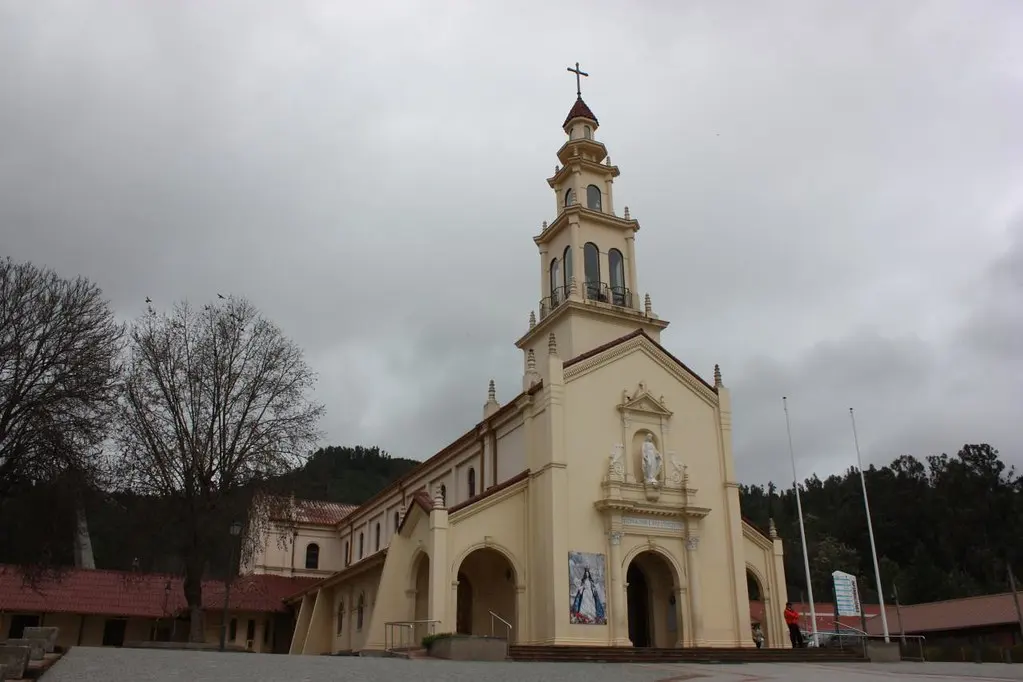
Image of Santuario Lo Vasquez. Image source
Visit essentials
A quick read before you go
- Duration
- Thirty minutes for a quiet visit outside festival time.
- Access
- Located on Ruta 68, approximately twelve kilometers from Casablanca, eighty kilometers from…
Overview
The sanctuary sits beside Ruta 68, the highway connecting Chile's two largest urban areas. For most of the year it is a quiet waypoint in the Casablanca Valley, visited by individual devotees who light candles and keep their appointments with the Virgin of the Immaculate Conception. Then December 8 arrives, and the highway becomes a river.
Up to a million people travel to Lo Vásquez on the Feast of the Immaculate Conception — on foot from Santiago, eighty kilometers to the east; by bicycle from Valparaíso, thirty-two kilometers to the west; by car, by bus, by any means available. Many walk through the night of December 7-8, covering the distance in ten to fourteen hours of darkness, arriving at dawn.
The cycling pilgrimage has become the largest mass cycling event in South America, with tens of thousands of riders filling the highway.
The sanctuary grew around the altar wall bearing the image of the Immaculate Conception that survived the catastrophic 1906 earthquake.
The sanctuary built around that wall became the spiritual center of a nation's walking devotion. The mandas — personal vows exchanged between devotee and Virgin — drive the pilgrimage. People walk because they promised to walk. They cycle because they promised to cycle. The body becomes the prayer, and the highway becomes the path.
Why this place is sacred
The qualities that make Lo Vásquez more than a roadside chapel converge in ways that are difficult to replicate.
The first is the earthquake miracle. Chile is one of the most seismically active nations on earth. Earthquakes are not abstract threats but lived experience — nearly every Chilean alive has felt the ground shake. The story of the 1906 altar wall, standing intact amid total destruction, speaks directly to this national experience. In a land where buildings fall, this wall did not. In a land where the ground betrays, this image held. The miracle is not theological abstraction.
It is structural engineering elevated to parable.
The second is the highway. Ruta 68 is a modern dual carriageway, built for automobiles, designed for speed. On December 8, it is reclaimed by human feet and bicycle wheels. The secular infrastructure of commerce and transport is temporarily sacralized by the passage of a million pilgrims. The transformation is visible: a highway built for engines becomes a pilgrimage route walked in darkness.
This conversion of the ordinary into the sacred — not in a church, not in a wilderness, but on a highway — is part of Lo Vásquez's distinctive quality.
The third is the body. The mandas tradition converts abstract devotion into physical commitment. Walking eighty kilometers through the night is not a metaphor for faith. It is faith expressed through blistered feet, aching muscles, and the cold air of a December night in central Chile. The cycling pilgrimage adds a contemporary variant: athletic endurance as spiritual practice. In both cases, the body is not the vehicle of the spirit but its instrument.
The fourth is scale. A million people choosing the same night to walk to the same place creates a social phenomenon that exceeds any individual intention. The camaraderie of the road — strangers sharing water, encouragement, and the rhythm of walking — produces a temporary community defined by shared effort. By the time the sanctuary appears in the dawn light, the individual has been absorbed into something larger.
The original hermitage was built by a private devotee in the early nineteenth century as a personal expression of Marian devotion along the road between Santiago and Valparaíso. The location was practical — a stopping point for travelers — rather than mystical. The sacredness of the site was not given but earned, through the accumulation of devotion and the earthquake miracle that confirmed it.
The trajectory from private hermitage to national pilgrimage site spans two centuries and three earthquakes. Each destruction and rebuilding raised the stakes and deepened the devotion. The 1906 miracle was the turning point: from a local chapel to a place of power. The pilgrimage grew steadily through the twentieth century, expanding from walking to include cycling as the road was modernized.
The mass cycling event — a phenomenon of the late twentieth and early twenty-first centuries — demonstrates that pilgrimage traditions do not merely persist but adapt, finding new forms of embodiment as cultures change.
Experience and orientation
There are two experiences of Lo Vásquez, and they share a location but little else.
The first is the December 8 pilgrimage. If you walk from Santiago, you begin in the evening of December 7, joining a stream of pilgrims that thickens as the hours pass. The highway at night is a different landscape: headlamps, reflective vests, the sound of feet on asphalt, the murmur of conversation in the darkness. Water stations staffed by volunteers and Red Cross workers punctuate the route. Fellow pilgrims share food and encouragement. The kilometers accumulate. Blisters form. Fatigue deepens.
Somewhere around hour six, a quality of attention shifts — the body's complaints become background, and the walking itself becomes the foreground. This is the state that pilgrims across traditions describe: the point where the journey stops being about the destination and becomes sufficient in itself.
Arrival at Lo Vásquez in the dawn light is the reward. The sanctuary appears amid the rolling hills of the Casablanca Valley, its esplanade filling with thousands of simultaneous arrivals. The emotional release of completing the journey — having kept the promise, having earned the arrival through the body — is visible in the faces of the pilgrims. Tears are common. Masses are celebrated continuously throughout December 8. The candle-lighting areas blaze. The ex-voto displays grow with fresh testimonials.
The cycling pilgrimage has its own character. Tens of thousands of riders fill the highway in a spectacle that blurs the line between athletic event and spiritual practice. The peloton moves faster than the walkers but carries the same intention: the body offered as prayer.
The second experience is the quiet visit. Outside December 8, Lo Vásquez is a sanctuary attended by individual devotees. The esplanade is nearly empty. The candles burn for specific intentions. The altar wall that survived the earthquake stands as it has for over a century. In this quiet, the site's personal dimension emerges: not the collective spectacle of the pilgrimage but the private conversation between devotee and Virgin.
For the December 8 pilgrimage: depart Santiago in the evening of December 7. Wear reflective clothing or carry lights. Bring water, energy food, warm layers for the cold night, and practical footwear. Follow police and volunteer instructions on highway safety. For a quiet visit: Lo Vásquez is accessible by car via Ruta 68, approximately twelve kilometers from Casablanca. The sanctuary is open year-round.
Context and lineage
In the early nineteenth century, a devotee of the Virgin Mary built a small hermitage along the road between Santiago and Valparaíso. The identity of this person is lost to history, but their act of placing a sacred image at a stopping point for travelers established the site. A chapel replaced the hermitage. The 1851 earthquake destroyed it. A second chapel was built.
The catastrophic 1906 earthquake destroyed that one too — but when the dust settled and the rubble was cleared, the altar wall bearing the image of the Immaculate Conception was found standing, intact amid total destruction.
In earthquake-prone Chile, where the destruction of buildings is a recurrent fact of life, a wall that refused to fall carried immediate and profound significance. The news spread rapidly. What had been a roadside chapel became a pilgrimage destination. The sanctuary built around the surviving wall attracted growing numbers of devotees, and the December 8 pilgrimage grew from hundreds to thousands to hundreds of thousands to, eventually, approximately a million.
Lo Vásquez belongs to the Latin American tradition of Marian pilgrimage, connected to sites like Guadalupe in Mexico, Aparecida in Brazil, and Luján in Argentina. Within Chile, it holds the preeminent position. The mandas tradition — personal vows exchanged between devotee and Virgin — is shared across Latin American Catholic culture but finds particular expression at Lo Vásquez through the emphasis on physical journey. The cycling pilgrimage adds a distinctly contemporary layer, connecting centuries-old devotional practice to modern athletic culture.
Unknown Hermitage Builder
The anonymous devotee who established the original hermitage along the Santiago-Valparaíso road in the early nineteenth century. Their act of placing a sacred image at a traveler's rest point created the seed from which Chile's largest pilgrimage grew.
Virgen de la Inmaculada Concepción (Virgin of the Immaculate Conception)
The sacred image whose altar wall survived the 1906 earthquake, transforming a roadside chapel into a national pilgrimage site. The image is the object of devotion for up to a million pilgrims annually.
Traditions and practice
The mandas are the engine of Lo Vásquez. A person in crisis makes a vow to the Virgin: if she intervenes — heals a child, saves a job, resolves a crisis — the devotee will make the pilgrimage on foot or by bicycle. The fulfillment of the manda is not optional. It is a sacred contract, and the physical difficulty of the journey is the currency of payment.
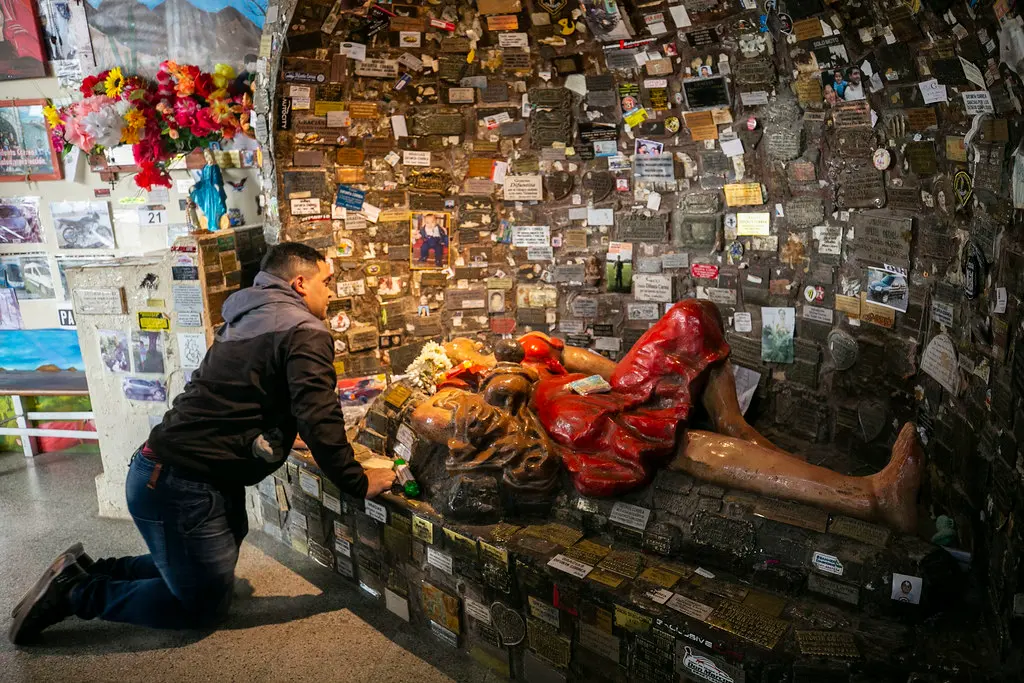
This tradition predates the modern pilgrimage and connects to deep patterns in Latin American Catholic devotion, where the body's suffering is understood as a form of offering. Ex-votos — small metal or wax objects representing the prayer or its answer — are left at the sanctuary as material evidence of the exchange.
The December 8 pilgrimage departs from Santiago and Valparaíso on the evening of December 7. Pilgrims walk or cycle through the night, arriving at Lo Vásquez throughout the morning of December 8. Masses are celebrated continuously at the sanctuary. Candles are lit in enormous quantities. The cycling pilgrimage, which has become the largest mass cycling event in South America, departs from multiple starting points. Water and first aid stations staffed by volunteers, the Red Cross, and police line the route.
Year-round, the sanctuary maintains a permanent chaplaincy with regular Masses, candle-lighting, and individual devotional visits.
If you intend to walk the December 8 pilgrimage, begin training weeks in advance. The eighty-kilometer walk is not casual — it requires genuine physical preparation. Depart with a group if possible; the camaraderie of the road is part of the experience. Walk at a steady pace. Accept water and food from the volunteers who staff the route. Resist the temptation to rush. The pilgrimage is the prayer, not just the arrival.
If you prefer to observe rather than participate, station yourself at the sanctuary in the early morning of December 8 and watch the pilgrims arrive. The expressions on their faces — exhaustion transformed into gratitude — tell you everything about what the journey means.
For a quiet visit outside December 8, drive to Lo Vásquez via Ruta 68. Light a candle. Read the ex-voto displays. Notice the altar wall — the one that survived when everything else fell. In the silence of an ordinary weekday, the sanctuary's essential quality becomes available: the sense that something here endured.
Roman Catholicism (Marian devotion — Immaculate Conception)
ActiveLo Vásquez is Chile's most visited Marian shrine, dedicated to the Immaculate Conception. The devotion was cemented by the survival of the altar wall in the 1906 earthquake. The December 8 pilgrimage is now the largest annual religious gathering in Chile and one of the largest in South America.
Pilgrimage cycling tradition
ActiveThe mass cycling pilgrimage to Lo Vásquez has become the largest such event in South America, adding a contemporary dimension to the ancient practice of physical pilgrimage. The tradition demonstrates how devotional practices adapt to modern culture.
Perspectives and open questions
Lo Vásquez sits at the intersection of popular religion, national identity, seismic geology, and the evolving relationship between the human body and the sacred.
Scholarly perspective
Religious anthropologists study Lo Vásquez as Chile's largest expression of popular Catholic pilgrimage, noting its cross-class character — professionals, workers, students, and the elderly all participate. The physical dimension of the pilgrimage aligns with broader Latin American Catholic traditions of corporeal devotion. The 1906 earthquake miracle is analyzed as a foundational narrative connecting Chilean geological vulnerability to spiritual resilience: in a land where buildings fall, faith in what endures carries existential weight.
The mass cycling pilgrimage is studied as evidence that devotional traditions adapt and evolve, finding new forms of embodied practice as cultures change.
Living and traditional perspectives
For Chilean devotees, the Virgin of Lo Vásquez is their mother. She stayed when the earthquake destroyed everything around her. The mandas system creates a personal relationship of reciprocity: the Virgin gives protection, and the devotee gives physical effort. Walking through the night is understood not as suffering but as love made visible. The candles at the sanctuary are prayers given form. The ex-votos are gratitude made material.
When devotees say they are keeping a promise, they mean it in the most literal sense — a contract between themselves and the Virgin, sealed by the body's effort.
Alternative interpretations
The pilgrimage route along Ruta 68 traces a symbolic path between Santiago, Chile's seat of power, and Valparaíso, its port to the world. The highway, a modern secular artery, is temporarily reclaimed by an ancient mode of travel — the human foot. The cycling dimension adds a contemporary layer to the practice of sacred journey, positioning the bicycle as a pilgrim's vehicle and athletic endurance as spiritual quality.
The overnight walk through darkness toward dawn arrival carries resonances of death-and-rebirth symbolism found across pilgrimage traditions worldwide.
Open questions
The identity of the person who built the original hermitage remains lost. The specific provenance of the image that survived the 1906 earthquake is incompletely documented. How the social composition of the pilgrimage has shifted over two centuries — from roadside travelers to a cross-section of Chilean society — has not been comprehensively studied.
Plan your visit
Access and arrival
Located on Ruta 68, approximately twelve kilometers from Casablanca, eighty kilometers from Santiago, and thirty-two kilometers from Valparaíso. Year-round: accessible by car via Ruta 68. On December 8: sections of Ruta 68 are closed to regular vehicular traffic to accommodate pilgrims on foot and bicycle. Public transportation is rerouted. Buses from Santiago and Valparaíso drop passengers within walking distance. Entry to the sanctuary is free. Mobile phone signal is available.
Emergency and medical services are present along the route and at the sanctuary during the December pilgrimage.
No accommodation at Lo Vásquez itself. Most December 8 pilgrims travel overnight and return home the same day. Hotels in Casablanca (12 km), Valparaíso (32 km), and Santiago (80 km) are available.
Respectful visit
Inside the sanctuary: cover shoulders and knees. For the pilgrimage walk: practical, layered clothing for cold night temperatures and warm morning sun. Comfortable, well-broken-in shoes are essential for walkers. Cycling gear for riders. Reflective clothing or accessories for night travel on the highway.
Photography is welcomed along the pilgrimage route and in the outdoor areas of the sanctuary. Be sensitive when photographing inside the sanctuary during Mass. The arrival of pilgrims at dawn is a legitimate and moving subject for photography, but avoid treating exhausted or emotional pilgrims as spectacle.
Candles are the primary offering and can be purchased at the sanctuary or brought from home. Monetary donations support the sanctuary. Ex-votos — small metal or wax figures representing prayers — are a traditional offering.
Follow traffic and safety instructions from police and volunteers during the December 8 pilgrimage. Walk or ride on the designated side of the highway. Do not block emergency access. Carry out your trash. Do not leave non-biodegradable materials at the sanctuary.
The December 8 pilgrimage involves walking or cycling on an active highway at night. Wear reflective clothing and carry lights. Stay on the designated side of the road. Follow all instructions from police and volunteers. Dehydration, blisters, and hypothermia are genuine risks. Bring adequate water, food, and warm layers. The December night can be cold despite the approach of summer. Emergency services are stationed along the route but response times may be slow given the scale of the event.
Current practical details
Address
Ruta 68 s/n, Casablanca, Valparaíso, Chile
Phone
Hours
Hours, fees, and access can change — verify on the official source before you travel. Practical details last checked Jun 2026.
Location
Map loads as you approach this section.
Pilgrim reflections
A portrait of encounter, not a score
Pilgrims describe what they felt, how present they could become, and whether the place would shape a journey. There are no stars and no ranking of traditions.
No reviewed reflections yet
The first pilgrims can help describe the character of being here.
Share a reflection
Available after an account-backed “Been there.” Every reflection is reviewed before publication.
Nearby sacred places
Explore other sacred places in the region. Proximity does not establish access or travel time; check each place’s guidance.



Share a photo
Help visitors recognize Santuario Lo Vasquez. Every submission is reviewed before publication.