Samye
Tibet's first Buddhist monastery, where Padmasambhava tamed spirits and a great debate shaped a civilization
Understand sacred places, explore living traditions, and learn how to engage respectfully with Pilgrim Map.
Access has not been verified. Check current local guidance before planning a visit.
Samye, Tibet Autonomous Region, China

Visit essentials
A quick read before you go
- Duration
- Half day for the monastery complex.
- Access
- Dranang County, Lhoka Prefecture, Tibet Autonomous Region.
Overview
Samye made Buddhism an institution embedded in Tibet rather than only a royal interest. In the eighth century, King Trisong Detsen invited the Indian master Shantarakshita to build it. Tradition says Tibet's land gods, mountain deities, demons, and other local spirits destroyed the work with earthquakes, floods, and storms until Shantarakshita called for Padmasambhava. The tantric master bound the spirits by ritual oath to protect the dharma, turning former opponents into guardians.
Samye's plan is a three-dimensional mandala. The Utse represents Mount Meru; four cardinal temples, four continents; eight smaller temples, eight subcontinents; Sun and Moon temples flank them; and a wall once carrying 1,008 stupas represents the universe's iron-mountain rim. The Utse's three floors are Tibetan, Chinese, and Indian.
At the Great Debate around 792–794 CE, Kamalashila's Indian gradual path of study, ethics, and progressive meditation opposed Moheyan's Chinese Chan teaching of sudden recognition. The king declared the Indian school the winner, directing Tibetan Buddhism toward Indian traditions; every Tibetan Buddhist school traces something of its philosophical foundation to that decision. Samye also ordained the first seven Tibetan monks, establishing the sangha from which every Tibetan Buddhist lineage traces institutional origin.
Why this place is sacred
Samye's sacred force is foundational: Tibetan Buddhist civilization radiated from here. In the traditional account, Padmasambhava did not destroy Tibet's indigenous spirits but bound them as dharma protectors, negotiating two spiritual worlds into coexistence. This pattern shaped the place of mountain, lake, and local deities in Tibetan Buddhist cosmology.
The mandala plan makes architecture cosmology. Moving from the iron-mountain perimeter toward the Utse was designed as contemplative travel through a miniature universe. The Utse's Tibetan ground floor grounds the structure in local identity, the Chinese middle acknowledges the neighboring culture that also transmitted Buddhism, and the Indian top honors the source.
The Great Debate linked enduring philosophy to this site, although its proceedings and conclusion remain debated. Hepo Ri grounds the Padmasambhava account in the adjacent landscape of spirit-subduing rites.
Samye was built approximately 763-779 CE by King Trisong Detsen as the first institutional Buddhist monastery in Tibet. Its purpose was to establish Buddhism as a permanent institutional presence in the land, supported by ordained monastics and protected by converted local spirits.
Samye has been administered by successive Tibetan Buddhist schools: Nyingma originally, then Sakya during the Mongol era, then Gelug. This multi-school character reflects the monastery's foundational role, as the first Buddhist institution in Tibet, it belongs in some sense to all Tibetan Buddhist traditions. The monastery suffered fire damage in 1809 and severe damage during the Cultural Revolution. Extensive restoration since the 1980s has revived both the physical structure and monastic practice.
Experience and orientation
Some approaches cross the Yarlung Tsangpo, or Brahmaputra, by ferry; a bridge route also exists. The river crossing adds a liminal, water-as-threshold quality to the approach. The enclosure, once set with 1,008 stupas, marks entry into the mandala cosmos.
The Utse's Tibetan, Chinese, and Indian styles are visible from outside, layering the sources of Tibetan Buddhism. Its assembly hall and chapels contain important, sometimes damaged and restored murals of Tibetan history, Buddhist cosmology, and Padmasambhava's life. Pilgrims move clockwise in kora, praying and turning wheels along a path sustained for 1,200 years.
A moderate climb up Hepo Ri reaches centuries-used meditation caves and a panoramic view of the monastery's mandala plan, valley, and river—one of Tibetan sacred geography's most significant vistas. Tradition locates Padmasambhava's spirit-subduing rituals there. Chapel dedications and monastic life express Samye's multi-school character: Nyingma, Sakya, and Gelug traditions share the complex, a living expression of its foundational role.
Visit the monastery in the morning for monastic prayers and the best light in the chapels. Climb Hepo Ri in the afternoon for the panoramic view and to visit the meditation caves. Walk the kora route to experience the mandala plan from the pilgrim's perspective. Allow a full day for the monastery, Hepo Ri, and the circumambulation. The ferry crossing, if available, adds a memorable dimension to the journey.
Context and lineage
When King Trisong Detsen invited the Indian master Shantarakshita to build a monastery, the local spirits of Tibet caused earthquakes, floods, and storms to destroy the construction. Shantarakshita told the king that only the tantric master Padmasambhava could subdue these forces. Padmasambhava traveled to Tibet and at each sacred site performed vajra dances and rituals that bound the spirits to oaths of protection for the dharma. The former enemies of Buddhism became its guardians. The monastery could then be built.
Around 792-794 CE, King Trisong Detsen organized a formal debate at Samye between the Indian master Kamalashila, who taught a gradual path through study, ethical discipline, and progressive meditation, and the Chinese Chan master Moheyan, who taught that enlightenment comes suddenly through direct recognition of mind's nature. The king declared the Indian gradualist school the winner, aligning Tibetan Buddhism with Indian traditions for all subsequent history.
Samye's lineage runs through all four major schools of Tibetan Buddhism. The Nyingma school traces its origin to Padmasambhava's consecration of the site. Sakya and Gelug schools administered the monastery during later periods. The ordination of the first seven Tibetan monks at Samye is the foundational event for the Tibetan monastic sangha as a whole.
King Trisong Detsen
patron
One of the three great Dharma Kings of Tibet who commissioned Samye Monastery, establishing Buddhism as the state religion.
Padmasambhava (Guru Rinpoche)
consecrator
The tantric master from Oddiyana who performed the rituals to subdue local spirits opposing the monastery's construction. Revered as the 'second Buddha' in the Nyingma tradition.
Shantarakshita
founder
The Indian Buddhist abbot who designed Samye's mandala plan and served as its first abbot, ordaining the first seven Tibetan monks.
Kamalashila
debater
The Indian Buddhist master who won the Great Debate of Samye, establishing the gradual path as the philosophical foundation of Tibetan Buddhism.
Traditions and practice
Padmasambhava's consecration rituals established the spiritual foundation. Royal Buddhist ceremonies marked the monastery's early history. Monastic ordination ceremonies created the first Tibetan sangha. The Great Prayer Festivals and cham dances reenacting Padmasambhava's subjugation of spirits have been performed for centuries.
Daily monastic prayers and pujas continue. Guru Rinpoche devotions are observed on the tenth day of each Tibetan month, with special significance on the tenth month. Butter lamp offerings are maintained in chapels. Annual cham dance festivals draw pilgrims from across Tibet. Pilgrim circumambulation of the monastery and Hepo Ri continues daily. Monastic education programs maintain the scholarly tradition. The monastery's ecumenical character, hosting Nyingma, Sakya, and Gelug traditions, is reflected in combined prayer services.
Walk the kora clockwise with the pilgrims; its movement reveals the mandala more clearly than a fixed viewpoint. Climb Hepo Ri, where permitted, and sit near the centuries-used meditation caves traditionally associated with Padmasambhava's rites. The summit panorama is the most complete visual encounter with the monastery's mandala plan and the river beyond.
In the Utse, notice the Tibetan ground floor, Chinese middle, and Indian top: the vertical structure tells how Buddhism reached Tibet. A permitted butter-lamp offering joins a practice maintained since the monastery's consecration 1,200 years ago.
Nyingma (Ancient) School
ActiveSamye holds special significance for the Nyingma school, which traces its lineage to Padmasambhava, who consecrated the monastery by subjugating Tibet's spirits. Padmasambhava is said to have hidden terma at and around Samye. The monastery's founding represents the moment when Buddhism took institutional root in Tibet with the ordination of the first seven Tibetan monks.
Guru Rinpoche devotional practices. Tantric sadhana in the Nyingma tradition. Terma revelation and practice. Annual Guru Rinpoche festivals. Cham dances reenacting Padmasambhava's subjugation of spirits. Circumambulation and prostrations.
Multi-School Tibetan Buddhism
ActiveSamye's unique position as the first monastery in Tibet means it has been administered by successive schools, giving it an ecumenical character. Nyingma, Sakya, and Gelug traditions currently maintain chapels and practices. This multi-school character reflects the monastery's foundational role: as the first Buddhist institution in Tibet, it belongs to all traditions.
Gelug philosophical debate. Sakya liturgical practices. Multi-school monastic calendar incorporating festivals from different traditions. Combined prayer services.
Perspectives and open questions
Samye invites engagement as a historical turning point, an architectural mandala, a site of ongoing devotion, and a landscape where two spiritual worlds were negotiated into coexistence.
Scholarly perspective
Historians recognize Samye as the pivotal institution in the establishment of Buddhism in Tibet. The Great Debate is studied as a crucial moment that aligned Tibetan Buddhism with Indian rather than Chinese traditions. Architectural historians analyze the mandala design as a sophisticated expression of Buddhist cosmology in built form. The monastery's role as a translation center produced the foundation of Tibetan Buddhist literature.
Living and traditional perspectives
For Tibetan Buddhists, Samye is where the dharma took root in the Land of Snows. Padmasambhava's subjugation of local spirits is understood as the moment when Tibet's landscape became Buddhist, every mountain, lake, and spring incorporated into the dharma's protection. The monastery is revered as the source from which all Tibetan Buddhist lineages ultimately flow.
Alternative interpretations
Samye attracts interest as a site where Padmasambhava is believed to have hidden terma, treasure teachings. The mandala design is interpreted by some as not merely symbolic but as a functional spiritual technology that concentrates and directs sacred energy. The meditation caves above Samye at Chimphu are sought by practitioners for their reputation as places of exceptional spiritual power.
Open questions
What exactly the Great Debate of Samye concluded, and how accurately later accounts reflect the actual proceedings, remains debated. The extent of undiscovered terma hidden by Padmasambhava at and around Samye is by definition unknown. What the original form of Shantarakshita's monastery looked like before later modifications is uncertain. How pre-Buddhist Bon practices at this site influenced the Buddhism that developed here is not well understood. What texts were translated at Samye that have since been lost cannot be determined.
Plan your visit
Access and arrival
Dranang County, Lhoka Prefecture, Tibet Autonomous Region. Approximately 150 km from Lhasa, three to four hours by road. Some routes involve a ferry crossing of the Yarlung Tsangpo River. Bridge crossing also available. No public transport to the monastery; hire vehicle through a licensed tour agency. Entry fee approximately 40-50 CNY. Tibet Travel Permit required. Lhoka Prefecture permits may be needed. No reliable phone signal at the monastery.
Basic guesthouses in the village near the monastery. The nearest hotels with more options are in Tsedang, about 35 km away, or in Lhasa, about 150 km away. Travelers often combine Samye with other Lhoka sites over multiple days.
Respectful visit
Modest clothing with shoulders and knees covered. Warm layers for altitude and wind at 3,556 meters. Comfortable shoes for walking and kora circumambulation. Sun protection.
Exterior photography generally permitted. Interior photography restricted or prohibited in most chapels. Follow posted signs. Ask permission before photographing monks. No flash photography. Drone use prohibited.
Butter lamps can be offered in chapels. Khata (white scarves) may be offered at sacred sites. Monetary offerings at altars. Incense offerings outside temples.
Walk clockwise around the monastery, all temples, and Hepo Ri. Remove hats and shoes in chapels. Do not touch murals, statues, or ritual objects. Silence during services. Some areas restricted to monks. Do not step on thresholds. Do not point feet toward altars.
The monastery sits at approximately 3,556 meters altitude. Acclimatize before visiting. The road from Lhasa takes approximately three to four hours. Photography is restricted in some chapels. Some areas are reserved for monks. If the visit involves a ferry crossing, check current availability.
Current practical details
Address
8GF3+HHJ, Sangyezhen, Zhanang County, Shannan, Tibet, China, 850800
Hours, fees, and access can change — verify on the official source before you travel. Practical details last checked Jun 2026.
Location
Map loads as you approach this section.
Pilgrim reflections
A portrait of encounter, not a score
Pilgrims describe what they felt, how present they could become, and whether the place would shape a journey. There are no stars and no ranking of traditions.
No reviewed reflections yet
The first pilgrims can help describe the character of being here.
Share a reflection
Available after an account-backed “Been there.” Every reflection is reviewed before publication.
Nearby sacred places
Explore other sacred places in the region. Proximity does not establish access or travel time; check each place’s guidance.
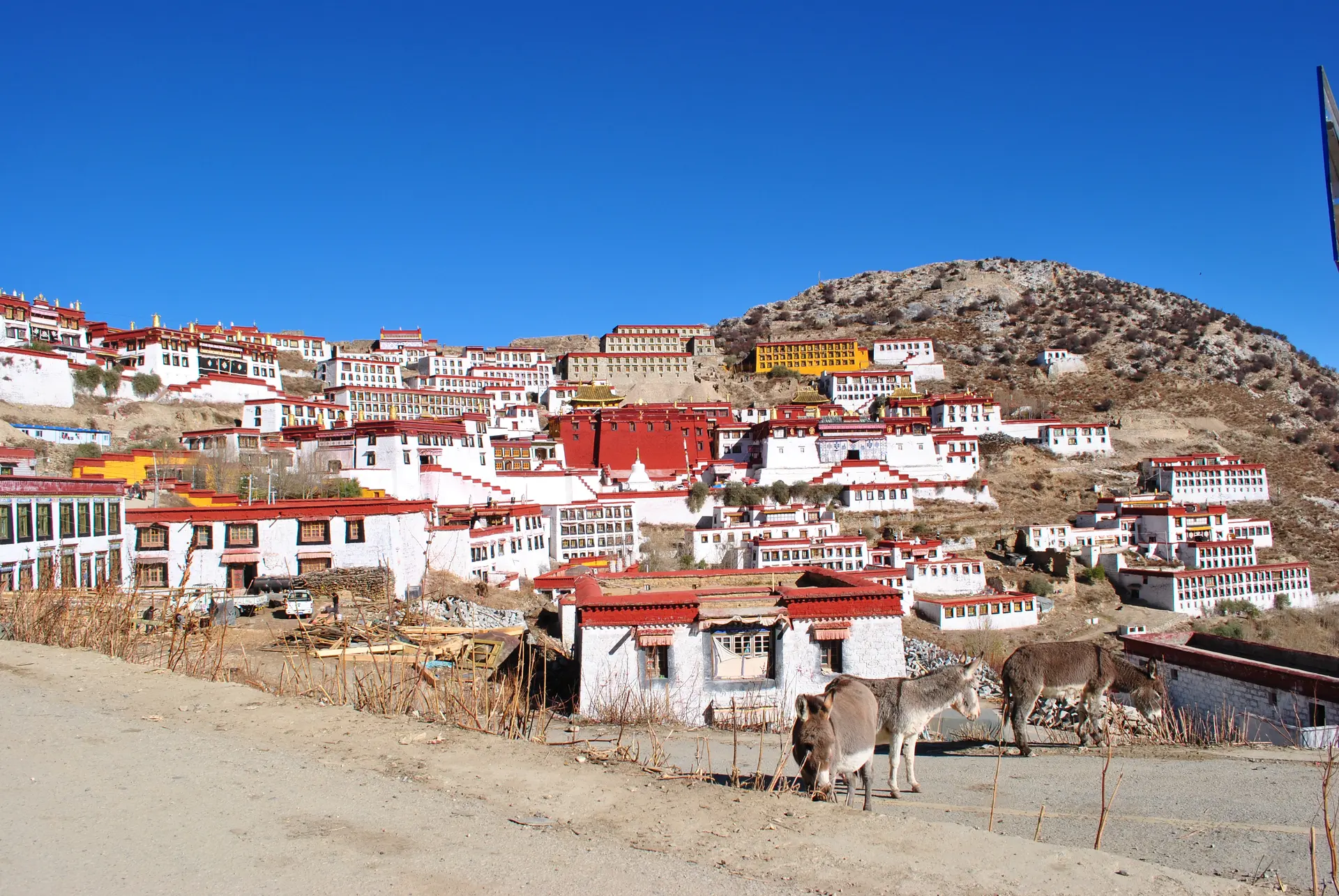
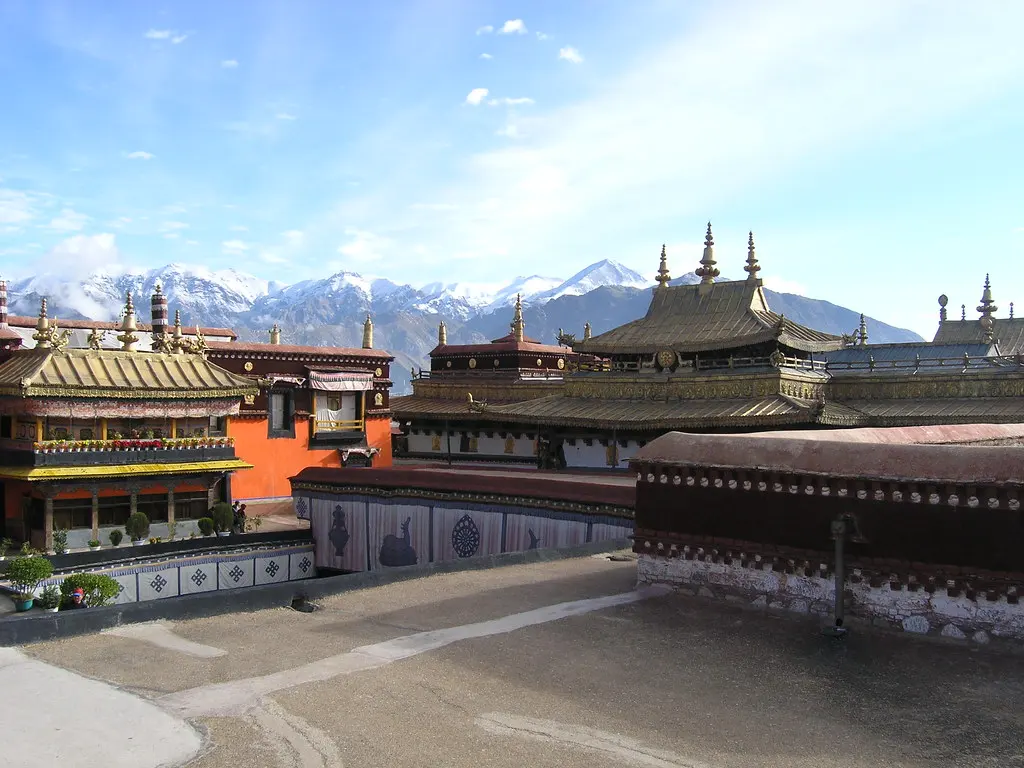


Photo gallery
3 curated photos
Pilgrim glossary
- Mandala
- A symbolic diagram of the cosmos used in meditation and ritual.
- Sangha
- The community of Buddhist practitioners, traditionally monks and nuns.
- Dharma
- The teachings of the Buddha; also the universal law underlying them.
Share a photo
Help visitors recognize Samye. Every submission is reviewed before publication.