Renaca, Iglesia de San Expedito
A beachside parish that became Chile's sanctuary for those who cannot wait
Understand sacred places, explore living traditions, and learn how to engage respectfully with Pilgrim Map.
Access has not been verified. Check current local guidance before planning a visit.
Viña del Mar, Valparaíso, Chile

Visit essentials
A quick read before you go
- Duration
- Thirty minutes for a quiet individual visit, including time to read testimonials and light a…
- Access
- Located at Avenida Borgoño 14000, Reñaca, Viña del Mar.
Overview
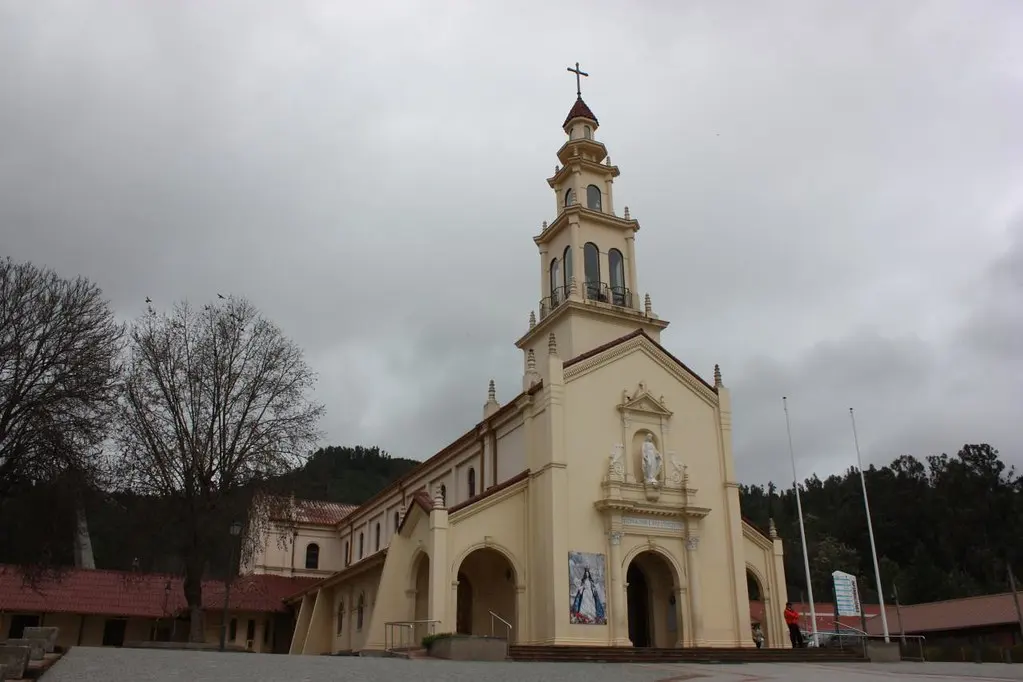
The modest mid-twentieth-century Parroquia San Expedito sits in a residential neighborhood of Reñaca, a beachside district of Viña del Mar on Chile's central coast. It serves its local community through regular Masses, baptisms, and funerals, an unlikely setting for concentrated spiritual intensity.
In 2000 an image of San Expedito was added and the church began drawing devotees from across Chile. The saint of urgent causes is, according to tradition, a third-century Roman centurion who crushed the crow of procrastination underfoot and declared, 'Today, not tomorrow.' On the nineteenth of every month, the anniversary of his martyrdom, special Masses fill the church with people seeking action rather than contemplation: a job this week, rent tomorrow, or healing now.
Displayed handwritten notes, printed letters, and photographs each tell of a crisis met by what the author understands as answered prayer. Together they form not formulaic institutional thanksgiving but the raw, specific gratitude of people who believed they were heard. The church's spiritual power exceeds its physical modesty because it is accessible: San Expedito resides not in a cathedral but in a neighborhood parish near the beach, available to anyone who enters.
Why this place is sacred
The quality that sets this church apart has nothing to do with its building and everything to do with what happens inside it.
The first factor is urgency. Most sacred sites accumulate their power over centuries. San Expedito's church in Reñaca acquired its significance in a single generation. The devotion that began in 2000 with the addition of an image has grown with the speed that characterizes the saint himself — the saint who refused to wait. The people who come here are not seeking gradual spiritual development. They are seeking immediate help.
This concentration of desperate petition creates an atmosphere unlike that of sites where the primary mode is reflection.
The second is testimony. The walls and displays of the church carry written accounts from devotees who believe their prayers were answered. A job found the day after a novena. A medical test that came back clear. A debt resolved at the last possible moment. Whether or not these accounts constitute evidence of supernatural intervention is a question the church does not need to resolve.
What they constitute is a visible accumulation of human hope and gratitude that charges the space with emotional weight.
The third is accessibility. There is no pilgrimage required, no remote location to reach, no elaborate preparation. The church is in a residential neighborhood, served by public buses, open during regular hours. San Expedito is the saint of those who cannot wait, and his church is a place that does not make you wait either. This accessibility — the ordinariness of the setting contrasted with the intensity of what is sought within it — creates its own kind of thinness.
The fourth is rhythm. The nineteenth of every month concentrates the devotion into regular pulses of communal petition. Between these monthly gatherings, individual devotees come and go, but the monthly Mass creates a heartbeat that sustains the community.
The parish was established in 1962 to serve the residential community of Reñaca. Its transformation into a devotional center was not planned but emerged organically after the San Expedito image was added in 2000. The rapid growth of the devotion — drawing visitors from far beyond the parish boundaries — represents a grassroots shift in the church's identity from neighborhood parish to national sanctuary.
The trajectory from ordinary parish to Chile's main San Expedito sanctuary took roughly a generation. The addition of the image in 2000 was the catalyst, but the devotion's growth was driven by word of mouth among devotees who believed their prayers had been answered. The monthly nineteenth-of-the-month Masses formalized what had begun as individual visits.
The parish now functions in dual capacity: serving its local community with standard parish activities while simultaneously operating as a devotional center that draws visitors from across Chile.
Experience and orientation
Approaching the church from the streets of Reñaca, you pass through an ordinary Chilean beach neighborhood: residential buildings, small shops, the salt air of the central coast. The church does not announce itself dramatically. It is a mid-century parish building, functional rather than beautiful, located on Avenida Borgoño.
Inside, the scale is intimate. This is not a basilica but a parish church, and its proportions create a sense of closeness rather than grandeur. The San Expedito image is the devotional focal point — the Roman soldier holding a cross inscribed HODIE (Today), his foot on a crow inscribed CRAS (Tomorrow). Around and near the image, candles burn. Red is the dominant color of the devotion, associated with the saint's martyrdom and his military identity.
What distinguishes the interior experience is the testimonials. Displayed on walls and in designated areas, these handwritten and typed accounts form a living archive of answered prayers. Reading them is an unexpectedly moving experience. The specificity of the gratitude — not 'thank you for blessings' but 'thank you for the job I got on Tuesday' — removes the abstraction from prayer and replaces it with narrative.
Each testimonial is a small story of crisis and resolution, written by someone who believed San Expedito intervened.
On the nineteenth of the month, the atmosphere intensifies. The church fills with devotees who have come specifically for the special Mass. The congregation is not the usual Sunday parish crowd but a gathered community of petition — people united by the shared experience of needing something urgently. The energy is focused and direct. There is little of the meditative quiet associated with contemplative sacred sites.
This is a place of action, of asking, of believing that heaven responds to specifics.
The contrast with the beachside setting adds an unexpected dimension. Steps from the church, the Pacific Ocean stretches to the horizon. The juxtaposition of resort leisure and spiritual urgency is not jarring but clarifying: it reminds you that crisis can intrude anywhere, and that the sacred is not confined to grand settings.
The church is located at Avenida Borgoño 14000, Reñaca. Check the parish Mass schedule for regular service times. The nineteenth of each month offers the special San Expedito Mass, which is the most concentrated devotional experience. April 19 is the principal feast day. The church is open for individual visits during regular hours. There is no admission fee.
Context and lineage
The legend of Saint Expeditus places him in Melitene (modern Malatya, Turkey) in the third century. A Roman centurion, he decided to convert to Christianity. At that moment, the devil appeared in the form of a crow crying 'CRAS! CRAS!' — Latin for 'Tomorrow! Tomorrow!' — tempting him to delay. Expeditus crushed the crow underfoot and declared 'HODIE!' — 'Today!' He was martyred on April 19, 303 AD, during the Diocletian persecutions.
Whether Expeditus existed as a historical figure is debated among scholars — some consider him entirely legendary, possibly arising from a misinterpreted shipping label on a package of relics. But the legend's power does not depend on historical verification. The image of a person choosing immediate decisive action over endless delay speaks to anyone who has faced a deadline, a crisis, or a moment when everything depends on acting now.
In Chile, devotion to San Expedito dates to at least 1830, introduced through European Catholic communities. The devotion grew among working-class and middle-class Chileans who found in San Expedito a saint who understood material urgency. When the Reñaca church added his image in 2000, word spread that prayers offered there were being answered with unusual frequency. The church became a destination.
San Expedito devotion in Latin America belongs to the broader tradition of popular saint veneration — the practice of developing intense, personal relationships with specific saints who are understood to specialize in particular kinds of intercession. This tradition, deeply rooted in Catholic popular religion, often exists in productive tension with institutional church structures. San Expedito's devotion has grown particularly in Argentina, Brazil, and Chile, where economic instability creates ongoing need for a saint of urgent causes.
The Reñaca church's emergence as Chile's national center for this devotion follows a pattern seen elsewhere in Latin American popular Catholicism, where specific sites become associated with particular devotions through grassroots rather than top-down processes.
Saint Expeditus
Third-century Roman centurion (traditional), patron saint of urgent causes, merchants, navigators, and students. His legend of choosing immediate conversion over delay established his identity as the saint of those who cannot wait. His feast day, April 19, is the principal celebration at the Reñaca church.
Reñaca Parish Community
The local community that has sustained and shaped the devotion since 2000, transforming an ordinary parish into Chile's principal San Expedito sanctuary through collective practice rather than institutional decree.
Traditions and practice
The devotion to San Expedito follows traditional Catholic popular saint veneration patterns that have been practiced in Latin America for centuries. Novenas — nine-day prayer cycles — are the primary structured form of petition. Devotees light candles, especially red candles associated with the saint's martyrdom and military identity, at the image. Ex-voto offerings — objects representing the favor asked for or received — are a traditional element.
The iconography is consistent: San Expedito as a Roman soldier holding a cross inscribed HODIE, stepping on a crow inscribed CRAS. This image has become so recognizable in Chile that it serves as a visual shorthand for urgency and decisive action.
Special Masses on the nineteenth of every month draw the largest regular gatherings. The April 19 feast day is the principal annual celebration, with heightened attendance and more elaborate liturgy. Between these focal points, individual devotees visit the church to light candles, pray novenas, and read or add testimonials. Some devotees wear red to the monthly Masses, honoring the saint's color.
The testimonial tradition — writing and publicly displaying accounts of favors received — is perhaps the most distinctive contemporary practice. It creates a feedback loop: newcomers read the testimonials, are encouraged, make their own petitions, and if answered, add their own accounts. The display grows as a living archive of the community's relationship with the saint.
Visit on the nineteenth of any month to experience the concentrated devotion of the special Mass. Arrive early enough to spend time reading the testimonials before the service begins. Pay attention to the specificity of the gratitude expressed — these are not formulaic thanksgivings but detailed stories of people who believed they received help at the moment they needed it most. If you feel moved to do so, light a red candle at the San Expedito image.
You need not be Catholic to visit the church or to participate in this simple act. After the Mass, walk to the ocean — the Pacific is minutes away — and consider the contrast between the vastness of the sea and the intimacy of the prayers you have just witnessed.
Roman Catholicism (Devotion to San Expedito)
ActiveSan Expedito is venerated as the patron saint of urgent causes. The Reñaca parish has become Chile's main center of this devotion since 2000, drawing a growing community of devotees who seek immediate divine intervention through the saint's intercession. The tradition represents popular Catholic saint veneration at its most direct and personal.
Perspectives and open questions
San Expedito's growing devotion in Chile raises questions about popular religion, economic precariousness, and the endurance of saint veneration in an increasingly secular society.
Scholarly perspective
Scholars of popular religion in Latin America study San Expedito devotion as an example of how popular saints fill needs that institutional Catholicism does not always address directly. The saint of urgency speaks to populations experiencing economic precariousness, where patience is not a virtue but a luxury. Religious anthropologists note that San Expedito devotion tends to grow during economic downturns, as people seek immediate divine intervention for material problems.
The Reñaca church's rapid emergence as a devotional center since 2000 is analyzed within the broader context of popular Catholicism's resilience in Chile, where institutional church attendance has declined but devotional practices persist and adapt.
Living and traditional perspectives
For devotees, San Expedito is not a distant intercessor but an immediate ally. He understood urgency in his own life — choosing conversion now over the crow's temptation to delay — and he understands it in the lives of those who pray to him. The testimonials at the church are not mere records but active participants in the devotion: each account of an answered prayer strengthens the faith of the next petitioner.
The monthly rhythm of the nineteenth creates a community bound by shared experience of need and gratitude.
Alternative interpretations
The legend of San Expedito — crushing procrastination, choosing today over tomorrow — resonates with contemporary mindfulness and presence-focused spiritual teachings. The military imagery of the Roman centurion connects to spiritual warfare traditions across multiple traditions. The red color associated with the saint has associations with vitality and decisive action in various symbolic systems. Whether or not the historical Expeditus existed, the archetype he represents — the decisive spiritual warrior who refuses delay — has power independent of hagiographic verification.
Open questions
The historical existence of Saint Expeditus remains unresolved. How the specific San Expedito image arrived at the Reñaca church in 2000, and who initiated the devotion, is not fully documented. What accounts for the rapid growth of the devotion at this particular location, when other San Expedito images exist elsewhere in Chile, is an open question. The relationship between Chilean economic cycles and the intensity of San Expedito devotion has not been formally studied.
Plan your visit
Access and arrival
Located at Avenida Borgoño 14000, Reñaca, Viña del Mar. From Viña del Mar center: approximately seven kilometers north along the coast road, fifteen to twenty minutes by bus or car. From Valparaíso: approximately fifteen kilometers, thirty minutes by bus or car. From Santiago: approximately 120 kilometers via Ruta 68, one and a half to two hours by car or bus. Regular local buses serve Reñaca from Viña del Mar and Valparaíso. Taxis and ride-share services are abundant.
On-street parking is available. Entry is free. Mobile phone signal is reliable. No special permits or reservations required.
Reñaca and the broader Viña del Mar area offer extensive accommodation options, from hostels to luxury hotels. The beachside location means accommodation is abundant but prices rise during Chilean summer (December-February). The church is easily incorporated into a broader visit to the Valparaíso-Viña del Mar area.
Respectful visit
Respectful attire covering shoulders and knees when entering the church. Reñaca is a beach area, so visitors coming from the coast should change into appropriate clothing before entering. The parish is casual but not a beachfront.
Photography is generally permitted inside the church but should be discreet and never during Mass. Do not photograph other worshippers without their explicit permission, particularly those who are praying or in visible emotional states.
Candles, especially red ones, are the primary offering and can be purchased near the church. Monetary donations support the parish. Written testimonials of favors received, if you have one to share, are a valued contribution to the devotional community.
Silence during Mass. No eating or drinking inside the church. Mobile phones off or silent. Respect the privacy of other devotees. Do not remove testimonials or other devotional materials.
The church is a neighborhood parish, not a tourist attraction. Respect the privacy of devotees, particularly those who may be in visible distress while praying for urgent needs. The nineteenth-of-the-month Masses can be crowded; arrive early for seating. Standard Catholic church etiquette applies at all times.
Current practical details
Address
Av. Borgoño 14130-14190, Viña del Mar, Valparaíso, Chile
Phone
Hours
Hours, fees, and access can change — verify on the official source before you travel. Practical details last checked Jun 2026.
Location
Map loads as you approach this section.
Pilgrim reflections
A portrait of encounter, not a score
Pilgrims describe what they felt, how present they could become, and whether the place would shape a journey. There are no stars and no ranking of traditions.
No reviewed reflections yet
The first pilgrims can help describe the character of being here.
Share a reflection
Available after an account-backed “Been there.” Every reflection is reviewed before publication.
Nearby sacred places
Explore other sacred places in the region. Proximity does not establish access or travel time; check each place’s guidance.



Share a photo
Help visitors recognize Renaca, Iglesia de San Expedito. Every submission is reviewed before publication.