Poas Volcano
Where a bird's tears filled what fire had emptied, and the Earth still breathes through acid water
Understand sacred places, explore living traditions, and learn how to engage respectfully with Pilgrim Map.
Access has not been verified. Check current local guidance before planning a visit.
Toro Amarillo, Alajuela, Costa Rica
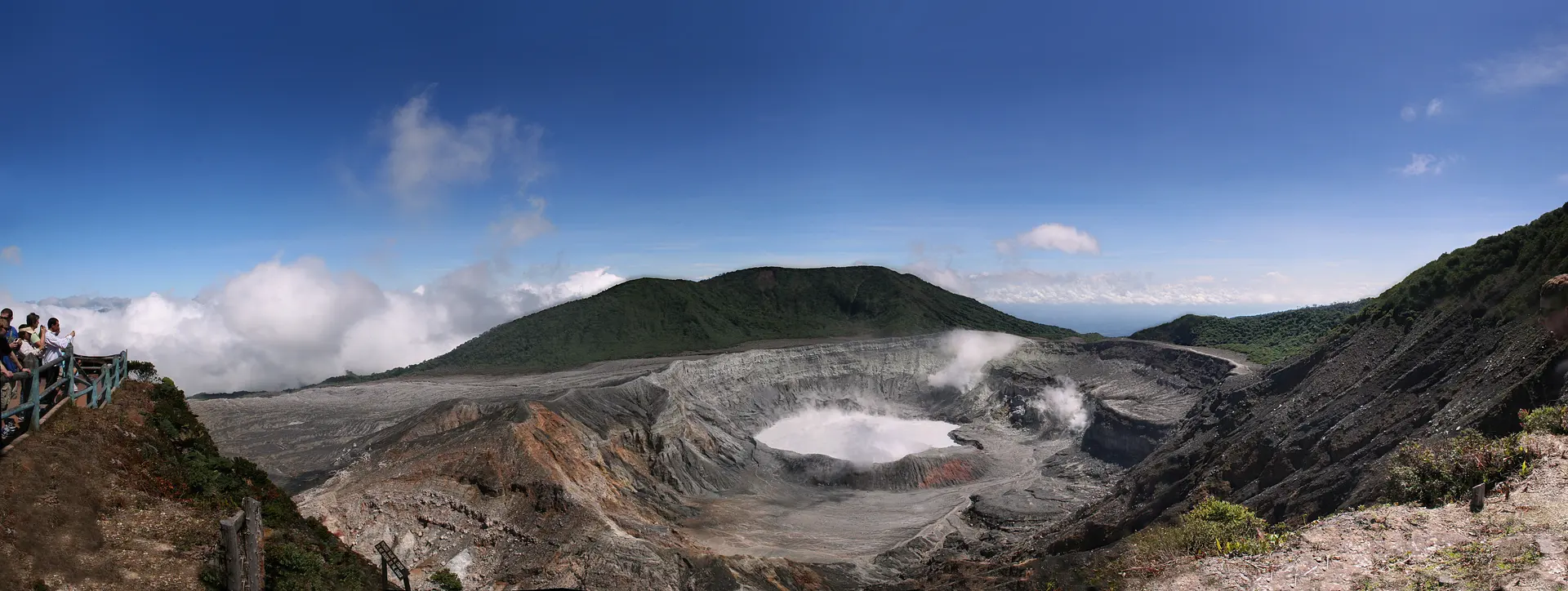
Image of Poas Volcano. Image source · CC-BY-2.0
Visit essentials
A quick read before you go
- Duration
- Two to three hours for the main crater viewpoint and Botos Lagoon trail.
- Etiquette
- Poas Volcano National Park follows strict safety and conservation protocols, especially since…
Overview
Poas Volcano rises 2,697 meters above Costa Rica's Central Valley, with two summit crater lakes embodying its dual nature. The main crater, among Earth's largest active craters, contains an acidic turquoise lake so corrosive that it has dissolved monitoring equipment lowered into it. Fumarolic vents release columns of steam and volcanic gas, and crater walls scarred by centuries of eruptions drop steeply to the water.
A twenty-minute walk through cloud forest reaches Laguna Botos, named for the indigenous people who once inhabited these slopes. Their legend says a bird called the rualdo saw volcanic destruction of the forests it loved and wept until its tears filled the dormant crater. Where the main crater holds acid and fire, Botos holds fresh water and green stillness. Separated by a narrow ridge, they present destruction and creation as adjacent rather than sequential facts.
The 2017 eruption vaporized the crater lake, sent ash columns thousands of meters skyward, closed the park for over a year, and transformed how visitors encounter the mountain. Since reopening in 2018, advance reservations and timed entry have made visits deliberate rather than casual. Every arrival carries awareness that the present landscape is provisional. The volcano erupted recently enough to be remembered, and it will erupt again.
Why this place is sacred
The Botos understood something about Poas that the scientific framework confirms but cannot fully contain: this mountain is alive. The main crater's acidic lake is not a static body of water but a dynamic system in constant chemical exchange with the magmatic processes below. Its color shifts between turquoise, grey, and rust as mineral concentrations change. The fumaroles release sulfur dioxide and water vapor, gases that make the volcano visible as a breathing entity.
On active days, the crater produces phreatic explosions, geysers of superheated water and rock, that confirm the thin crust between the visitor and the underground forces.
The Botos legend of the rualdo bird adds a mythological layer to this geological reality. In their telling, the volcanic destruction of the forest, a real and recurring event, produced grief so deep that it became creative. The bird's tears did not merely symbolize sorrow; they filled a crater, transforming a wound in the earth into a lake.
This is not naive sentiment but a sophisticated understanding of the volcanic cycle: destruction and renewal are inseparable, and what fire empties, water may fill.
The cloud forest on the approach to Botos Lagoon deepens the encounter. Walking from the barren crater rim into dense, moss-draped forest in the space of twenty minutes, the visitor crosses a boundary between austerity and abundance. The cloud forest is itself a product of the volcano, its soil enriched by centuries of ash, its moisture trapped by the mountain's elevation.
Everything here, the acid lake, the bird's lake, the cloud forest, the barren rock, is the volcano expressing itself in different registers.
The Botos people understood Poas as a sacred entity. Their legend of the rualdo bird and the creation of Laguna Botos suggests a spiritual framework in which the volcano's destructive and creative powers were held together rather than separated. The broader Central American indigenous tradition treated volcanic peaks as meeting points between human and spiritual worlds, places where the forces governing existence were concentrated and perceptible.
The first recorded ascent of Poas was in 1828 by Miguel Alfaro. Scientific study of the volcano accelerated through the 19th and 20th centuries. The national park, established in 1971, transformed Poas from a feared natural force into Costa Rica's most visited national park. The paved road to the summit made the crater accessible to families, school groups, and tourists of all abilities, a democratic access that was unusual for an active volcanic site.
The 2017 eruption disrupted this accessibility and forced the adoption of the reservation system that now governs visits. The Botos people, who gave their name to the southern lake, largely disappeared as a distinct cultural group following European colonization.
Experience and orientation
The reservation requirement, introduced after the 2018 reopening, changes the character of a Poas visit before you arrive. You must decide in advance, book a specific time, and commit. This imposed intentionality is an unexpected gift: it transforms a casual day trip into something more considered.
The drive from the Central Valley ascends through coffee plantations and dairy farms, through cloud forest, to the summit parking area. The air cools and thins. At the parking area, rangers provide a safety briefing, a reminder that the mountain you are about to approach last erupted within living memory.
The path to the main crater is short and paved. The first view of the crater stops most visitors in their tracks. The scale is difficult to process: a vast depression with walls of layered volcanic rock dropping to a lake whose turquoise color looks artificial, wrong, too vivid for a natural body of water. Steam rises from fumarolic vents. The sulfurous smell is intermittent but unmistakable.
If the volcano is active, rangers may limit your time at the viewpoint to twenty minutes, a constraint that focuses attention rather than diminishing the experience.
The walk to Botos Lagoon is the necessary counterpoint. The trail passes through cloud forest, a world of epiphytes, ferns, and mosses that drips with moisture. The forest is quiet in a way that feels intentional, as if the abundance of life here has agreed to whisper. The lagoon itself is still and green, occupying a dormant crater that has been at peace long enough for forest to reclaim its rim.
If the main crater is the volcano as destroyer, Botos is the volcano as creator, a place where geological violence has produced, over centuries, a cradle of water and life.
The post-eruption landscape visible at the main crater, where the 2017 event altered the crater morphology and temporarily destroyed the lake, serves as evidence of the volcano's ongoing power. What you see today is not what existed five years ago and is not what will exist five years hence.
Book reservations through the SINAC website well in advance, especially for weekend and holiday slots. The first time slot, at 7 AM, offers the best crater visibility before clouds form. The drive from San Jose takes approximately ninety minutes. Dress warmly in layers with rain gear. Allow two to three hours for the crater viewpoint and the Botos Lagoon trail.
Context and lineage
The Botos legend of the rualdo bird is the oldest known narrative about Poas Volcano. According to the story, a bird of great beauty lived in the forests on the volcano's slopes. When a volcanic eruption destroyed the forests, the rualdo wept with such grief that its tears filled the dormant southern crater, creating the lake that bears the Botos name. Whether the rualdo refers to a real bird species, now possibly extinct, or a mythological creature is unknown.
What the legend preserves is an understanding that the volcanic landscape is defined by the cycle of destruction and renewal, and that grief can be a creative force.
The name Poas itself may derive from an indigenous word, though its exact etymology is uncertain. Some sources suggest a Huetar origin. The name's indigenous roots, like the Botos legend, point to a relationship with this mountain that predates written history by centuries.
Poas carries the memory of the Botos in the name of its dormant lake, though the people themselves are gone. The broader indigenous tradition of volcanic reverence in Central America provides context but cannot reconstruct what was lost. The modern relationship to the mountain is shaped by science, conservation, and tourism, frameworks that illuminate the volcano's physical reality while remaining silent on the spiritual dimensions the Botos recognized.
The Botos People
Indigenous inhabitants of the area surrounding Poas Volcano who gave their name to the southern crater lake. Their legend of the rualdo bird preserves a spiritual understanding of the volcano's destructive and creative powers. They largely disappeared as a distinct cultural group following European colonization.
Miguel Alfaro
First recorded person to ascend Poas Volcano, in 1828, marking the beginning of the mountain's documented modern history.
OVSICORI
Costa Rica's volcanological and seismological observatory, responsible for monitoring Poas and all active volcanoes in the country. Their work provides the scientific basis for the park's safety protocols.
Traditions and practice
The Botos understood Poas as a sacred entity whose destructive and creative powers were inseparable. Their legend of the rualdo bird, whose tears of grief over volcanic destruction created a lake, suggests a spiritual practice of holding destruction and renewal together rather than separating them. The broader Central American indigenous tradition of volcanic reverence included offerings, pilgrimages, and the interpretation of volcanic activity as spiritual communication. Specific Botos rituals at Poas are not recorded.
Visiting Poas requires advance online reservation through the SINAC website. The timed-entry system, adopted after the 2018 reopening, limits the number of visitors at the crater viewpoint and may impose twenty-minute viewing windows during periods of heightened activity. Rangers provide safety briefings. The trail to Botos Lagoon through cloud forest is open as conditions allow. Interpretive signage provides geological and ecological context. Environmental education programs operate through the park.
Begin at the main crater and give yourself the full allotted time, whether twenty minutes or more. Resist the impulse to photograph immediately; stand first and let the scale register. Notice the fumarolic activity, the smell of sulfur, the color of the water. Then walk the trail to Botos Lagoon. The transition from barren rock to cloud forest happens quickly, and the quality of attention shifts from awe to intimacy.
At the lagoon, sit with the stillness and recall the Botos legend: this water exists because a bird wept over what the volcano destroyed. The two lakes, seen together, form a single teaching about loss and what follows loss.
Botos Indigenous Spirituality
HistoricalThe Botos were the indigenous people who inhabited the area around Poas Volcano. Their name persists in Laguna Botos, the dormant southern crater lake. Their legend of the rualdo bird, whose tears of grief over volcanic destruction filled the crater with water, preserves a spiritual understanding of the volcano as a place where destruction and creation are inseparable. The Botos largely disappeared as a distinct cultural group following European colonization.
Reverence for the volcano as a living spiritual entity. Oral tradition of the rualdo bird legend connecting destruction and creation through grief. Understanding of the volcanic landscape as a cycle of loss and renewal.
Costa Rican Volcanic Heritage
ActivePoas Volcano has been one of Costa Rica's most significant natural landmarks since the national park was established in 1971. Before the 2017 eruption, it was the most visited national park in the country. The eruption and subsequent closure were experienced as a national loss, and the 2018 reopening was celebrated as a restoration of a cultural touchstone. The new reservation system has transformed the visit from casual to intentional.
Family and school visits to the crater as a formative Costa Rican experience. Environmental education programs at the park. Photography of the crater lake as a national icon. Coffee farm visits along the approach road as a complementary cultural experience.
Perspectives and open questions
Poas invites reflection on the relationship between destruction and creation, a theme embedded in the Botos legend, visible in the two crater lakes, and confirmed by the 2017 eruption and subsequent renewal of the park.
Scholarly perspective
Geologists classify Poas as a complex stratovolcano with over forty documented eruptions since 1828. The main crater lake is one of the most acidic natural bodies of water on Earth. The 2017 phreatomagmatic eruption significantly altered the crater morphology and is well studied as a case of volcanic hazard management. The Smithsonian Global Volcanism Program monitors the volcano's ongoing activity.
Anthropological research on the Botos people is limited due to their early disappearance following European contact; what is known comes primarily through the place name and the rualdo bird legend preserved in popular literature.
Living and traditional perspectives
The Botos people's understanding of Poas is preserved primarily through the legend of the rualdo bird and the naming of Botos Lagoon. The legend's structure, in which a bird's grief over destruction creates a new body of water, suggests a cosmology in which loss and renewal are understood as a single process rather than a contradiction. The broader Central American indigenous tradition of volcanic reverence provides context, but specific Botos spiritual practices at the mountain are not documented.
Alternative interpretations
Some visitors report feeling heightened energy at the crater rim, which they attribute to the volcano's geological activity. The crater lake's color changes have been interpreted as reflecting the volcano's spiritual state. These are personal interpretations that do not require endorsement or dismissal. What the volcano offers is sufficiently affecting without additional framework: an active geological system, visible and audible, at the edge of a cloud forest.
Open questions
The specific spiritual practices of the Botos people at Poas are not recorded. Whether the rualdo bird legend refers to a real bird species, now possibly extinct, or is entirely mythical remains unknown. The exact etymology of the name Poas is debated. How the crater morphology and lake will continue to evolve following the 2017 eruption is being actively studied.
Plan your visit
Access and arrival
Alajuela (approximately 40 km) and San Jose (55 km) offer the nearest full range of accommodations. Several lodges near the park entrance provide early-morning proximity. Coffee farm stays along the approach road are available. Mobile phone signal is generally available at the summit and along the access road. Restroom facilities at the parking area.
Respectful visit
Warm, layered clothing essential. Summit temperatures range from five to ten degrees Celsius. Rain gear is required, not suggested. Sturdy footwear for the Botos Lagoon trail. Sun protection despite the cold.
Photography is permitted throughout the park. No drones without authorization.
Do not leave offerings or objects in the park. Leave no trace principles apply throughout.
Advance online reservation required through SINAC | Stay on designated trails and behind safety barriers | Follow all ranger instructions | Do not enter restricted zones around the crater | No food or beverages at the main crater viewpoint | Park may close without notice during volcanic events | Visitors with respiratory conditions should exercise caution
Stay on designated trails and behind safety barriers at all times. The volcano is active and monitored; the park may close without notice during volcanic events. Do not enter restricted zones around the crater. Follow all ranger instructions. Visitors with respiratory conditions should be aware of potential exposure to volcanic gases, particularly sulfur dioxide. The altitude and cold at the summit can be significant.
Current practical details
Address
Poás Volcano, Alajuela Province, Alajuela, Costa Rica
Hours, fees, and access can change — verify on the official source before you travel. Practical details last checked Jun 2026.
Location
Map loads as you approach this section.
Pilgrim reflections
A portrait of encounter, not a score
Pilgrims describe what they felt, how present they could become, and whether the place would shape a journey. There are no stars and no ranking of traditions.
No reviewed reflections yet
The first pilgrims can help describe the character of being here.
Share a reflection
Available after an account-backed “Been there.” Every reflection is reviewed before publication.
Nearby sacred places
Explore other sacred places in the region. Proximity does not establish access or travel time; check each place’s guidance.

San Ramon Nonato Church, Sabanilla
Sabanilla, Montes de Oca, Costa Rica
35.8 km away

Irazu Volcano
Santa Rosa, Cartago, Costa Rica
49.1 km away

Basilica of Our Lady of the Angels, Cartago
Cartago, Cartago, Costa Rica
51.3 km away
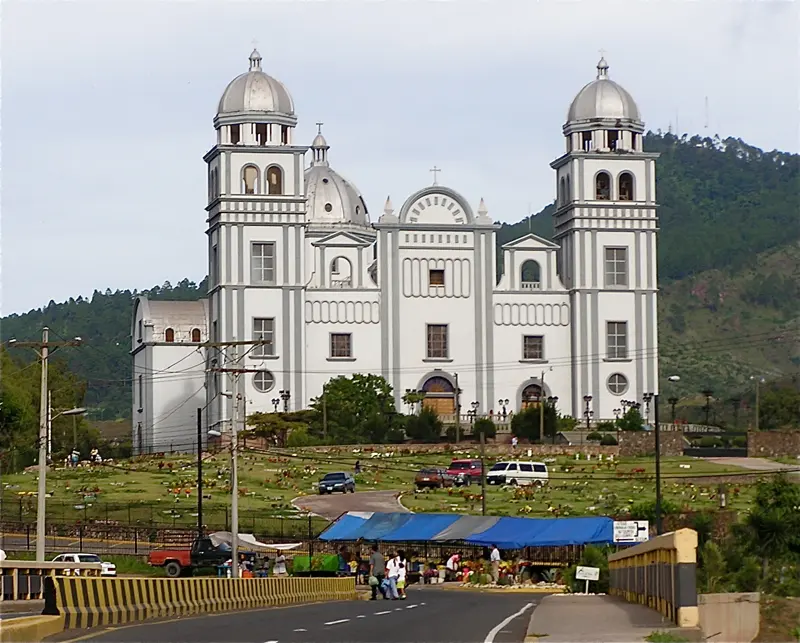
Basilica of Our Lady of Suyapa
Tegucigalpa, Francisco Morazán, Honduras
535.8 km away
Share a photo
Help visitors recognize Poas Volcano. Every submission is reviewed before publication.