Petroglyphs, Cholpon Ata
A field of carved boulders where steppe nomads marked the sky for three thousand years
Understand sacred places, explore living traditions, and learn how to engage respectfully with Pilgrim Map.
Access has not been verified. Check current local guidance before planning a visit.
Çolpon-Ata, Issyk-Kul, Kyrgyzstan
Read the sources
Visit essentials
A quick read before you go
- Duration
- About 30 minutes for a short loop; one to two hours for the full field and upper sections with a…
- Access
- Roughly 3 km from central Cholpon-Ata, reachable on foot or by short taxi; modest entrance fee…
Overview
Across roughly forty-two hectares of lakeshore meadow, hundreds of ancient glacial boulders bear images of ibex with great curving horns, hunted deer, horsemen, leashed snow leopards, and the discs and chariots of a sky-watching people. The earliest carvings are attributed to Bronze Age herding cultures, perhaps of the second millennium BCE; most belong to Saka and Usun nomads who held this country between the eighth century BCE and first century AD.
Later grave markers and tombs layer the dead among the images.
Scholars interpret the field as a ceremonial landscape rather than a single monument, where steppe peoples returned across generations to carve, gather, and very likely honor the sun and open sky. It lies between Lake Issyk-Kul, long regarded by surrounding cultures as sacred and healing, and the snowline of the Kungey Ala-Too—a threshold between earth and sky.
The original rites are extinct. Today this open-air museum and reserve draws visitors for deep-time quiet rather than worship. The boulders preserve a thirty-century human impulse: marking the sacred in stone, under weather, beside water.
Why this place is sacred
What gives this scattered field its weight is duration. The same expanse of boulders drew Bronze Age herders, then Saka and Usun nomads, then later Türkic peoples who set grave markers among the older images, each leaving their mark on stones that earlier glaciers had already carried down from the mountains. The carvings are not decoration but a cosmology written in rock: solar discs and chariots, the ibex and deer of the hunt, riders and beasts that recur across centuries.
Travel accounts often describe the field as an open-air temple of sun worshippers, and the recurring solar imagery makes that reading plausible, though the precise ritual meaning of the stone circles, the boundary wall, and the individual carvings remains uncertain. The setting deepens the sense of liminality. To one side lies Issyk-Kul, a vast alpine lake long held sacred and credited with healing; to the other rise the Kungey Ala-Too.
The boulders themselves, primordial and erratic, lend the ground a geological gravity older than any of the people who carved them.
Most likely a long-used ceremonial and ritual landscape of steppe nomads, associated with veneration of the sun and celestial bodies, with stone circles, a boundary wall, tombs and standing grave markers (balbals) accumulating over time. The carvings record hunting, animals, riders and solar motifs central to steppe cosmology.
From Bronze Age herding cultures the field passed to Saka and Usun nomads, who produced the dominant body of imagery, and later to Türkic peoples who erected balbal grave markers and tombs across it. The active rites ended with those cultures. In the modern era the boulders were organized as an open-air museum and a Kyrgyz national historical-cultural reserve, and the ground now serves heritage visitation and scholarship rather than worship.
Experience and orientation
The visit is a walk and a search. The boulders lie spread across open meadow, and the carvings rarely announce themselves; you move from stone to stone, learning to read the weathered surfaces, until the eye begins to catch ibex horns, a running deer, a rider, a disc.
Visitors commonly describe this slow hunt as the rewarding part, a quiet attentiveness rewarded stone by stone, with panoramas of the lake on one side and the snow line of the Kungey Ala-Too on the other. Many also note that the site is modest and worn rather than monumental, and that without a guide the fainter carvings are easy to miss.
The dominant feeling people report is one of deep time: the recognition that hands separated from yours by three thousand years worked these same surfaces, under the same sky, beside the same lake. Early morning or late afternoon, when low light rakes across the boulders and throws the incisions into relief, is when the carvings read most clearly and the walking is coolest.
The field sits about three kilometers from central Cholpon-Ata on the northern shore of Lake Issyk-Kul, at roughly 1,600 to 1,800 meters, in the foothills of the Kungey Ala-Too. Boulders are spread across open ground with marked walking routes; a short loop covers the nearest carvings, while the full field and upper sections reward a longer circuit. A guide helps locate and interpret the fainter images.
Context and lineage
The carvings begin, by most accounts, with Bronze Age herding cultures of around the second millennium BCE, then accumulate through the Saka and Usun period (roughly the eighth century BCE to the first century AD), which produced the dominant body of imagery, and continue into the fourth century AD; later Türkic peoples added balbal grave markers and tombs. Dating ranges differ between sources, and estimates of the number of carved stones vary widely, from around nine hundred to several thousand.
Local tradition reads the town's name, Cholpon-Ata, as 'Venus-Father' or 'Morning-Star Father,' a protective spirit, though an alternative tradition links it to Chopan-Ata, patron of shepherds. A beloved legend tells of a peasant girl who threw herself from a cruel khan's citadel rather than submit, and of her grieving father whose face is said to be visible in the opposite mountains, his tears feeding the salt lake.
The site was organized as an open-air museum and reserve in the modern era, in the later twentieth century. It is, despite frequent claims in travel sources, not a UNESCO World Heritage Site; Sulaiman-Too is Kyrgyzstan's only inscribed property.
There is no single founding tradition or institution; the field is the cumulative work of successive steppe cultures, from Bronze Age herders through Saka and Usun nomads to later Türkic peoples. Its modern lineage is that of a Kyrgyz national historical-cultural reserve and open-air museum rather than a religious institution.
Bronze Age Andronovo-related herders
Earliest carvers
Saka (Scythian) nomads
Principal carvers
Usun nomads
Later steppe carvers
Türkic peoples
Grave-marker tradition
Cholpon-Ata ('Morning-Star Father')
Mythological namesake spirit
Traditions and practice
In antiquity the field is interpreted as a setting for steppe religion: veneration of the sun and celestial bodies, animal sacrifice, and ceremonial gatherings conducted, by some readings, by Saka priests. Later Türkic burial practice marked graves with carved standing stones (balbals). None of these traditions continue.
Visitation today is secular and interpretive. People walk the marked routes, search out and photograph the carvings, and often take a guide to locate and read the fainter images. There is no active religious ceremony at the site.
Walk slowly and let the carvings emerge rather than expecting them to stand out; come in low morning or evening light, when raking sun makes the incisions legible. Treat the walk as an exercise in deep-time attention, holding in mind the three thousand years of hands that worked these stones.
Saka / Scythian steppe religion (sun and sky worship)
HistoricalThe Saka regarded this territory as sacred, and the carvings are widely interpreted as part of an open-air sanctuary where rites to the sun and celestial bodies were conducted.
Animal sacrifice, solar and celestial veneration, ritual hunts and ceremonial gatherings.
Bronze Age Andronovo-related nomadic cultures
HistoricalThe earliest carvings, around the second millennium BCE, are attributed to Bronze Age herding cultures that preceded the Saka.
Rock carving of animals and hunting scenes.
Türkic balbal / grave-marker tradition
HistoricalLater balbal standing stones and tombs, medieval through more recent centuries, overlay the prehistoric carvings, marking and guarding burials.
Erecting carved standing stones at burial sites.
Perspectives and open questions
The field is read most firmly as an archaeological record of steppe cultures, with its ritual and astronomical dimensions ranging from well-supported to speculative.
Scholarly perspective
Scholars treat Cholpon-Ata as a major Central Asian open-air petroglyph concentration, with carvings spanning the Bronze Age through the early Türkic period and dominated by Saka and Usun imagery. The field is read as a long-used ceremonial and ritual landscape of steppe nomads, associated with sun and sky worship, and dotted with stone circles, a boundary wall, tombs and balbals.
Living and traditional perspectives
In Kyrgyz cultural memory the lakeshore and the figure of Cholpon-Ata, the Morning-Star Father, carry protective, ancestral significance, and the petroglyph field is embraced as part of the nation's deep heritage.
Alternative interpretations
Popular and travel accounts frame the site as an open-air temple for sun worship with astronomical alignments, and some assert specific solstice or equinox sightlines. These claims appear in non-academic sources and are not established by peer-reviewed archaeoastronomy, so they are best held lightly.
Open questions
The precise ritual function of the individual stone circles and the boundary wall is unknown, as is whether any solar alignments were intentional. The full meaning of the recurring tamga and solar motifs, and the extent of the now-submerged lakeside settlements associated with the carvers, remain open.
Plan your visit
Access and arrival
Roughly 3 km from central Cholpon-Ata, reachable on foot or by short taxi; modest entrance fee (around 80 som). Cholpon-Ata is reached by road from Bishkek in about three to four hours.
Cholpon-Ata is a lakeside resort town with a range of hotels, guesthouses and seasonal lodging within a few kilometers of the site.
Respectful visit
No religious dress code. Practical outdoor clothing, sun protection and sturdy footwear for uneven terrain at altitude.
Permitted and encouraged across the field and its lake-and-mountain setting; never touch or chalk a carving to make it photograph better.
None expected.
Do not touch, rub, chalk, climb on, or deface the carvings; do not remove stones; keep to the marked paths.
The carvings are fragile and have suffered from graffiti, chalking and handling. Do not touch, rub, chalk, climb on, or deface them, and do not remove stones; stay on the marked paths.
Location
Map loads as you approach this section.
Pilgrim reflections
A portrait of encounter, not a score
Pilgrims describe what they felt, how present they could become, and whether the place would shape a journey. There are no stars and no ranking of traditions.
No reviewed reflections yet
The first pilgrims can help describe the character of being here.
Share a reflection
Available after an account-backed “Been there.” Every reflection is reviewed before publication.
Nearby sacred places
Explore other sacred places in the region. Proximity does not establish access or travel time; check each place’s guidance.

Ascension Cathedral of Almaty
Almaty, Almaty, Kazakhstan
66.8 km away
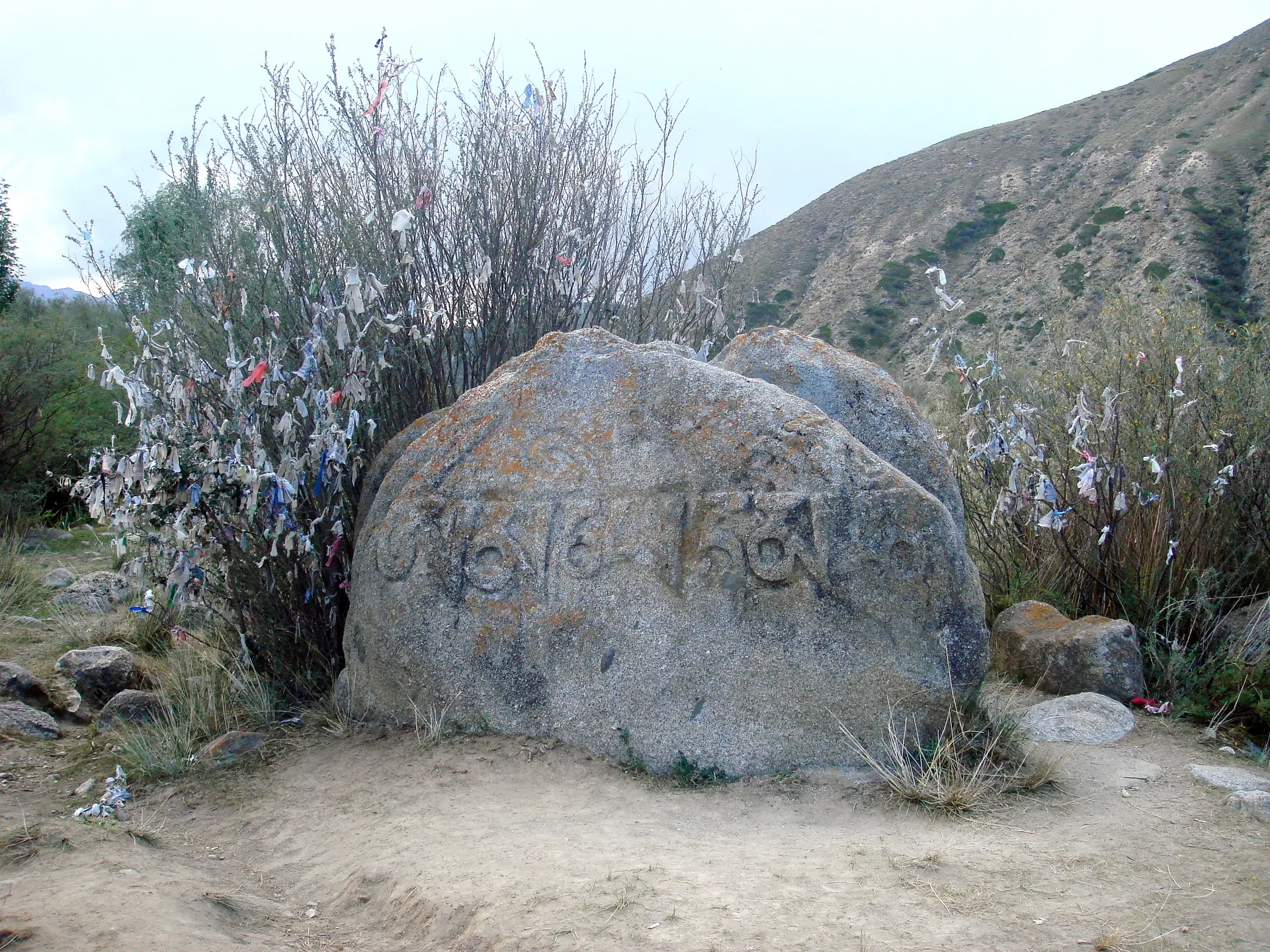
Tamga-Tash Buddhist Inscription Stones
Tamga, Issyk-Kul Region, Kyrgyzstan
72.2 km away

Barskoon Waterfall Cascade
Barskoon, Issyk-Kul Region, Kyrgyzstan
85.7 km away

Dungan Mosque of Karakol
Karakol, Issyk-Kul Region, Kyrgyzstan
111.1 km away
References
Sources consulted for this page. Source categories describe the publication, not a guarantee that every claim is verified. Traditional accounts and outside interpretations may differ.
- 01Cholpon-Ata — Wikipedia contributorsencyclopediaTown background, etymology (Venus-father), population, legend of the weeping father.
- 02Ancient Petroglyphs Of Cholpon-Ata And Mysterious Balbals Figures That Guard Grave Sites, Kyrgyzstan — AncientPages.comnewsDescribes ~900 boulders, balbals as grave guardians (6th-19th c.), Scythian-Saka epoch carvings, open-air temple interpretation.
- 03Petroglyphs in Cholpon-Ata, Kyrgyzstan — AdvantourguideDating 2nd millennium BCE-4th c. AD; Saka sun worship and shaman sacrifices; settlements now underwater in the bay.
- 04Petroglyphs in Cholpon-Ata — Silk Adventures (silkadv.com)guideStone circles, boundary wall, balbals and tombs; nomadic tamga; ceremonial open-air temple interpretation.
- 05The Petroglyph Museum of Cholpon-Ata — Nomadaysguide42 ha site, sun/celestial worship, motifs of animals and solar discs.
- 06Issyk-Kul State Historical and Cultural Museum and Reserve, Cholpon-Ata — AdvantourguideReserve framing; archaeological context of the lakeshore site.
- 07The Petroglyph Museum of Cholpon-Ata — Kyrgyz'What? (kyrgyzstantravel.com)guidePractical visit info: ~80 som entry, foot/taxi access, walking routes 20-30 min to longer.
- 08Visit the Cholpon-Ata Petroglyphs: Photos, info, planning tips — Zigzag on EarthguideVisitor experience, layout, photography conditions.
- 09Kyrgyzstan's Petroglyphs #1 - Issyk-kul Hollow — Uzbek JourneysblogField description of carvings and setting at Kungey Ala-Too foothills, ~1600-1800 m.
Share a photo
Help visitors recognize Petroglyphs, Cholpon Ata. Every submission is reviewed before publication.