Organ Pipe Cactus National Monument, Arizona
Where the annual salt pilgrimage passes through 16,000 years of continuous human presence
Understand sacred places, explore living traditions, and learn how to engage respectfully with Pilgrim Map.
Access has not been verified. Check current local guidance before planning a visit.
Ajo, Arizona, United States
Read the sources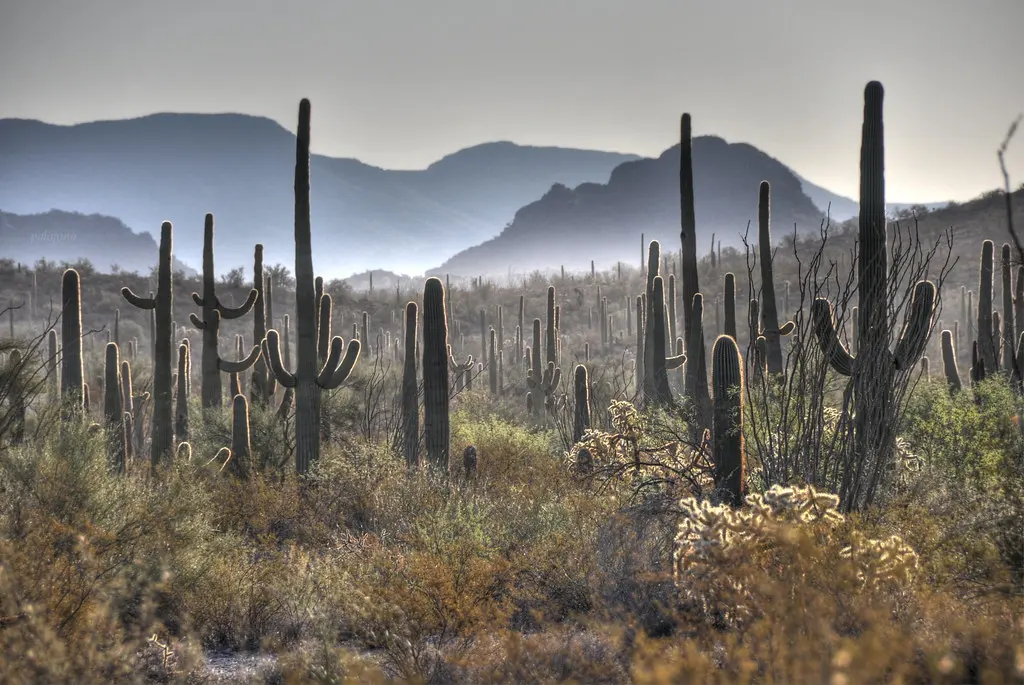
Image of Organ Pipe Cactus National Monument, Arizona. Image source
Visit essentials
A quick read before you go
- Duration
- Full day allows both scenic drives and time at Quitobaquito
- Access
- The monument is accessible from Highway 85, approximately 35 miles south of Ajo and 5 miles…
Overview
The Sonoran Desert extends across the border between Arizona and Mexico with indifference to political boundaries. For the Tohono O'odham people, whose homeland this has been for millennia, the land holds meanings that predate any nation-state. Within Organ Pipe Cactus National Monument lie places central to their ongoing spiritual practice.
Quitobaquito Springs emerges from the earth as a rare perennial oasis in a landscape defined by scarcity. Archaeological evidence documents human presence here for approximately 16,000 years, making this one of the longest continuously inhabited sites in North America. For the Tohono O'odham, it serves as a vital waypoint on the annual salt pilgrimage, the ceremonial journey to the Gulf of California for sacred salt that has continued for generations.
Monument Hill holds different but equally profound significance: a ceremonial site, the location of historic battles, and a burial ground where ancestors rest. The organ pipe cacti found nowhere else in the wild United States stand as living witnesses to this sacred geography.
In recent years, border wall construction has brought trauma to these sacred sites. Environmental laws were waived to speed construction. Monument Hill was blasted. Groundwater pumping for concrete threatens Quitobaquito. A 30-foot wall now divides landscapes that have been ceremonially connected for millennia. For visitors, this monument offers encounter with sacred Sonoran Desert landscape and with the ongoing struggle to protect Indigenous sacred sites.
Why this place is sacred
The concept of thin places often centers on dramatic encounters or notable visions. Quitobaquito Springs offers something different: thinness through sheer duration. Sixteen thousand years of human presence at a single water source in the desert creates accumulation of meaning that transcends individual experience.
Every generation that knelt to drink from these waters added to what the spring holds. The O'odham pilgrims who stop here on their journey to gather salt from the Gulf of California join a lineage of travelers stretching back to the end of the last ice age. The spring-fed pond with its endangered pupfish and mud turtles is not merely an ecological rarity but a repository of human relationship with this landscape.
Monument Hill adds another dimension of thinness: the presence of the dead. As a burial ground, it holds ancestors of the Tohono O'odham. The ceremonial practices that once took place here and the battles fought on its slopes have left marks that those sensitive to such things report feeling.
The decision to blast through this hill for border wall construction was not merely insensitive to living Indigenous peoples but destructive of the relationship between living and dead that the site maintained.
The thinness at Organ Pipe is layered: temporal depth at Quitobaquito, ancestral presence at Monument Hill, and the ongoing practice of the salt pilgrimage connecting contemporary O'odham to traditions that predate European presence on this continent.
Quitobaquito has served as water source, gathering place, and pilgrimage waypoint since before recorded history. Monument Hill has functioned as ceremonial site and burial ground. The salt pilgrimage passing through this area connects the O'odham to the Gulf of California and to the sacred practice of salt gathering.
The core functions of these sites continued largely unchanged until the 21st century. National monument designation in 1937 and subsequent protections maintained access while limiting development. The Tohono O'odham continued traditional practices within the protected landscape. Border wall construction beginning in 2019 represented the most significant disruption in 16,000 years of continuous use, physically dividing sacred landscape and threatening the water source that made human presence possible.
Experience and orientation
Arriving at Organ Pipe Cactus National Monument, visitors enter 517 square miles of Sonoran Desert stretching to the Mexican border. The organ pipe cacti that give the monument its name grow nowhere else in the wild United States. Their columnar forms, branching from a single base like the pipes of a church organ, create a landscape unlike any other.
The Puerto Blanco Drive leads to Quitobaquito Springs, where a rare perennial oasis supports life in the desert. The spring-fed pond seems improbable in this landscape of scarcity. Endangered Quitobaquito pupfish and Sonoyta mud turtles inhabit waters that have drawn humans for 16,000 years. The quality of silence here holds particular weight, the kind of stillness that accumulates over millennia.
Elsewhere in the monument, visitors may encounter the 30-foot border wall that now divides landscapes previously connected. The contrast is stark: ancient saguaros and organ pipes standing near industrial steel. For those aware of the Tohono O'odham sacred sites desecrated by construction, the wall carries additional meaning. Monument Hill, where ancestors were buried and ceremonies performed, was blasted to make way for it.
The visitor experience at Organ Pipe thus contains contradiction: extraordinary desert beauty, deep Indigenous sacred significance, and contemporary political conflict. All three are present simultaneously. The monument offers no escape into pastoral timelessness but demands engagement with what it means for sacred sites to exist within contested border zones.
Organ Pipe Cactus National Monument lies in southern Arizona, sharing a border with Sonora, Mexico. The visitor center is accessible from Highway 85. Quitobaquito Springs is reached via Puerto Blanco Drive. The monument is approximately 35 miles south of Ajo, Arizona.
Context and lineage
The specific origin narratives for Quitobaquito and Monument Hill have not been shared publicly by the Tohono O'odham in the way that creation stories associated with Baboquivari have been. What is known is that this landscape has supported continuous human presence for approximately 16,000 years, that the Hohokam and their descendants the Tohono O'odham have lived here since time immemorial, and that specific sites within the monument hold ceremonial significance that continues today.
The salt pilgrimage itself is a journey to the Gulf of California to gather sacred salt, passing through what is now the monument. This practice connects the O'odham to the sea, to ceremonial salt, and to a route traveled by ancestors for countless generations.
The lineage of sacred practice at Organ Pipe extends back 16,000 years at Quitobaquito Springs, making it one of the oldest continuously used sites in North America. The Hohokam people dispersed around CE 1450, with their descendants becoming the Tohono O'odham (Desert People) and Hia Ced O'odham (Sand People). Spanish arrival disrupted but did not end traditional practices. The salt pilgrimage has continued despite borders and restrictions.
Traditions and practice
The annual salt pilgrimage to the Gulf of California is the primary traditional practice associated with this area. O'odham pilgrims travel to the sea to gather sacred salt, with Quitobaquito serving as a waypoint on this ceremonial journey. The pilgrimage is not a single event but an ongoing tradition that has continued for generations.
Monument Hill served as a site for ceremonial observances, the specific nature of which has not been publicly shared. As a burial ground, it also held ongoing significance for those whose ancestors rest there. The relationship between the living and the dead maintained at such sites is central to O'odham spirituality.
Traditional gathering of water, plants, and medicinal materials has continued throughout the monument's history. Quitobaquito's perennial water made it a gathering point in a landscape where water is precious.
The salt pilgrimage continues, though border policies have complicated cross-border ceremonial travel. Tohono O'odham tribal members continue traditional practices within the monument to the extent that regulations and physical barriers permit.
The border wall has created unprecedented disruption to practices that have continued for millennia. Movement across what was once continuous sacred landscape now requires crossing international boundaries. The trauma of watching Monument Hill blasted and Quitobaquito threatened has added dimensions of grief and activism to contemporary O'odham engagement with the site.
Visit with awareness of what this landscape represents to the Tohono O'odham. The organ pipe cacti and desert scenery draw most visitors, but the sacred geography underlying this landscape deserves recognition.
At Quitobaquito, sit with the temporal depth of this place. Sixteen thousand years of human presence at a single spring is almost impossible to comprehend. The endangered species in the pool have survived because this water has survived. Consider what the water means.
If you encounter the border wall, do not look away. The monument now includes this reality. Understanding what was destroyed to build it is part of understanding where you are.
Tohono O'odham
ActiveThe monument contains multiple sites sacred to the Tohono O'odham Nation. Quitobaquito Springs has been a gathering place and pilgrimage waypoint for approximately 16,000 years. Monument Hill is a ceremonial site, historic battle location, and burial ground. The area lies along the route of the annual salt pilgrimage to the Gulf of California.
The salt pilgrimage continues despite border complications. Tribal members gather water, plants, and ceremonial materials. The relationship between living O'odham and ancestors buried at Monument Hill is maintained even as the site has been damaged.
Perspectives and open questions
The significance of Organ Pipe's sacred sites is understood primarily through Tohono O'odham traditional knowledge. Archaeological evidence supports the extraordinary temporal depth of human presence. Contemporary political conflict over the border wall has brought new attention to these sites.
Scholarly perspective
Archaeological evidence documents approximately 16,000 years of human presence at Quitobaquito Springs, making it one of the longest continuously inhabited sites in North America. The site's significance to the Tohono O'odham is recognized in park management and interpretation. UNESCO Biosphere Reserve designation in 1976 acknowledged the monument's ecological significance.
Recent scholarly and journalistic attention has focused on the impact of border wall construction on Indigenous sacred sites. Environmental assessments, normally required for such construction, were waived. The destruction of Monument Hill and threats to Quitobaquito's water source have been documented in legal proceedings and news coverage.
Living and traditional perspectives
The Tohono O'odham Nation maintains that multiple sites within the monument are sacred. The specific nature of their sacred significance has not been comprehensively shared publicly, in contrast to the more open sharing of I'itoi traditions at Baboquivari. What is clear is that this land holds deep meaning, that the salt pilgrimage continues, and that border wall construction has caused profound trauma to the community.
Richard Begay of the Navajo Nation noted that the destruction of sacred sites affects not only the immediate tribal community but all Indigenous peoples who recognize the sanctity of such places.
Open questions
The specific ceremonial practices at Monument Hill and the full range of traditional uses of the monument have not been publicly shared. This privacy is appropriate and should be respected. What can be known is that the sites matter and that their desecration has caused real harm.
Plan your visit
Access and arrival
The monument is accessible from Highway 85, approximately 35 miles south of Ajo and 5 miles south of Lukeville (at the monument entrance). Scenic drives require unpaved roads; check conditions at the visitor center.
Camping is available at Twin Peaks Campground within the monument. Lodging is available in Ajo (35 miles) and Gila Bend (75 miles). Fill fuel tanks before arriving; no fuel is available within the monument.
Respectful visit
Appropriate desert clothing with sun protection. Temperatures in the Sonoran Desert can be extreme, particularly in summer.
Permitted throughout the monument. Be sensitive around sacred areas and do not photograph tribal members without permission.
Do not leave offerings unless you are Tohono O'odham following traditional practice.
Stay on designated roads and trails. Border zone regulations apply. Do not disturb cultural sites or archaeological materials.
Although an intention to honor the site may be appreciated, adding objects can be disrespectful or confusing in the context of ongoing traditional use.
The border area requires awareness. Remain on designated roads and trails. The monument shares a border with Mexico, and regulations apply.
Do not disturb any cultural sites or archaeological materials. The depth of human presence here means that evidence of past habitation can be found throughout the monument.
Current practical details
Address
10 Organ Pipe Dr, Ajo, AZ 85321, USA
Phone
Hours
Hours, fees, and access can change — verify on the official source before you travel. Practical details last checked Jun 2026.
Location
Map loads as you approach this section.
Pilgrim reflections
A portrait of encounter, not a score
Pilgrims describe what they felt, how present they could become, and whether the place would shape a journey. There are no stars and no ranking of traditions.
No reviewed reflections yet
The first pilgrims can help describe the character of being here.
Share a reflection
Available after an account-backed “Been there.” Every reflection is reviewed before publication.
Nearby sacred places
Explore other sacred places in the region. Proximity does not establish access or travel time; check each place’s guidance.


References
Sources consulted for this page. Source categories describe the publication, not a guarantee that every claim is verified. Traditional accounts and outside interpretations may differ.
- 01Quitobaquito Springs — National Park ServiceofficialOfficial NPS documentation
- 02Organ Pipe Cactus National Monument — WikipediaencyclopediaGeneral reference
- 03Organ Pipe Cactus National Monument — PeakVisorguideTravel information
Share a photo
Help visitors recognize Organ Pipe Cactus National Monument, Arizona. Every submission is reviewed before publication.