National Shrine of Our Lady of Częstochowa, Pennsylvania
Where Polish faith found its American home on Beacon Hill
Understand sacred places, explore living traditions, and learn how to engage respectfully with Pilgrim Map.
Access has not been verified. Check current local guidance before planning a visit.
Doylestown, Pennsylvania, United States
Read the sources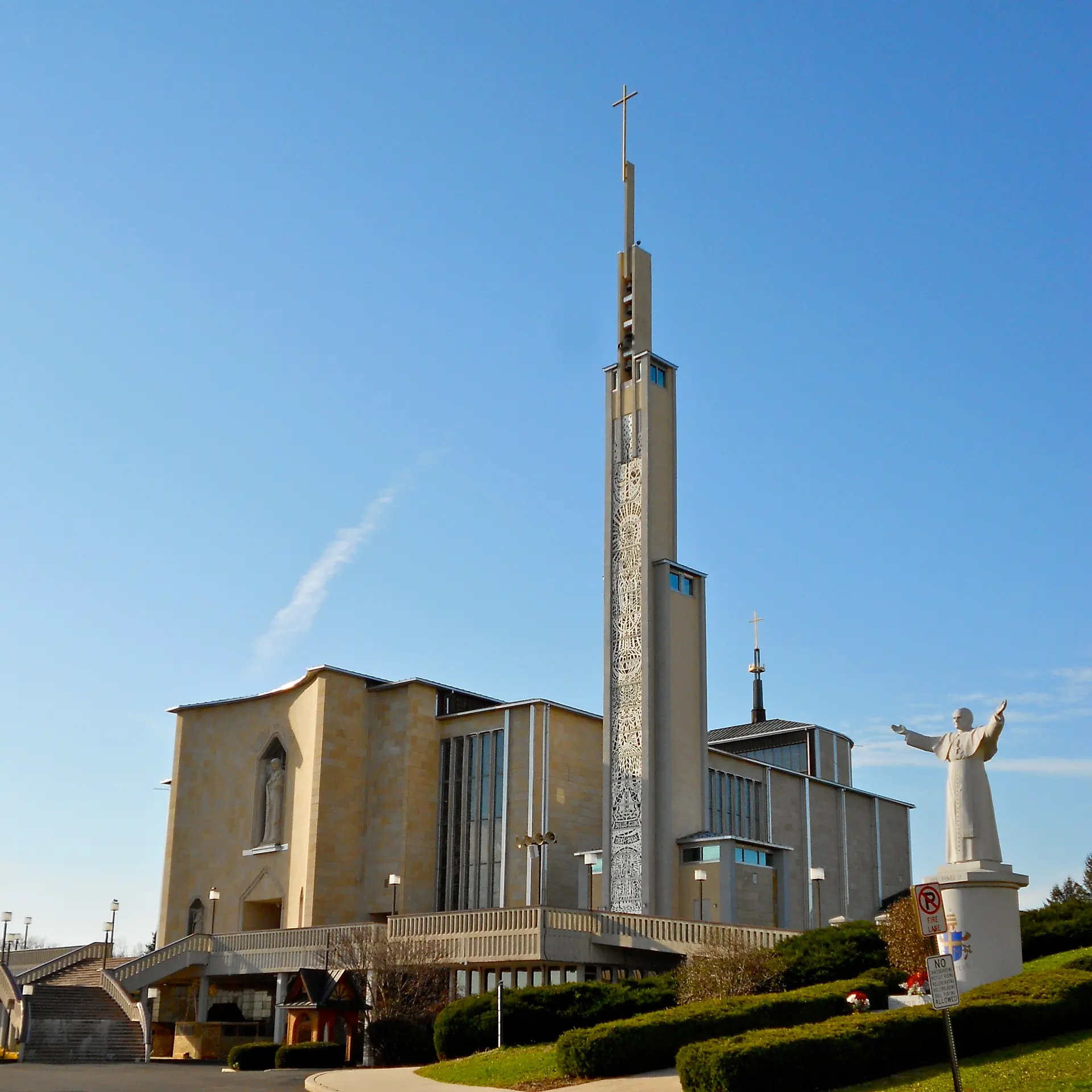
Visit essentials
A quick read before you go
- Duration
- Allow two to three hours for a thorough visit including both churches, the outdoor Stations of…
- Access
- The shrine is located at 654 Ferry Road, Doylestown, PA 18901.
Overview
On a hill in southeastern Pennsylvania, the National Shrine of Our Lady of Czestochowa preserves a Poland shaped by faith through partition, occupation, and exile.
Pauline Father Michael Zembrzuski arrived in America in 1951 after Communist authorities expelled him from Hungary. Visiting Polish parishes across the northeastern United States, he saw communities drifting from the faith that had defined their ancestors through centuries of suffering and envisioned a bridge between worlds: a shrine to Our Lady of Czestochowa, the Black Madonna understood to have protected Poland since the fourteenth century.
Mass was first celebrated in 1955 in a converted barn on forty acres of Doylestown farmland. Eleven years later, 135,000 people gathered there to dedicate a shrine commemorating a thousand years of Polish Christianity. President Lyndon Johnson and Cardinal Karol Wojtyla of Krakow, later Pope John Paul II, attended; the barn had become a spiritual capital.
The shrine now draws at least 50,000 pilgrims annually. Some come from nearby Philadelphia; others walk sixty miles from New Jersey, as pilgrims have done since 1988. All approach an icon that has looked back at Poles for over six hundred years.
Why this place is sacred
A thin place is said to be where the distance between heaven and earth collapses. At the National Shrine of Our Lady of Czestochowa, the thinning happens not only vertically but horizontally. Time and geography compress. A pilgrim standing before the Black Madonna icon in Pennsylvania stands, in some spiritual sense, before the original at Jasna Gora. A second-generation Polish-American lighting a candle here participates in a devotion their great-grandparents practiced in Krakow or Warsaw.
The shrine's location on Beacon Hill, the highest elevation in Bucks County, was not accidental. Father Zembrzuski sought a place that would allow the shrine to be seen from a distance, a literal beacon. The rolling farmland of southeastern Pennsylvania offered something that perhaps reminded him of the Polish countryside he had lost. Here, the Church could put down roots in foreign soil.
Several elements concentrate the sacred here. The lower church is a replica of Our Lady's Chapel at Jasna Gora, creating an architectural echo across the Atlantic. The outdoor Stations of the Cross wind through 170 acres, inviting pilgrims into the landscape itself. The heart of Ignacy Paderewski, Poland's third prime minister and beloved patriot, rests in a special shrine, along with memorials to the victims of the Katyn massacres. These are not merely historical artifacts.
They are presences that continue to speak.
The walking pilgrimage tradition adds another dimension. Since 1988, pilgrims have walked sixty miles from Great Meadows, New Jersey, arriving at the shrine after days of physical exertion and communal prayer. This practice echoes the great walking pilgrimages of Europe and transforms the approach to the shrine into preparation for encounter. Those who arrive on foot report that something shifts in them during the walk. The sacrifice of the body opens the spirit.
What makes this place thin is not any single element but their accumulation. Six centuries of devotion to the Black Madonna. Seven decades of continuous pilgrimage to this American site. The presence of sacred relics and memorial. The landscape itself, rolling and pastoral, inviting contemplation. And always, the icon, looking out from the sanctuary with the same penetrating gaze she has worn for centuries.
The shrine was founded to preserve Polish Catholic faith and culture among immigrants and their descendants, while also creating a spiritual link to Catholics suffering under Communist persecution behind the Iron Curtain. The dedication in 1966 specifically commemorated a thousand years of Polish Christianity, dating from the baptism of Duke Mieszko I in 966.
What began as a small chapel in a converted barn has expanded to include the main upper church, a replica of Our Lady's Chapel at Jasna Gora, a retreat house, visitor center with Polish deli, outdoor Stations of the Cross, memorial cemetery, and various shrines and memorials. The focus has broadened from serving primarily Polish-American Catholics to welcoming pilgrims of all backgrounds who are drawn to Marian devotion or seeking encounter with sacred tradition.
Experience and orientation
The experience of visiting the National Shrine begins before entering any building. The grounds announce themselves gradually as visitors drive the winding road up Beacon Hill. Trees give way to open sky. A cemetery appears, white crosses marking the graves of Polish-Americans who chose to rest in this sacred ground. Then the shrine itself emerges, its modernist architecture both surprising and somehow appropriate, a twentieth-century vessel for a medieval devotion.
Inside the upper church, space and light create an environment for encounter. But most pilgrims are drawn downward, to the lower church that replicates Our Lady's Chapel at Jasna Gora. Here, the Black Madonna presides. Her icon, a faithful copy of the original in Poland, shows Mary holding the infant Jesus, her dark face marked by two parallel scars. According to tradition, Hussites slashed the original icon during a raid in 1430. The marks remain, transformed from wounds into witnesses.
Those who sit before this icon often describe an experience difficult to capture in words. Some speak of feeling seen. Others describe a sense of being held, protected, understood. Polish-Americans frequently report profound emotional release, as if the devotion of their grandparents and great-grandparents suddenly becomes accessible, no longer abstract history but living inheritance. Visitors without Polish heritage report similar experiences of peace and presence, suggesting that whatever operates here transcends ethnic particularity.
Outside, the grounds offer a different mode of encounter. The Stations of the Cross wind through wooded paths, inviting pilgrims to walk with Jesus toward Golgotha. The pace necessarily slows. The landscape, green in summer and stark in winter, provides a contemplative backdrop. Many visitors speak of the quality of silence here, how it feels not empty but full, a silence that listens.
The walking pilgrimage from New Jersey represents the most intensive form of encounter the shrine offers. Four days of walking, sleeping in churches and parish halls, praying the rosary as the miles accumulate. Pilgrims who complete this journey describe transformation that goes beyond the spiritual into the physical, as if the body itself has been remade by the sacrifice.
They arrive at the shrine not as tourists but as pilgrims in the fullest sense, having earned their encounter through effort and intention.
The shrine is best approached with patience. Allow time to walk the grounds before entering the churches. Begin in the upper church, then descend to the lower church and the Black Madonna icon. Sit with the icon for at least fifteen minutes. Afterwards, walk the outdoor Stations of the Cross if weather permits. The visitor center offers refreshment, including Polish food from the deli.
For the deepest experience, consider participating in the annual walking pilgrimage in August, or timing your visit to coincide with the Feast of Our Lady of Czestochowa on August 26.
Context and lineage
The story begins with expulsion and ends with creation. Father Michael Zembrzuski belonged to the Order of Saint Paul the First Hermit, the Pauline Fathers, who had guarded the Black Madonna at Jasna Gora since 1382. In 1951, Communist authorities expelled him from Hungary. He made his way to America, where he found scattered Polish communities struggling to maintain their faith and identity in a new land.
Zembrzuski saw both a need and an opportunity. An American shrine to Our Lady of Czestochowa could preserve Polish Catholic tradition while also creating a spiritual connection to the persecuted Church behind the Iron Curtain. In November 1953, the Pauline Order received permission from the Holy See to establish a monastery in Doylestown, Pennsylvania. Forty acres of farmland on Beacon Hill became the foundation.
The beginning was humble. On June 26, 1955, Father Zembrzuski celebrated the first Mass in a small barn converted into a chapel. But the vision was anything but small. As more property was acquired and the Polish-American community rallied behind the project, plans emerged for a shrine that would commemorate the millennium of Polish Christianity, dating from Duke Mieszko I's baptism in 966.
Ground was broken on August 23, 1964. Two years later, on October 16, 1966, the completed shrine was dedicated before a crowd of 135,000. President Lyndon Johnson attended, as did Cardinal Karol Wojtyla of Krakow. The Cardinal would return to the shrine in 1969, a decade before becoming Pope John Paul II. The converted barn had become a spiritual landmark, visible proof that Polish faith had not merely survived exile but flourished in it.
The shrine is operated by the Pauline Fathers and Brothers, the Order of Saint Paul the First Hermit. This order has guarded the original Black Madonna icon at Jasna Gora monastery in Czestochowa, Poland since 1382. The American shrine maintains the same spiritual lineage, bringing Pauline devotion and Marian tradition to the Western Hemisphere.
The order traces its origins to hermits in the Hungarian mountains in the thirteenth century, taking their inspiration from Saint Paul of Thebes, the first Christian hermit.
Father Michael M. Zembrzuski
Founder
Cardinal Karol Wojtyla (Pope John Paul II)
Notable visitor and spiritual supporter
President Lyndon B. Johnson
Honored guest at dedication
Ignacy Paderewski
Polish patriot whose heart rests at the shrine
Traditions and practice
The devotion to Our Lady of Czestochowa follows a tradition established over six centuries. At Jasna Gora in Poland, the icon is unveiled each morning with trumpet fanfare, revealed to pilgrims who have gathered for this moment. While the American shrine does not replicate this specific ritual, it maintains the tradition of Marian veneration that surrounds the Black Madonna. This includes processions, hymns in Polish and English, and extended time in the presence of the icon.
The tradition of walking pilgrimage connects to medieval practice, when pilgrims walked hundreds of miles to reach holy sites. The sacrifice of the body was understood as preparation for spiritual encounter. At the American shrine, this tradition continues through the annual pilgrimage from Great Meadows, New Jersey, established in 1988. Pilgrims walk sixty miles over several days, praying the rosary, sleeping in churches, arriving at the shrine having earned their encounter through physical effort.
Daily Mass is celebrated at the shrine, with confession available. The annual calendar includes several major celebrations. The Feast of Our Lady of Czestochowa on August 26 draws pilgrims from across the region. The Polish Festival on Labor Day weekend combines religious observance with cultural celebration, featuring Polish food, music, and folk traditions. The Rosary candlelight procession on October 7 transforms the grounds into a river of light as pilgrims process while praying the rosary.
The shrine also operates a retreat house, offering group retreats that combine the resources of the sacred grounds with structured spiritual programming. These retreats provide opportunities for deeper engagement than a day visit allows.
Visitors seeking meaningful engagement might begin by attending Mass if timing allows. Afterwards, spend time in the lower church before the Black Madonna icon. Do not rush this. Fifteen to thirty minutes of silent attention allows something to shift. Then walk the outdoor Stations of the Cross, letting the landscape become part of the prayer.
For those able to make the commitment, the annual walking pilgrimage from New Jersey offers transformation through physical sacrifice. Registration is required, and pilgrims walk in community, sharing meals and prayer along the route. This is not a casual undertaking but a practice that echoes the great pilgrimages of Christian tradition.
Even those who cannot walk sixty miles can approach the shrine with pilgrimage mindset. Drive in silence for the final miles. Arrive with intention. Allow the grounds to slow your pace before entering the sanctuary. These small disciplines transform a visit into something closer to pilgrimage.
Roman Catholicism / Polish Marian Devotion
ActiveThe shrine stands as the American center of devotion to Our Lady of Czestochowa, whose icon has been the spiritual heart of Polish Catholicism for over six centuries. This devotion combines Marian theology with Polish cultural identity, creating a tradition where faith and nationality interweave. For Polish-Americans, the shrine offers connection to ancestral practice while adapting that practice to American context.
Daily Mass and confession. Veneration of the Black Madonna icon. Walking pilgrimages from New Jersey each August. Feast of Our Lady of Czestochowa on August 26. Polish Festival on Labor Day weekend. Rosary candlelight procession on October 7. Outdoor Stations of the Cross. Group retreats at the retreat house. The shrine maintains Polish hymns and prayers while also offering services in English.
Perspectives and open questions
The National Shrine of Our Lady of Czestochowa exists at the intersection of several perspectives. Catholic devotion sees it as a holy place where Mary's presence is particularly accessible. Polish cultural identity finds in it a preservation of heritage that might otherwise have been lost to assimilation. Cold War history recognizes it as a product of anti-Communist solidarity, a spiritual outpost maintaining connection to persecuted believers. Each perspective illuminates something essential about the site.
Scholarly perspective
Scholars of American religious history locate the shrine within broader patterns of ethnic Catholic institution-building in the twentieth century. As immigrant communities established themselves in America, they created institutions that preserved both faith and cultural identity. The shrine represents an unusually ambitious example of this pattern, establishing not merely a parish but a national pilgrimage destination.
The Cold War context is significant for understanding the shrine's founding and early growth. The dedication in 1966 occurred when the Church in Poland remained under Communist restriction. American Polish Catholics saw the shrine as both preserving their tradition and maintaining solidarity with Catholics who could not worship freely. President Johnson's presence at the dedication reflected the political dimension of this solidarity.
Living and traditional perspectives
From within Catholic tradition, the shrine is understood as a place of Marian encounter. The Black Madonna of Czestochowa has been the protectress of Poland since 1382, when the Pauline Fathers brought the icon to Jasna Gora. According to tradition, the icon was painted by Saint Luke the Evangelist on a tabletop from the Holy Family's house. Historical analysis suggests Byzantine origin, but the tradition persists because it speaks to a truth beyond historical verification.
The icon survived the Swedish siege of 1655, when Jasna Gora became the last fortress in Poland to resist the invaders. The Swedes' failure to take the monastery was attributed to Mary's intervention, and the icon became a symbol of Polish resistance and resilience. This historical resonance gives the American shrine its depth. Those who stand before the replica icon stand in continuity with Poles who have sought Mary's protection through centuries of trial.
Open questions
The full range of spiritual experiences reported at the shrine over seven decades has never been systematically documented. Pilgrims speak of answered prayers, healings, and encounters that defy easy categorization. The shrine does not maintain formal records of such reports, meaning that much of its spiritual history exists only in the memories of those who have visited.
The original Black Madonna icon at Jasna Gora carries its own mysteries. Its origin, whether Byzantine as scholars suggest or apostolic as tradition holds, remains unresolved. The meaning of the two parallel scars on Mary's face, attributed to Hussite raiders in 1430, continues to invite interpretation. These questions extend to the American shrine through the icon's replica, reminding visitors that not everything can be known, only encountered.
Plan your visit
Access and arrival
The shrine is located at 654 Ferry Road, Doylestown, PA 18901. From Philadelphia, take I-95 north to Route 332 west, then follow signs to the shrine. The drive takes approximately one hour depending on traffic. Free parking is available in several lots, including designated handicapped spaces and bus parking. The site is fully wheelchair accessible with elevators connecting church levels and ramps throughout the grounds.
The shrine operates a retreat house for group retreats. Individual visitors can find accommodations in Doylestown and surrounding areas, which offer hotels, bed and breakfasts, and vacation rentals. The visitor center includes a Polish deli serving traditional foods and a cafeteria for meals during your visit.
Respectful visit
Dress modestly, as you would for any Catholic church. Shorts and sleeveless shirts are acceptable in summer but should not be excessively revealing. Remove hats inside the churches. Nothing more formal is required.
Photography is generally permitted throughout the shrine grounds and inside the churches. However, during Mass and services, cameras should be put away. In the lower church, photograph the icon if you wish, but do so quickly and quietly, without disturbing those in prayer. The shrine is a place of worship first and a photographic subject second.
Candles may be lit in designated areas. Donations are accepted and support the ongoing operation of the shrine. The gift shop offers religious items for purchase. If you feel moved to leave an offering at the icon, monetary donations are appropriate and appreciated.
The grounds are open 24 hours a day, seven days a week. The churches are open during regular hours, typically from early morning through evening. No food or drink is permitted in the churches. Pets are not allowed inside buildings. Large groups should contact the shrine in advance to arrange visits.
The shrine is an active place of Catholic worship. While visitors of all backgrounds are welcome, the primary purpose of the site is religious practice, not tourism. During Mass and other services, reverent behavior is expected. Photography should be respectful and discrete, especially in the lower church. The icon is a sacred object, not a cultural artifact.
Current practical details
Address
654 Ferry Rd, Doylestown, PA 18901, USA
Phone
Hours, fees, and access can change — verify on the official source before you travel. Practical details last checked Jun 2026.
Location
Map loads as you approach this section.
Pilgrim reflections
A portrait of encounter, not a score
Pilgrims describe what they felt, how present they could become, and whether the place would shape a journey. There are no stars and no ranking of traditions.
No reviewed reflections yet
The first pilgrims can help describe the character of being here.
Share a reflection
Available after an account-backed “Been there.” Every reflection is reviewed before publication.
Nearby sacred places
Explore other sacred places in the region. Proximity does not establish access or travel time; check each place’s guidance.
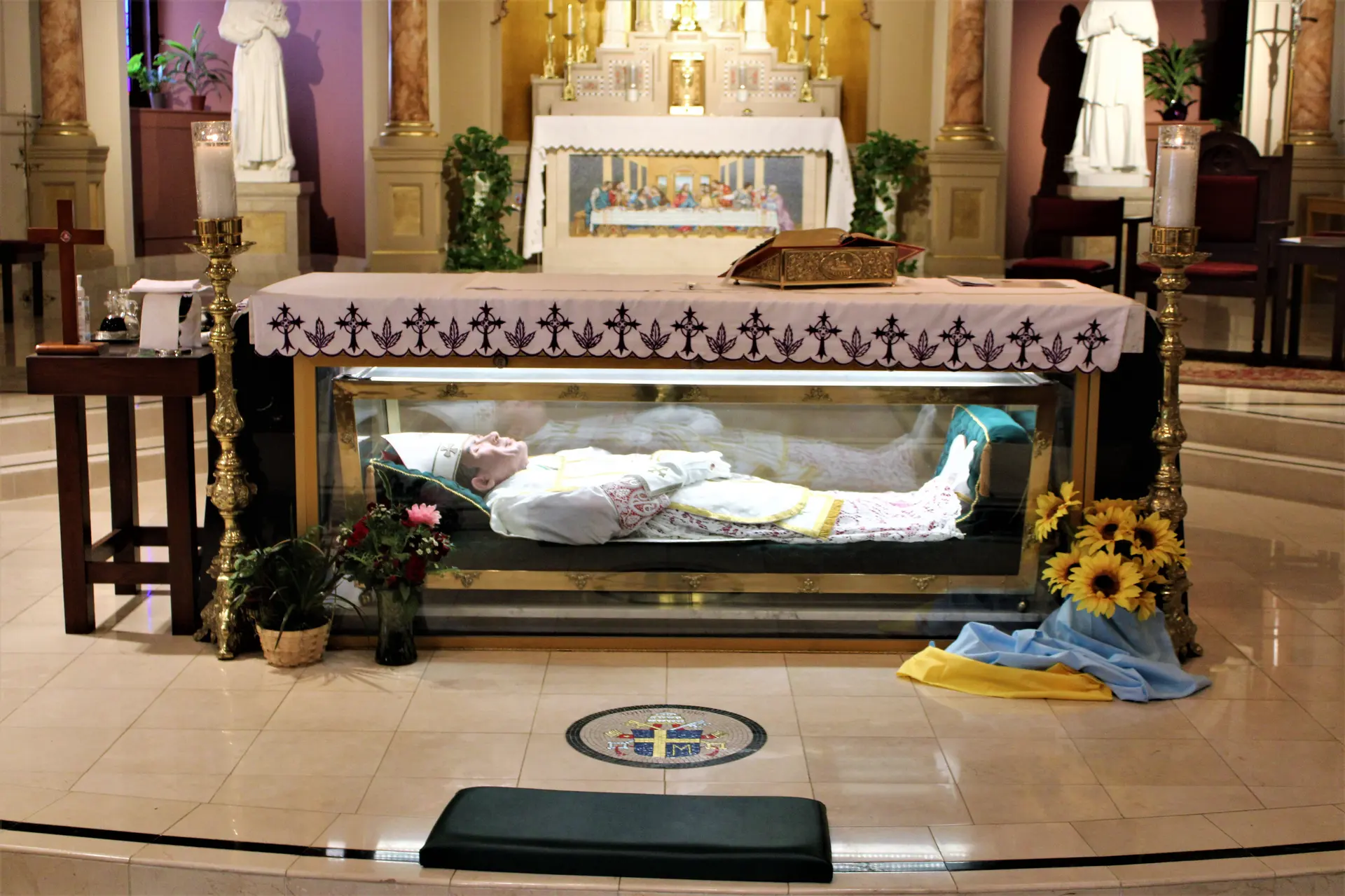
National Shrine of St. John Neumann
Philadelphia, Pennsylvania, United States
43.2 km away
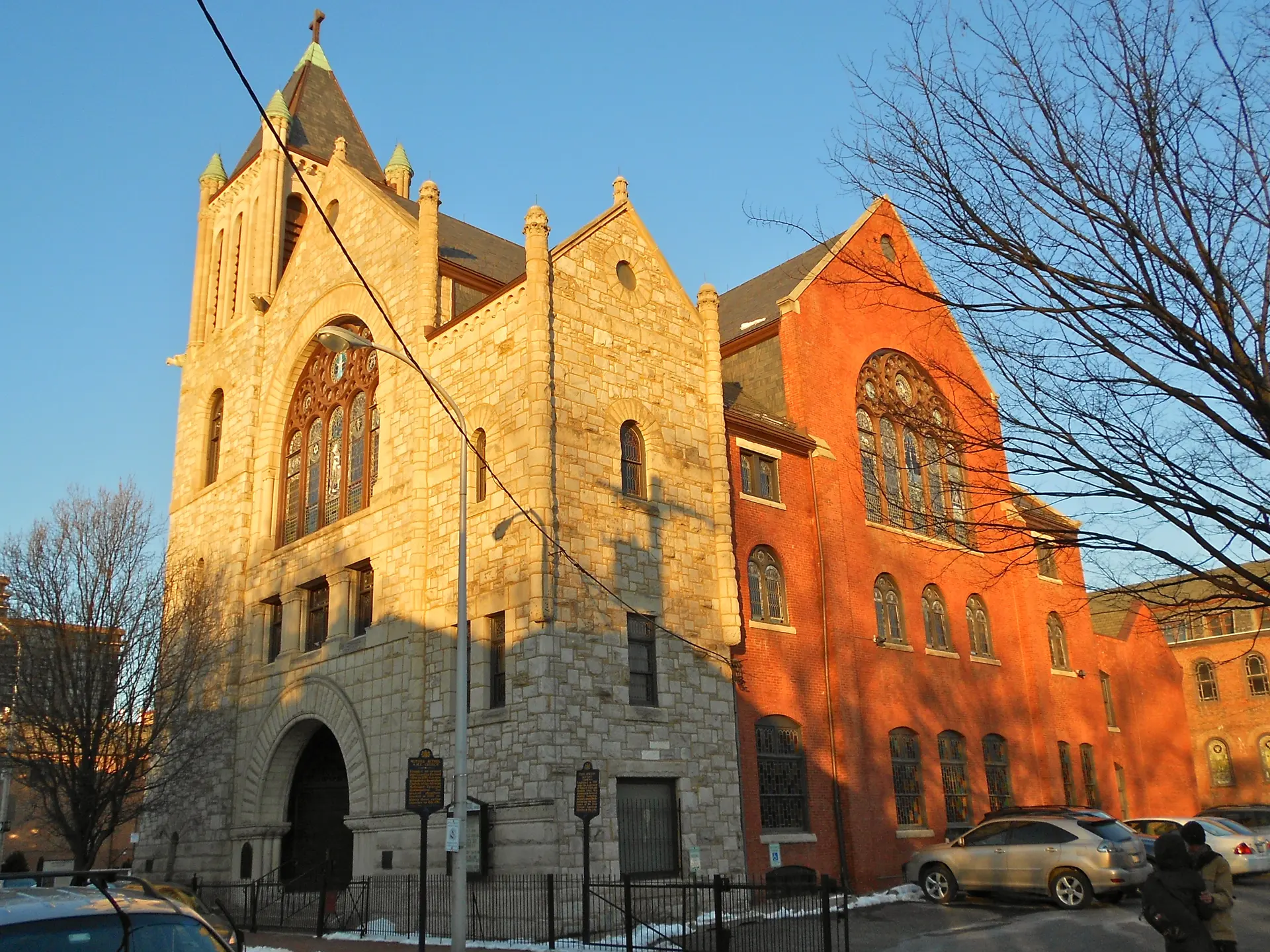
Mother Bethel African Methodist Episcopal Church
Philadelphia, Pennsylvania, United States
46.2 km away

National Shrine of Saint Rita of Cascia
Philadelphia, Pennsylvania, United States
47.1 km away

BAPS Swaminarayan Akshardham
Robbinsville, New Jersey, United States
48.0 km away
References
Sources consulted for this page. Source categories describe the publication, not a guarantee that every claim is verified. Traditional accounts and outside interpretations may differ.
- 01The National Shrine of Our Lady of Czestochowa — National Shrine of Our Lady of CzestochowaSource contextOfficial shrine website
- 02National Shrine of Our Lady of Czestochowa — WikipediaencyclopediaGeneral reference
Share a photo
Help visitors recognize National Shrine of Our Lady of Częstochowa, Pennsylvania. Every submission is reviewed before publication.