Sacred sites in China

Mt. Heng Shan Nan

The Southern Peak, where three teachings coexist beneath the fire god's summit

Hengyang, Hunan, China

Open in Maps

Plan this visit

Practical context before you go

Duration

Full day minimum. The Grand Temple alone warrants one to two hours. The hike to Zhurong Peak takes four to six hours round trip. The shuttle bus and cable car can shorten the mountain visit to three to four hours. Two days recommended for thorough exploration.

Access

Located in Nanyue District, Hengyang City, Hunan Province. The nearest major airport is Changsha Huanghua International Airport, approximately 150 km north. High-speed rail to Hengyang East Station, then bus or taxi to Nanyue. Admission fees for the scenic area and Grand Temple are separate. Shuttle buses from the base to Halfway Temple. Cable car to the upper mountain. Accommodation available in Nanyue town and at some mountain temples. Mobile phone signal available throughout.

Etiquette

Respectful behavior at both Taoist and Buddhist temples. Follow fire safety regulations when burning incense. During festivals, follow crowd management instructions.

At a glance

Coordinates
27.2775, 112.6456
Suggested duration
Full day minimum. The Grand Temple alone warrants one to two hours. The hike to Zhurong Peak takes four to six hours round trip. The shuttle bus and cable car can shorten the mountain visit to three to four hours. Two days recommended for thorough exploration.
Access
Located in Nanyue District, Hengyang City, Hunan Province. The nearest major airport is Changsha Huanghua International Airport, approximately 150 km north. High-speed rail to Hengyang East Station, then bus or taxi to Nanyue. Admission fees for the scenic area and Grand Temple are separate. Shuttle buses from the base to Halfway Temple. Cable car to the upper mountain. Accommodation available in Nanyue town and at some mountain temples. Mobile phone signal available throughout.

Pilgrim tips

  • Located in Nanyue District, Hengyang City, Hunan Province. The nearest major airport is Changsha Huanghua International Airport, approximately 150 km north. High-speed rail to Hengyang East Station, then bus or taxi to Nanyue. Admission fees for the scenic area and Grand Temple are separate. Shuttle buses from the base to Halfway Temple. Cable car to the upper mountain. Accommodation available in Nanyue town and at some mountain temples. Mobile phone signal available throughout.
  • No strict dress code, but modest clothing is appropriate for temple areas. Comfortable walking shoes essential for the mountain paths. Layers recommended, as the summit is significantly cooler than the base.
  • Generally permitted at temple exteriors and scenic areas. Some temple interiors may restrict photography. Be respectful when photographing worshippers and do not interfere with ceremonies.
  • During major festivals, particularly Chinese New Year, the Grand Temple and mountain paths become extremely crowded. Follow crowd management instructions from staff. The massive incense burning generates dense smoke that may affect visitors with respiratory sensitivities. Fire safety regulations should be carefully observed when burning incense and paper offerings.

Continue exploring

Overview

Heng Shan rises across 72 peaks in Hunan Province, the Southern Peak of the Five Great Mountains that have anchored Chinese cosmology for over three millennia. The mountain is distinguished by the harmonious coexistence of Taoism, Buddhism, and Confucianism at a single sacred site, with the Grand Temple of Nanyue at its base physically expressing this unity through imperial-palace architecture flanked by Taoist temples on one side and Buddhist temples on the other. Zhurong, the ancient fire god, is said to be buried at the 1,300-meter summit.

The character for Heng means balance. Of all the Five Great Mountains, the Southern Peak earns its name most literally. Three great traditions of Chinese thought, Taoism, Buddhism, and Confucianism, have found their equilibrium here in a way they have managed at almost no other place. The Grand Temple of Nanyue, the largest temple complex in southern China, embodies this balance in stone and timber: its central halls follow the layout of an imperial palace, its eastern wing houses Taoist temples, its western wing houses Buddhist ones. They have stood together for centuries.

In the Chinese five elements system, the Southern Peak corresponds to fire, summer, and the color red. These associations are not abstract but embodied in the worship of Zhurong, the fire god, one of the mythical Five Emperors of Chinese creation mythology, said to have been born on and buried at the summit. The peak that bears his name, at 1,300 meters, carries a stone temple where offerings to the fire deity continue today.

The mountain's 72 peaks, of which Zhurong is the highest, create a sacred landscape of unusual complexity. Over 200 temples and hermitages have been distributed across this landscape at various points in history, some grand complexes visible from the valley floor, others small structures tucked into mountain folds where a monk or priest could practice in relative solitude. The pilgrimage path from the Grand Temple to Zhurong Peak follows approximately 13 km of mountain trail through forest, past temples of alternating tradition, to the fire god's summit.

What makes Heng Shan distinctive among China's sacred mountains is not any single element but the way elements coexist. The massive incense offerings that characterize worship here, with pilgrims carrying bundles of incense sticks as tall as themselves, belong to a folk religious practice that flows between and through all three formal traditions. The fire that burns this incense connects to the mountain's fire symbolism. The smoke rises toward the summit where Zhurong sleeps. The balance holds.

Context and lineage

Heng Shan is the Southern Peak of the Five Great Mountains, one of the most ancient and important systems in Chinese cosmology. The mountain corresponds to fire, summer, and the south in the five elements framework and is the resting place of Zhurong, the fire god.

Zhurong, the fire god, is said to have been born on and buried at the summit of Heng Shan. The peak is named in his honor. He was one of the mythical Five Emperors who ruled in the dawn of Chinese civilization. In the ancient cosmological system, the Five Great Mountains were understood as pillars supporting heaven, with each mountain anchoring one of the five cardinal directions. Heng Shan as the Southern Peak holds the south, maintaining the cosmic balance. Emperor Shun, one of the legendary sage-kings, is said to have made sacrifices at Heng Shan during his tour of the realm, establishing the pattern of imperial worship that continued for over two millennia. The name Heng means balance or weighing, reflecting the mountain's cosmological role.

Heng Shan's religious lineage spans the full history of Chinese organized religion. Ancient mountain worship and imperial state sacrifices represent the oldest layer. Taoist practice was established from the Han Dynasty. Buddhism arrived during the Southern and Northern Dynasties. The Three Teachings integration that characterizes the mountain's mature religious identity developed during the Song Dynasty and persists to the present. The Grand Temple's architectural expression of this pluralism, with its imperial central axis flanked by Taoist and Buddhist wings, is among the most tangible embodiments of Chinese religious syncretism.

Zhurong

The fire god of Chinese mythology, one of the Five Emperors, said to be born on and buried at the summit. His presence connects the mountain to the most ancient layer of Chinese sacred geography, predating all three of the formal traditions that later established themselves on the slopes.

Emperor Qin Shi Huang

The first emperor of unified China, who performed state sacrifices at Heng Shan during the Qin Dynasty, establishing the mountain's role in the imperial ritual system that would continue for over two millennia.

The Shangqing Taoist masters

Practitioners of the Supreme Clarity school of Taoism who established a significant Taoist presence on the mountain from the Han Dynasty, making Heng Shan one of the important centers of Taoist practice in southern China.

Why this place is sacred

Heng Shan's thinness comes from the convergence of three spiritual traditions at a single landscape, a multiplicity of sacred presences that suggests the mountain's holiness exceeds any single tradition's claim on it.

The thinness at Heng Shan operates through plurality. Where most sacred sites derive their charge from the intensity of a single tradition's devotion, Heng Shan draws its power from the coexistence of several. Walking through the Grand Temple, the visitor passes from Confucian imperial architecture to Taoist altars to Buddhist halls without crossing any visible boundary. The traditions do not compete. They occupy the same ground with a ease that suggests the ground itself is larger than any of them.

This pluralism is not modern tolerance but ancient coexistence, rooted in the Chinese philosophical principle of harmony. The understanding that Taoism, Buddhism, and Confucianism are not competing truths but complementary paths to understanding the same reality found its physical expression at Heng Shan centuries before any modern interfaith movement articulated similar ideas.

The fire god Zhurong adds a layer of elemental power that predates all three formal traditions. Zhurong is older than Taoism, older than Confucius, older than Buddhism's arrival in China. He belongs to the mythological stratum of Chinese consciousness where the natural forces are persons and the person of fire is a god. His presence at the summit gives the mountain an elemental character that the philosophical traditions refine but do not replace.

The incense culture at Heng Shan amplifies the experience of thinness through sheer volume. During major festivals, particularly Chinese New Year, the Grand Temple fills with smoke from thousands of burning incense sticks carried by pilgrims in bundles that dwarf the people holding them. The smoke, the fire, the prayers ascending: the mountain's elemental identity becomes visible, olfactory, and respiratory all at once.

Heng Shan was designated as the Southern Peak of the Five Great Mountains during the Zhou Dynasty, making it part of a cosmological system that has been central to Chinese civilization for over three millennia. Imperial state sacrifices to the Lord of the Southern Peak were conducted to ensure cosmic harmony. The fire god Zhurong's association with the summit connects the mountain to Chinese creation mythology.

The mountain's religious landscape grew through successive layers: ancient mountain worship and state sacrifices during the Zhou and Qin dynasties, Taoist establishment from the Han Dynasty, Buddhist arrival during the Southern and Northern Dynasties, and the Three Teachings integration that matured during the Song Dynasty. The Grand Temple, first built during the Tang Dynasty and rebuilt in its current palatial form during the Qing Dynasty, embodies the cumulative result. The Cultural Revolution damaged many temples. Post-1980s restoration and the mountain's designation as a National AAAAA Scenic Area have supported recovery.

Traditions and practice

Active Taoist, Buddhist, and folk religious worship continues year-round at the Grand Temple and throughout the mountain. Massive incense offerings are characteristic of Heng Shan devotion. Chinese New Year at the Grand Temple is the year's most significant event.

Imperial state sacrifices to the Lord of the Southern Peak were the mountain's most formal practice, conducted by emperors or their representatives for over two millennia. Taoist ceremonies for cosmic harmony and agricultural fertility drew on the mountain's fire association. Buddhist chanting and meditation retreats at mountain monasteries provided a contemplative complement. The burning of large quantities of incense as offerings to the mountain deity has been a constant across all traditions.

Year-round worship at the Grand Temple makes it one of the busiest temple complexes in southern China. Incense burning remains the primary devotional act, with Heng Shan famous for its massive offerings. The pilgrimage to Zhurong Peak via the 13-km mountain path continues as both a religious and recreational practice. Chinese New Year at the Grand Temple is the single largest annual event, drawing hundreds of thousands. Prayers for health, prosperity, academic success, and family well-being are made at various temples. Both Taoist and Buddhist ceremonies continue at their respective temples throughout the mountain.

Visit the Grand Temple first, and take time to notice the architectural arrangement. The central imperial halls flanked by Taoist and Buddhist wings are not just a historical artifact but a physical philosophy: three traditions sharing one ground. Walk through all three sections and notice how the atmosphere shifts between them.

If you hike to Zhurong Peak, notice how the temples along the path alternate between traditions. This alternation is the mountain's rhythm, its way of expressing the principle that different paths lead up the same mountain. At Zhurong Peak, stand at the fire god's temple and consider what it means for a mountain to be dedicated to fire: to warmth, to light, to the transformative force that changes everything it touches.

If your visit coincides with Chinese New Year, prepare for an experience of collective devotion on a scale that has few parallels. The incense smoke, the crowds, the noise of firecrackers, the intensity of thousands of people praying simultaneously create an atmosphere that is overwhelming, exhausting, and for many, genuinely moving.

Taoism (Southern Peak Tradition)

Active

Heng Shan has been a major Taoist sacred mountain since the Han Dynasty. As the Southern Peak, it corresponds to fire, summer, and the south in Chinese cosmology. The Shangqing school of Taoism had a significant presence. Taoist priests maintain temples and conduct ceremonies on the mountain.

Worship at Taoist temples. Incense and prayers to Zhurong and to the Lord of the Southern Peak. Taoist internal alchemy and meditation at hermitages. Ceremonies marking Chinese solar terms related to fire and summer.

Chinese Mahayana Buddhism

Active

Buddhism established itself on Heng Shan during the Southern and Northern Dynasties and grew to become equally prominent with Taoism. The Nantai Temple is one of the oldest Buddhist temples in southern China. Approximately half of the mountain's active temples are Buddhist.

Daily chanting and meditation at Buddhist monasteries. Buddhist pilgrimage combined with the mountain ascent. Participation in Vesak and other festivals. Sutra study and vegetarian meals at monasteries.

Confucianism and Imperial State Religion

Historical

As one of the Five Great Mountains, Heng Shan was a site of imperial state sacrifices from at least the Qin Dynasty. The Grand Temple's imperial-palace architecture preserves this legacy. The Confucian tradition of scholarly pilgrimage and mountain cultivation contributed to the mountain's literary heritage.

Imperial feng and shan sacrifices ended with the fall of the Qing Dynasty in 1912. The Grand Temple's architecture and ritual spaces preserve the framework. Annual temple festivals retain elements of the imperial sacrificial tradition.

Experience and perspectives

The experience of Heng Shan moves from the grand imperial architecture of the Nanyue Temple at the base through alternating Taoist and Buddhist temples along a 13-km mountain path to the fire god's summit, where the Sea of Clouds and the view across 72 peaks reward the ascent.

The Grand Temple of Nanyue is the experience's foundation. Covering approximately 98,500 square meters, the complex is the largest temple in southern China, and its architecture follows the layout of an imperial palace rather than a standard religious temple. Nine halls march along a central axis, their rooflines ascending in a progression that mimics the mountain behind them. On one side, Taoist temples. On the other, Buddhist ones. The arrangement is not accidental but programmatic: the Three Teachings share the same ground.

Inside, the atmosphere of active worship is intense. Heng Shan is one of the busiest sacred mountains in China, and the Grand Temple reflects this. Incense smoke fills the courtyards. Pilgrims move between altars with the purposeful concentration of people addressing something they take seriously. The scale of the incense offerings is distinctive to Heng Shan: bundles of sticks so large they require both arms to carry, their tips lit in enormous braziers that turn the courtyards hazy.

The mountain path begins behind the temple complex and climbs 13 km through forest to Zhurong Peak. The trail passes through alternating Taoist and Buddhist temples, each with its own character and quiet. Between temples, the forest provides shade and bird sound. The gradient is steady but not extreme. Shuttle buses and a cable car offer alternatives for those who prefer not to walk the full distance.

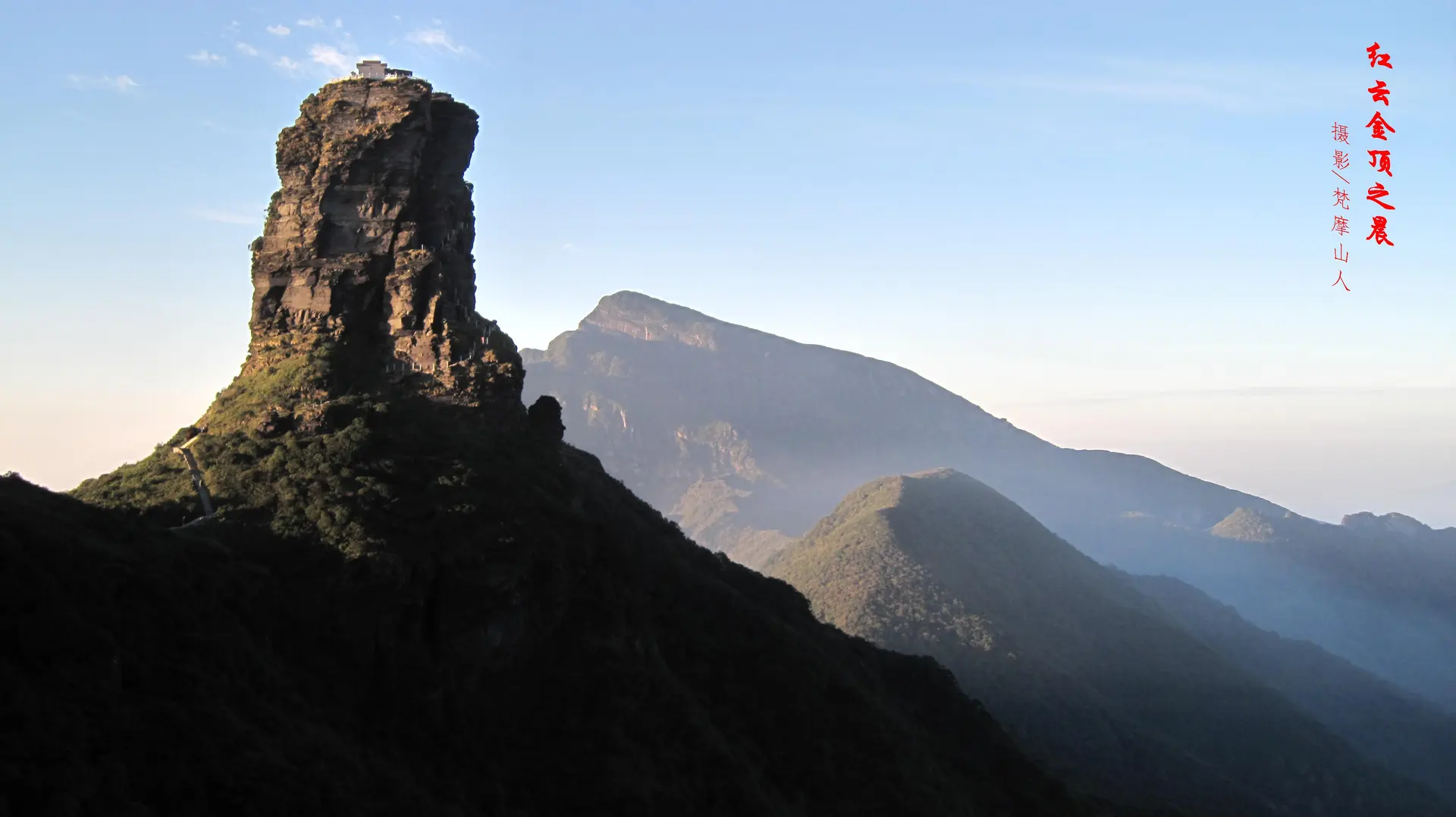
Zhurong Peak at 1,300 meters offers the summit view that the ascent earns. On clear days, the surrounding 72 peaks spread in every direction, their shapes varying from rounded domes to sharp ridges. On misty mornings, the Sea of Clouds fills the valleys between them, and the visitor stands above a white landscape punctuated by peak-islands. The stone temple dedicated to the fire god sits at the summit, its walls darkened by centuries of incense smoke.

Start at the Grand Temple of Nanyue for one to two hours of exploration. The mountain path begins nearby. The full hike to Zhurong Peak takes four to six hours round trip. Shuttle buses run to Halfway Temple, and a cable car connects to the upper mountain. Two days are recommended for a comprehensive visit at a relaxed pace. During Chinese New Year, expect massive crowds at the Grand Temple.

Heng Shan can be understood as a cosmic pillar, a fire temple, a demonstration of Chinese religious pluralism, or one piece of a five-mountain system that structures the sacred geography of an entire civilization.

Scholars emphasize Heng Shan's importance in Chinese cosmology as the Southern Peak, corresponding to fire, summer, and growth in the five elements system. Its continuous sacred use spanning over three millennia makes it one of the longest-running pilgrimage destinations in East Asia. The harmonious coexistence of Taoism, Buddhism, and Confucianism is cited as evidence of the Chinese cultural tendency toward religious syncretism rather than exclusivism. The Grand Temple's architecture is studied as a unique physical expression of the Three Teachings principle.

In Chinese religious understanding, Heng Shan is a cosmic pillar supporting the southern quarter of heaven. The fire god Zhurong's presence at the summit connects the mountain to the primordial creative forces of Chinese mythology. The mountain's qi corresponds to fire: warm, rising, expansive, making it particularly auspicious for prayers related to growth, vitality, and prosperity. The Three Teachings harmony reflects the Chinese philosophical principle that Taoism, Buddhism, and Confucianism are complementary paths to the same underlying reality.

In Chinese feng shui and geomantic tradition, the Five Great Mountains form the energy skeleton of the Chinese landmass, with Heng Shan anchoring the southern dragon vein. The mountain's fire association makes it a site of particular power for energetic transformation and purification. The frequent cloud formations and thermal updrafts are interpreted as visible manifestations of the mountain's fire qi rising toward heaven.

The exact origins of the Five Great Mountains system and when Heng Shan was first designated as the Southern Peak remain debated. The process by which Taoism and Buddhism came to coexist so peacefully at Heng Shan, in contrast to the sometimes contentious relationship between the traditions at other mountains, is not fully understood. The complete contents and condition of the mountain's 200-plus temples, many in remote locations, have not been comprehensively surveyed.

Visit planning

Located in Nanyue District, Hengyang City, Hunan Province. Approximately 150 km south of Changsha. Full day minimum for a comprehensive visit.

Located in Nanyue District, Hengyang City, Hunan Province. The nearest major airport is Changsha Huanghua International Airport, approximately 150 km north. High-speed rail to Hengyang East Station, then bus or taxi to Nanyue. Admission fees for the scenic area and Grand Temple are separate. Shuttle buses from the base to Halfway Temple. Cable car to the upper mountain. Accommodation available in Nanyue town and at some mountain temples. Mobile phone signal available throughout.

Nanyue town at the mountain's base offers hotels, guesthouses, and restaurants at various price levels. Some mountain temples provide basic accommodation. The town is well-equipped for visitors, with the Grand Temple within walking distance of most accommodation.

Respectful behavior at both Taoist and Buddhist temples. Follow fire safety regulations when burning incense. During festivals, follow crowd management instructions.

Heng Shan hosts both Taoist and Buddhist worship, and visitors may encounter both traditions during a single visit. Standard respectful behavior applies at all temple sites: remove hats in temple halls, speak quietly in monastic areas, do not climb on temple structures. When burning incense, use designated burners only and follow fire safety regulations. During festivals, the crowds are enormous and the atmosphere is intense; follow instructions from staff and police.

No strict dress code, but modest clothing is appropriate for temple areas. Comfortable walking shoes essential for the mountain paths. Layers recommended, as the summit is significantly cooler than the base.

Generally permitted at temple exteriors and scenic areas. Some temple interiors may restrict photography. Be respectful when photographing worshippers and do not interfere with ceremonies.

Incense is the primary offering and is available from numerous vendors. Heng Shan is famous for its large incense offerings. Place incense in designated burners. Some temples accept offerings of fruit, flowers, and paper goods. Follow fire safety regulations.

Do not climb on or touch temple structures. Remove hats in temple halls. Do not step on door thresholds. Speak quietly in monastic areas. Follow fire safety regulations. During festivals, follow crowd management instructions.

Nearby sacred places