Mt. Baboquivari, Arizona
Home of I'itoi, the creator god, and navel of the world in Tohono O'odham cosmology
Understand sacred places, explore living traditions, and learn how to engage respectfully with Pilgrim Map.
Access has not been verified. Check current local guidance before planning a visit.
Tucson, Arizona, United States
Read the sources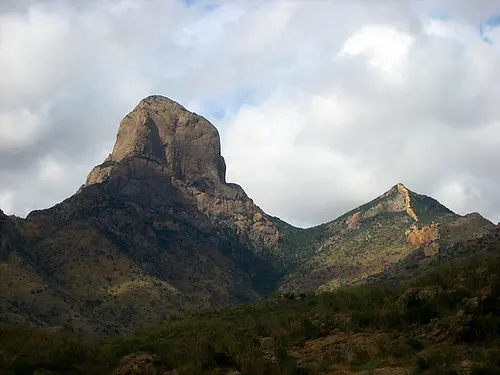
Image of Mt. Baboquivari, Arizona. Image source
Visit essentials
A quick read before you go
- Duration
- Full day allows meaningful time at the cave area without rushing
- Access
- The Baboquivari Mountains lie approximately 50 miles southwest of Tucson.
Overview
There is a mountain in the Sonoran Desert that the Tohono O'odham call Waw Kiwulik, meaning 'Narrow in the Middle.' To outsiders, it is Baboquivari Peak. To the O'odham, it is something far more significant: the center of their cosmos, the navel of the world, and the dwelling place of their creator, I'itoi.
The granite monolith rises to 7,730 feet, its distinctive hourglass shape visible across miles of desert. But its physical form is merely the outer expression of what the O'odham have always known: below this peak, within a labyrinth of passages, lives the one who brought their ancestors to this world from beneath the earth.
I'itoi emerged first, then led the Hohokam people through an ant hole after transforming them into ants, changing them back into the Tohono O'odham once they reached this world after the great flood.
Today, pilgrims still walk up this mountain to leave gifts at I'itoi's cave, asking for safe return. The Man in the Maze symbol appearing on O'odham basketry depicts their creator at the entrance to a labyrinth representing the maze of life itself. To stand atop Baboquivari, as one O'odham elder teaches, is to remember I'itoi and commit to doing good for the People. This is not merely a sacred mountain.
It is the place where the world opened and people emerged. It is home.
Why this place is sacred
The concept of a thin place finds perhaps its most literal expression at Baboquivari Peak. This is not a site where the divine once visited or where a saint experienced revelation. According to Tohono O'odham understanding, this is where the creator lives. I'itoi did not leave after bringing the people to this world; he retreated into the mountain, accessible through a labyrinth of passages, and remains there still.
This ongoing divine presence shapes everything about how the mountain is approached. When O'odham pilgrims bring gifts to the cave, they are not commemorating a past event but maintaining an active relationship. The tradition holds that visitors who approach the cave must bring something for I'itoi to ensure safe return, acknowledging that one is entering the presence of the creator.
The mountain's status as the navel of the world adds another dimension. In O'odham cosmology, this is not one sacred site among many but the center point, the place where Earth opened after the great flood. Everything radiates outward from here. The thinness at Baboquivari is not a quality of atmosphere or feeling but a statement about cosmic geography: this is where the boundaries between worlds are thinnest because this is where the world itself began.
The mountain has served as the dwelling place of I'itoi and the center of Tohono O'odham cosmology since time immemorial. It was the emergence point for the people after the great flood and has been the destination of pilgrimage and vision quests throughout O'odham history.
The core significance of Baboquivari has remained consistent. What has changed is access: the Baboquivari Peak Wilderness was designated by Congress in 1990 as 2,065 acres, and since 1998 the Tohono O'odham Nation has sought to have the peak returned to their custody. The mountain is currently co-stewarded by the Bureau of Land Management and the Tohono O'odham Nation. Ongoing land rights disputes reflect the tension between federal land management and Indigenous sacred geography.
Experience and orientation
The approach to Baboquivari reveals the mountain gradually, its distinctive hourglass silhouette emerging from the Sonoran Desert approximately 50 miles southwest of Tucson. The peak rises to 7,730 feet, noticeably higher than the surrounding Baboquivari Mountains, its shape explaining the O'odham name meaning 'narrow in the middle.'
The wilderness area is Arizona's smallest at just over 2,000 acres, but what it lacks in size it compensates in presence. The granite monolith commands attention from any angle, its form immediately recognizable to anyone who has seen photographs of the peak. In certain light, the rock face seems to glow.
Access to the lower areas follows trails through typical Sonoran Desert terrain: saguaro cacti, palo verde trees, and the particular quality of desert silence. The cave area where I'itoi is said to dwell requires more committed approach, and the summit itself demands technical Class 4 climbing skills. This physical difficulty has always been part of the mountain's character.
In traditional times, O'odham men climbed to the summit in search of visions, the challenge of the ascent inseparable from its spiritual significance.
Visitors commonly report a sense of profound presence here, an awareness of being in territory that holds deep meaning for others. Those who understand that this mountain is considered the dwelling place of a living deity approach with a different quality of attention than those who see only geology.
The gifts left at the cave entrance, the presence of other pilgrims, the sheer weight of what this place represents to the Tohono O'odham, all contribute to an atmosphere that transcends ordinary hiking experience.
Baboquivari lies approximately 50 miles southwest of Tucson in the Baboquivari Mountains. The wilderness area borders the Tohono O'odham Indian Reservation. High-clearance vehicles are recommended for access roads to trailheads.
Context and lineage
According to O'odham oral history, I'itoi brought the Hohokam people to this world from the underworld through Baboquivari. One account describes how he entered Earth from a world on the other side, leading his people through an ant hole after transforming them into ants. He then changed them back into the Tohono O'odham people. The mountain marks the place where the earth opened after the great flood, making it the navel of the world.
I'itoi did not simply create and depart. He dwells still within the mountain, accessible through a labyrinth of passages. His spirit continues to call to the O'odham people, and he gave them the Himdag, a series of commandments guiding people to remain in balance with the world.
The Man in the Maze symbol appearing throughout O'odham basketry and petroglyphs depicts I'itoi at the entrance to a labyrinth, the maze of life where a person travels and encounters the different moments that impact them.
The Pima, closely related to the Tohono O'odham, also call I'itoi 'Se:he' or 'Elder Brother,' recognizing his role in bringing their ancestors, the Hohokam, to this world. Both the Desert People (Tohono O'odham) and the River People (Akimel O'odham) trace their origins to his actions at this mountain.
Baboquivari's sacred status predates any recorded history, reaching back to the time when the world itself was young. The Hohokam people, ancestors of both the Tohono O'odham and the Akimel O'odham (Pima), emerged through this mountain. When the Hohokam culture dispersed around CE 1450, the sacred relationship with Baboquivari continued unbroken through their descendants. The Tohono O'odham have never ceased their pilgrimages to I'itoi's dwelling place.
I'itoi
Creator god who resides in the cave below Baboquivari Peak. He brought the people to this world from the underworld and gave them the Himdag, the way of life. The mountain may bear his name, or his name may derive from the mountain, so intertwined are they. His spirit remains within the mountain, calling to those with gifts to bring.
Traditions and practice
The primary traditional practice is pilgrimage to I'itoi's cave with offerings. Many Tohono O'odham walk up the mountain once a year to leave gifts for the creator, maintaining the relationship between the people and the one who brought them to this world. Visitors to the cave are asked to bring something for I'itoi to ensure safe return.
In earlier times, O'odham men climbed to the summit in search of visions. The extreme difficulty of the ascent, requiring technical climbing skills even today, was part of what made it appropriate for vision seeking. The effort and danger involved in reaching the summit created conditions for transformation.
Storytelling about I'itoi and Baboquivari has its own protocol: traditionally, these stories are told only during cold weather when snakes are asleep. This seasonal restriction reflects the integration of spiritual practice with the desert's rhythms.
The Man in the Maze symbol serves as a continuous practice of remembrance. Appearing on baskets, pottery, and petroglyphs, it depicts I'itoi at the entrance to the labyrinth of life, teaching that existence is a path of obstacles to be overcome along the himdag, the way of life.
Annual pilgrimages to I'itoi's cave continue among the Tohono O'odham. The offerings left at the cave entrance are contemporary expressions of an ancient practice. Tribal members maintain their relationship with the mountain even as land management has become complicated by federal wilderness designation.
The Man in the Maze remains central to O'odham art and identity, appearing on everything from traditional basketry to the official seal of the Tohono O'odham Nation. Contemporary artists continue creating work featuring this symbol, keeping the connection to I'itoi and Baboquivari alive in visual culture.
Non-O'odham visitors should approach Baboquivari with awareness that they are entering the most sacred place of a living tradition. If visiting the cave area, the tradition asks that you bring a gift for I'itoi. This is not optional politeness but protocol for entering the presence of the creator.
Sit with the significance of where you are. This mountain is not merely beautiful or geologically interesting; it is understood to be the navel of the world, the dwelling place of a creator deity, and the emergence point of a people. Let that understanding shape how you move through this landscape.
Consider what it means to visit someone's home uninvited. The O'odham relationship with Baboquivari is intimate and ongoing. Your presence is tolerated, perhaps, but this land holds significance that you are visiting, not sharing.
Tohono O'odham
ActiveBaboquivari is the most sacred place of the Tohono O'odham people, the dwelling place of their creator I'itoi, and the navel of the world. The mountain marks the eastern boundary of their traditional homeland and represents the emergence point where their ancestors entered this world after the great flood.
Annual pilgrimages to I'itoi's cave with offerings continue. Visitors bring gifts for the creator to ensure safe return. The Man in the Maze symbol central to O'odham visual culture depicts I'itoi at the entrance to the labyrinth of life. Traditional storytelling about I'itoi occurs during cold weather when snakes sleep.
Perspectives and open questions
Baboquivari presents a case where traditional Indigenous understanding is primary and largely uncontested. Scholarly perspectives document rather than interpret, and no significant alternative frameworks have developed around the site.
Scholarly perspective
Anthropological literature consistently documents Baboquivari's significance to the Tohono O'odham as the dwelling place of I'itoi and the center of their cosmology. The site represents a living tradition, not an archaeological puzzle. Scholarly work tends to focus on recording O'odham oral traditions and advocating for the protection of Indigenous sacred sites.
The ongoing land rights dispute between federal administration and Tohono O'odham claims has generated legal and policy scholarship examining how American land management intersects with Indigenous sacred geography. Since 1998, the Tohono O'odham Nation has sought to have the peak returned to their custody.
Living and traditional perspectives
For the Tohono O'odham, Baboquivari is not a matter of interpretation but of reality. I'itoi lives within this mountain. He brought the people here from the underworld. The Himdag he gave them guides their lives. The pilgrimages continue because the relationship continues.
The Man in the Maze appearing throughout O'odham visual culture is not decorative but instructive, depicting the creator at the entrance to the labyrinth of life. Every basket bearing this symbol is a statement about where the people came from and who brought them.
O'odham elder teachings emphasize what it means to stand atop the mountain: to remember I'itoi and commit to doing good for the People. This is not passive reverence but active responsibility.
Open questions
Little remains genuinely unknown about Baboquivari's significance; the O'odham tradition is clear and has been shared. What remains contested is land management: who should have authority over this mountain, how access should be regulated, and how federal wilderness designation relates to Indigenous sacred geography.
Plan your visit
Access and arrival
The Baboquivari Mountains lie approximately 50 miles southwest of Tucson. High-clearance vehicles are recommended for access roads to wilderness trailheads. The wilderness area is the smallest in Arizona at just over 2,000 acres.
Lodging is available in Tucson. Camping is possible in surrounding national forest lands outside the wilderness area. The wilderness itself has no facilities.
Respectful visit
Appropriate outdoor clothing for Sonoran Desert mountain terrain. Temperatures vary significantly with elevation and season. Sun protection is essential. If attempting technical climbing, proper climbing attire and equipment are required.
Be sensitive to the sacred nature of the site, particularly near the cave. Do not photograph pilgrims or offerings without permission. The mountain itself presents stunning photography opportunities, but consider what your documentation serves.
Visitors to the cave are asked to bring a gift for I'itoi. This is traditional protocol for entering the creator's dwelling place. The offering ensures safe return.
Do not remove anything from the mountain, including plants or rocks. Tradition holds this may cause death. Respect this as profoundly sacred ground throughout your visit.
Do not remove anything from the mountain. Tradition holds that taking a plant or rock from Baboquivari may cause death. This is not metaphor or exaggeration in O'odham understanding.
The summit requires technical Class 4 climbing skills. Do not attempt it without proper experience and equipment. The mountain's difficulty has always been part of its sacred character. Those who died attempting to reach the summit in traditional times were understood to have encountered the mountain's power directly.
Be aware that the cave area is an active pilgrimage site. You may encounter Tohono O'odham tribal members engaged in practices that have nothing to do with your visit. Do not interrupt, photograph, or intrude upon their observances.
Current practical details
Address
Baboquivari Mountains, Arizona 85736, USA
Hours, fees, and access can change — verify on the official source before you travel. Practical details last checked Jun 2026.
Location
Map loads as you approach this section.
Pilgrim reflections
A portrait of encounter, not a score
Pilgrims describe what they felt, how present they could become, and whether the place would shape a journey. There are no stars and no ranking of traditions.
No reviewed reflections yet
The first pilgrims can help describe the character of being here.
Share a reflection
Available after an account-backed “Been there.” Every reflection is reviewed before publication.
Nearby sacred places
Explore other sacred places in the region. Proximity does not establish access or travel time; check each place’s guidance.

Mission San Xavier del Bac
Tucson, Arizona, United States
65.7 km away
Organ Pipe Cactus National Monument, Arizona
Ajo, Arizona, United States
115.5 km away
Casa Grande Ruins National Monument
Coolidge, Arizona, United States
133.8 km away

Superstition Mountains, Arizona
Apache Junction, Arizona, United States
184.4 km away
References
Sources consulted for this page. Source categories describe the publication, not a guarantee that every claim is verified. Traditional accounts and outside interpretations may differ.
- 01Baboquivari Peak Wilderness — WikipediaencyclopediaGeneral reference
- 02Baboquivari Peak - sacred peak of the Tohono O'odham Nation — Brushes and BootsspiritualCultural documentation
- 03I'itoi — WikipediaencyclopediaCosmology reference
- 04Most Sacred Place of the Tohono O'odham — krischristensenspiritualFirsthand account
Share a photo
Help visitors recognize Mt. Baboquivari, Arizona. Every submission is reviewed before publication.