Lake Nam Tso
A lake goddess, a mountain protector and the layered memory of northern Tibet
Understand sacred places, explore living traditions, and learn how to engage respectfully with Pilgrim Map.
Access has not been verified. Check current local guidance before planning a visit.
Baingoin County, Tibet Autonomous Region, China
Read the sources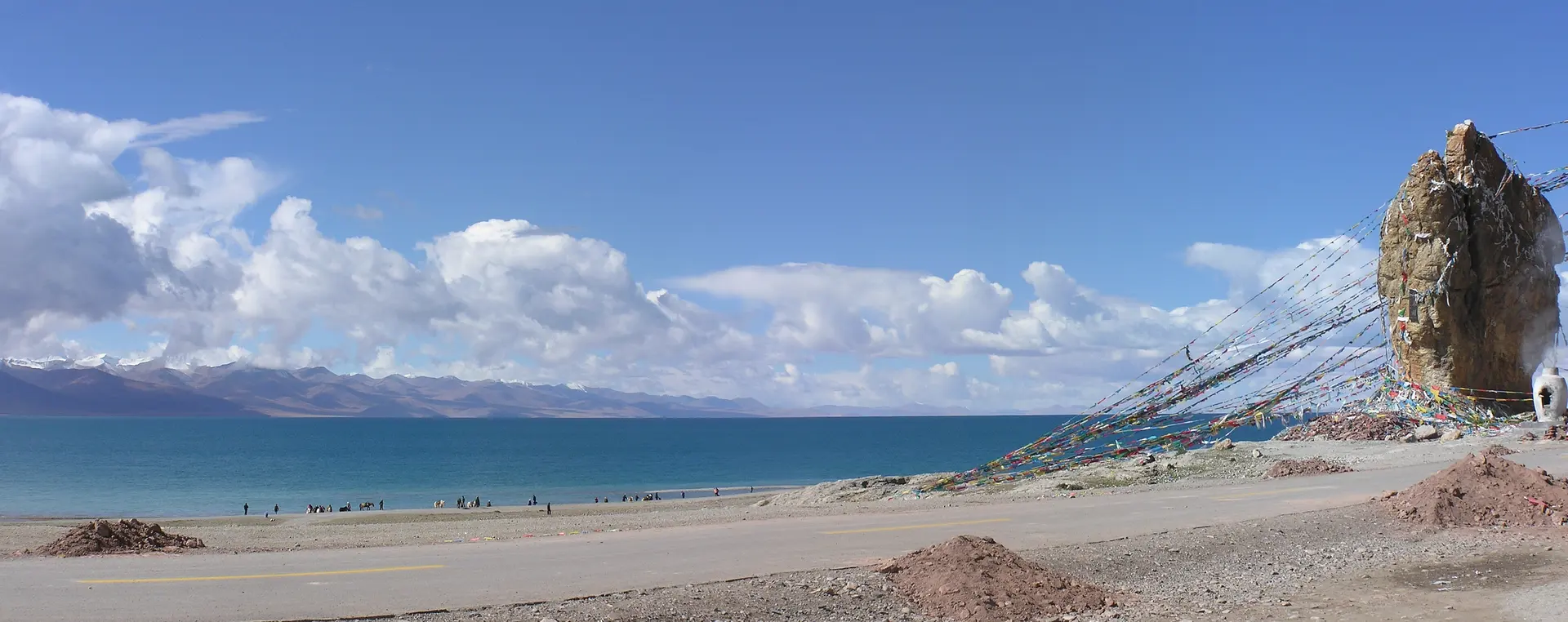
View on the lake Namtso (Nam-tso/Nam co) and the holy rock. Image source · CC BY 2.5
Visit essentials
A quick read before you go
- Best time
- No current lake-wide pilgrimage calendar or reliable seasonal opening window was established.
- Access
- Confirm the specific shore, permitted itinerary and current access arrangements before travel.
Overview
Namtso is a Tibetan sacred lake whose religious landscape extends beyond a single viewpoint. Lake, mountain, islands and caves carry different accounts of divine relationships and religious change. Its stories belong to particular communities and texts; there is no single tale that explains every shore.
Why this place is sacred
In the regional oral account recorded by John Vincent Bellezza, Nam Tsho is a goddess related to the mountain deity Nyenchen Thanglha. The pairing gives the waters a place within a landscape of named beings and relationships. Buddhist pilgrimage is documented here, while Bon texts and inscriptions preserve other layers of the lake’s religious history.
Experience and orientation
Consider the lake as a setting with many named places rather than assuming that a viewpoint visit covers its sacred geography. The cited archaeological inventory offers a way to learn about those places without treating an old field itinerary as present-day access advice.
Context and lineage
In a southeastern Changthang folktale recorded by John Vincent Bellezza, Targo takes Nam Tsho from her husband, Nyenchen Thanglha. Dragu Ngongen helps Thanglha recover her by stealing Targo’s horses as a diversion. Offered a reward, Dragu asks for Nam Tsho herself, and Thanglha honors his promise.
The goddess appears as a shepherdess and promises Dragu a child. At their appointed meeting, he sees a wild yak with a newborn calf and shoots the calf as game. The mother becomes Nam Tsho and tells him he has killed his own child. Grief gives way to his boastful sense of victory. This particular telling connects the lake’s personhood with kinship, rivalry and failed recognition; it is not a universal Tibetan creation story.
Bellezza’s inventory of Semodo describes both Bon and Buddhist inscriptions. It also records a Buddhist account of Guru Rinpoche subduing a mountain deity there. These are traditions attached to Semodo; they do not establish that he founded a particular modern walking circuit.
Traditions and practice
Pilgrimage and circumambulation form part of Namtso’s religious life. A walk around a peninsula and a circuit of the entire lake are different undertakings. This guide gives no full-lake distance or schedule: the previously stated figures were not supported by the reviewed evidence.
Tibetan Buddhism
ActivePilgrimage and accounts attached to the lake and Semodo.
Bon
ActiveDistinct textual, inscriptional and regional traditions; not a single unchanged predecessor to Buddhism.
Perspectives and open questions
Religious accounts and material evidence answer different questions.
Plan your visit
When to visit
No current lake-wide pilgrimage calendar or reliable seasonal opening window was established. Confirm the conditions and access status for the exact place and date with the responsible local operator.
Access and arrival
Confirm the specific shore, permitted itinerary and current access arrangements before travel. This review did not verify current transport, lake-circuit permissions, mobile coverage or emergency services. Do not plan an independent circuit from the map marker or this page.
Respectful visit
Ask before photographing people or religious activity; observe local restrictions.
Do not improvise offerings or leave objects in the landscape.
Leave religious objects and archaeological remains undisturbed.
Location
Map loads as you approach this section.
Pilgrim reflections
A portrait of encounter, not a score
Pilgrims describe what they felt, how present they could become, and whether the place would shape a journey. There are no stars and no ranking of traditions.
No reviewed reflections yet
The first pilgrims can help describe the character of being here.
Share a reflection
Available after an account-backed “Been there.” Every reflection is reviewed before publication.
Nearby sacred places
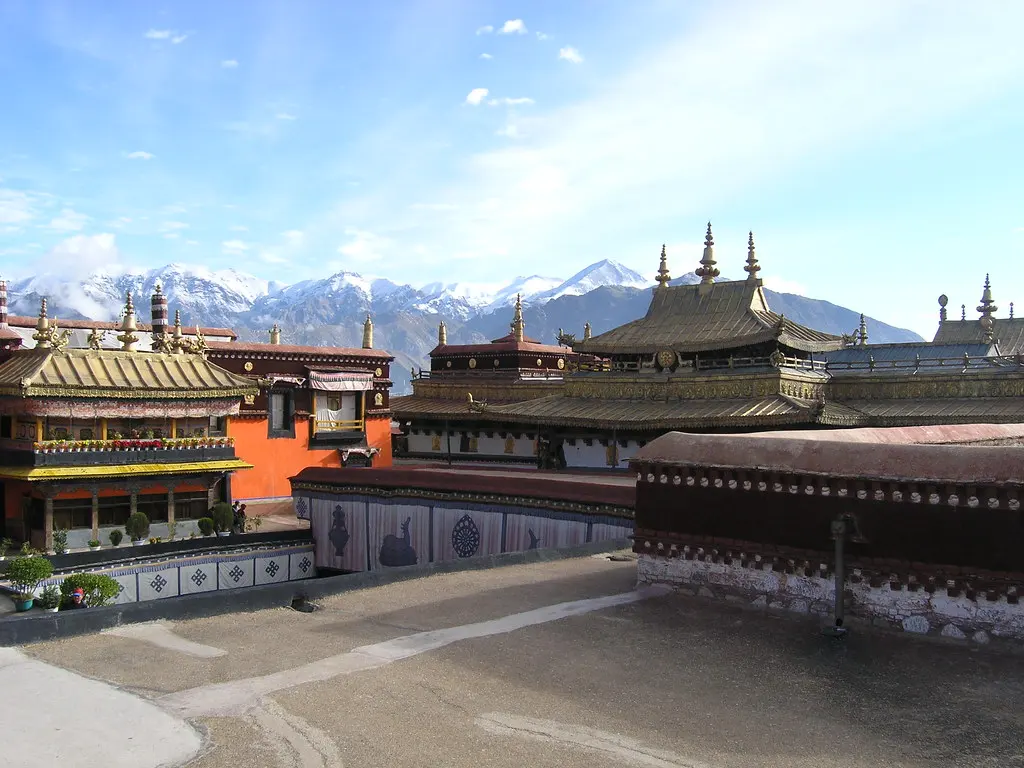
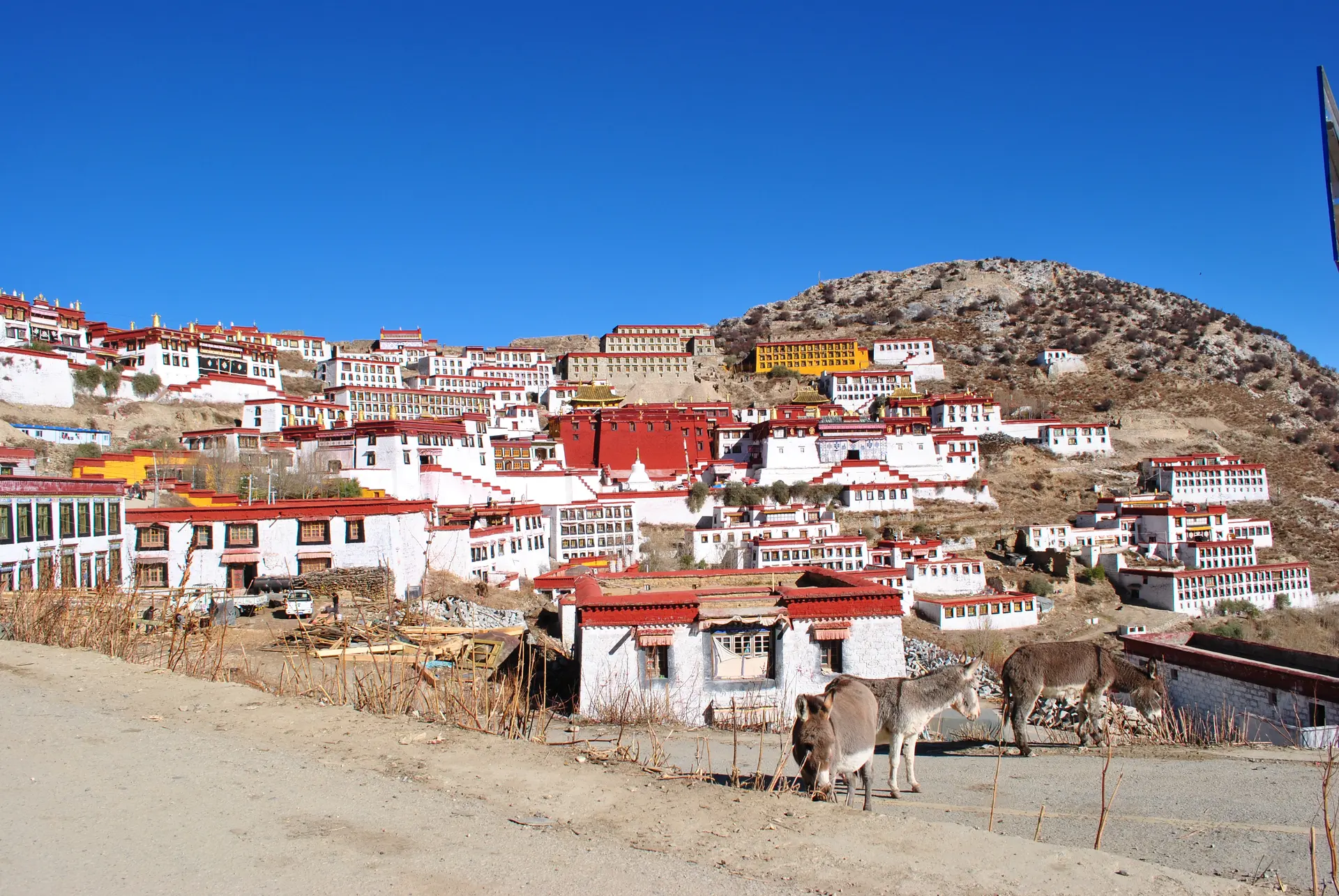
Explore other sacred places in the region. Proximity does not establish access or travel time; check each place’s guidance.


References
Sources consulted for this page. Source categories describe the publication, not a guarantee that every claim is verified. Traditional accounts and outside interpretations may differ.
- 01February 2014: The haunts of Dragu Ngongen — John Vincent BellezzaacademicOral tradition section: named regional account of Nam Tsho, Thanglha, Targo and Dragu Ngongen; interpretation is the researcher’s, not a universal Tibetan account.
- 02Semodo: Antiquities of Zhang Zhung — John Vincent Bellezza / Tibetan and Himalayan LibraryacademicField inventory distinguishes archaeological remains from Buddhist and Bon textual traditions; Guru Rinpoche account belongs to Semodo, not evidence for founding a Tashi Dor route.
- 03Namtso Lake — Chinese Academy of SciencesofficialIndexed official profile confirms lake identity and Buddhist pilgrimage; direct web-tool retrieval failed. Used only for this limited corroboration, no current itinerary or measurements.
- 04进藏常识:民风民俗与禁忌 — Shannan Culture and Tourism BureauofficialSeptember 2026 regional guidance: permission for photographs, preserve mani stones and ritual objects; explicitly distinguishes Bon circulation direction. Not a site-specific access permit.
Share a photo
Help visitors recognize Lake Nam Tso. Every submission is reviewed before publication.