Kumano Hongū Taisha
Where mountain paths converge and pilgrims arrive transformed at Japan's spiritual heart
Understand sacred places, explore living traditions, and learn how to engage respectfully with Pilgrim Map.
Access has not been verified. Check current local guidance before planning a visit.
Tanabe, Wakayama Prefecture, Japan
Read the sources
Station 5 of 8
Kumano Kodo — Nakahechi and Kumano SanzanVisit essentials
A quick read before you go
- Duration
- A focused visit to the main shrine and Oyunohara takes two to three hours.
- Access
- Kumano Hongu Taisha is located in Hongu-cho, Tanabe City, Wakayama Prefecture.
Overview
The paths through these mountains have witnessed pilgrims for over a millennium. Emperors abdicated thrones to walk here. Yamabushi ascetics trained in the peaks above. Common people, for whom the journey once represented months of hardship, arrived seeking what they called yomigaeri—rebirth, the death of the old self and emergence of the new.
Kumano Hongu Taisha stands at the convergence of these ancient routes, the spiritual heart of a network of trails now recognized alongside Spain's Camino de Santiago as one of only two UNESCO-listed pilgrimage paths in the world. The shrine enshrines Ketsumimiko-no-Okami, whom tradition identifies with Susanoo, the storm god who descended here in the form of three moons over two thousand years ago.
What draws pilgrims today is what drew them centuries ago: the sense of arrival after passage through sacred landscape, the accumulated weight of prayer absorbed into stone steps and cedar groves, and something more difficult to name—a thinness in the air that contemporary visitors describe in remarkably consistent terms, regardless of what beliefs they bring or leave behind.
This is not a museum of religion but a living shrine. Priests perform rituals each morning. Pilgrims receive seals documenting their completion of routes their ancestors walked. The Yatagarasu, the three-legged crow that guided the first emperor through these impossible mountains, still watches from banners and amulets, still said to guide those who have lost their way.
Why this place is sacred
The Kumano region has been understood as sacred since before recorded history. Long before Buddhism arrived, before the shrine took its current form, these mountains were revered as a realm where divine forces were unusually present. The peaks disappear into clouds. Rivers carve through gorges. Ancient cedar and cypress grow to dimensions that suggest lifespans beyond human comprehension.
It is land that does not merely contain the sacred but, in traditional understanding, is sacred—not metaphorically but literally, not as symbol but as presence.
The founding legend holds that around 33 BCE, three moons descended upon Oyunohara, the sandbank at the confluence of the Kumano and Otonashi rivers. They settled in the branches of a giant oak tree, and a voice proclaimed: 'I am Shojo Daigongen. Build a shrine and enshrine us here.' Whether or not this account reflects historical events, it established Hongu as a place of descent—a point where the divine came down to meet the human.
For over a millennium, emperors undertook the arduous journey to Kumano as an act of devotion. Emperor Shirakawa came nine times. Emperor Go-Shirakawa came thirty-four times. These were not casual visits but pilgrimages lasting weeks, through terrain so difficult that the procession itself constituted spiritual practice. The routes they walked still exist, worn smooth by countless feet, threading through forests where the canopy closes overhead like cathedral vaulting.
The 1889 flood that destroyed most of the original shrine complex at Oyunohara did not diminish the site's power. What remains there—the world's largest torii gate, 33.9 meters tall, marking the original sacred ground—has become its own form of pilgrimage destination. The shrine itself, rebuilt on higher ground, continues to function as it has for centuries.
The accumulated weight of prayer persists in both locations, and visitors frequently report experiencing the original site at Oyunohara as the more potent of the two.
Kumano Hongu Taisha served, and continues to serve, as the principal destination of the Kumano pilgrimage. Within the cosmology of the pilgrimage, the three grand shrines represent dimensions of time: Hayatama Taisha embodies the past, Nachi Taisha the future, and Hongu Taisha the present—the living moment, the here and now. To complete the pilgrimage to Hongu was to arrive fully into present awareness, to experience the renewal the tradition calls yomigaeri.
The shrine also functions as the sohonsha, the head shrine, of several thousand Kumano shrines throughout Japan. It stands as the source from which Kumano faith spread across the country, establishing the Kumano deities and the practice of Kumano pilgrimage as central to Japanese spirituality for centuries.
For most of its history, Kumano Hongu Taisha exemplified the fusion of Buddhism and Shinto known as shinbutsu shugo. The enshrined deities were understood as manifestations of Buddhist figures—Ketsumimiko as Amida Buddha, for instance. Buddhist monks served alongside Shinto priests. Pilgrims practiced both traditions without contradiction.
The Meiji Restoration of 1868 forcibly separated Buddhism and Shinto throughout Japan. Buddhist elements were removed from Kumano's shrines; the syncretism that had defined the tradition for centuries was officially dissolved. Today, Kumano Hongu Taisha operates as a purely Shinto institution. Yet the centuries of Buddhist influence remain in the landscape, in the pilgrimage routes that pass Buddhist temples, in the Yamabushi ascetics who still train in these mountains drawing on both traditions.
In recent decades, the Kumano Kodo has gained international recognition. The 2004 UNESCO World Heritage inscription brought new visitors from around the world. The Dual Pilgrim program, allowing walkers to document both the Kumano Kodo and the Camino de Santiago, created an unexpected dialogue between pilgrimage traditions. Kumano Hongu Taisha now welcomes seekers from traditions the shrine's founders never imagined—yet the effect appears consistent. Something about this place opens people, regardless of what they bring to it.
Experience and orientation
There is a moment, ascending the 158 stone steps through towering cedars toward the main shrine, when the journey becomes the destination. For those who have walked the Kumano Kodo—days of passage through mountain forests, crossing streams, sleeping in traditional inns—the steps are both culmination and threshold. But even visitors arriving by bus report something shifting as they climb: a quieting, a presence, a quality the Japanese call kiyome, purification.
The shrine itself is subdued by the standards of Japanese sacred architecture. No vermilion paint, no gilt ornamentation. The buildings are weathered cypress, the palette the grey and brown of the mountains surrounding them. This restraint seems deliberate, as though the architecture exists to hold space rather than draw attention. Visitors often comment on how the site feels rather than how it looks—a stillness that is not emptiness but fullness, a listening quality in the air.
Unexpected emotion is common. Pilgrims who have walked for days sometimes weep upon arrival—not from fatigue but from something harder to name. Recognition, perhaps. The sense of having arrived somewhere that was always waiting. Others describe an unusual clarity, thoughts that had been circling finally settling, decisions that had felt impossible now obvious. These reports come from secular hikers and religious devotees alike.
The original site at Oyunohara, a ten-minute walk from the main shrine, produces its own distinctive experience. Standing before the massive torii gate—the largest in the world—visitors enter a space where the shrine once stood before the 1889 flood. Two stone monuments now enshrine the deities that remained. The ground is open, surrounded by forest, holding the quality of a space that has returned to silence after great activity. Many find it more affecting than the rebuilt shrine.
The absence speaks.
For those who stay overnight in nearby Hongu or Yunomine Onsen and return in the early morning, before tour buses arrive, the site reveals different dimensions. The mist that sometimes hangs in the river valleys. The first light catching the cedar bark. The sound of the morning ceremony drifting from the main hall. These moments are difficult to describe to those who have not experienced them—they operate below the level of spectacle, in registers that require stillness to perceive.
Kumano Hongu Taisha rewards those who approach it as pilgrims rather than tourists. This does not require walking the full Kumano Kodo, though doing so transforms the experience. It requires only the intention of arriving rather than visiting—coming with something genuine at stake, some question or burden or hope that the journey might address.
Consider what you bring here. The Kumano tradition speaks of yomigaeri, rebirth. What in your life is ready to be released? What is ready to emerge? You need not articulate this in religious terms or believe in the shrine's deities. You need only be honest about what you are seeking.
The shrine and its surroundings were designed for walking. The paths, the steps, the distance between main shrine and Oyunohara—all require movement. Let the movement be slow. Let the steps be practice. The feet of centuries of pilgrims have worn these stones smooth; your feet now join theirs.
After completing the formal visit, sit somewhere quiet—the benches near the shrine office, the approach to Oyunohara, the edge of the river if weather permits. The experience often continues to unfold in stillness after the walking ends. Give it time.
Context and lineage
The founding narrative tells of three moons descending upon Oyunohara, settling in a great oak tree at the confluence of rivers. A voice proclaimed itself as Shojo Daigongen and commanded that a shrine be built. This divine descent occurred, according to tradition, around 33 BCE, during the reign of Emperor Sujin.
Whether this account reflects historical events cannot be verified—the earliest documentary references appear in the 9th century, a thousand years later. What the legend establishes is the site's meaning: a place where the sacred descended to earth, where the boundary between divine and human realms thinned enough for contact. This understanding has shaped every development since.
The site connects to older myth as well. According to the Kojiki and Nihon Shoki, Japan's foundational chronicles, Emperor Jimmu became lost in the Kumano mountains during his legendary eastern expedition. Amaterasu, the sun goddess, dispatched Yatagarasu—a three-legged crow—to guide him through the impenetrable peaks to Yamato, where he would establish his capital and become Japan's first emperor. This crow has been the symbol of Kumano ever since, representing divine guidance for those who lose their way.
The documented history of Kumano pilgrimage begins in the Heian period, when retired emperors made the journey a central practice of their later years. Emperor Shirakawa visited nine times. Emperor Toba visited twenty-one times. Emperor Go-Shirakawa visited thirty-four times. These were not brief excursions but processions lasting weeks, involving hundreds of attendants, transforming the journey itself into ceremony.
By the medieval period, the pilgrimage had democratized. Common people—farmers, merchants, the sick seeking healing—walked the same routes the emperors had walked. The phrase 'ari no Kumano-mode'—'the ant-pilgrimage to Kumano'—described the streams of pilgrims visible from above, filing through mountain passes like ants on a trail.
The 1889 flood destroyed the original shrine complex at Oyunohara. Of twelve shrines in five complexes, the Noh theater, the Romon gate, and other structures, only fragments survived. The remaining buildings were relocated to the current hilltop site in 1891, with only three of the original five pavilions rebuilt. In 2000, the massive torii gate was erected at Oyunohara, marking the original sacred ground.
The 2004 UNESCO World Heritage inscription—'Sacred Sites and Pilgrimage Routes in the Kii Mountain Range'—brought new international attention. The Kumano Kodo now draws walkers from around the world, continuing a pattern that has persisted for over a millennium: seekers from every background finding their way to these mountains, leaving changed.
Ketsumimiko-no-Okami
deity
The principal deity of Kumano Hongu Taisha, also identified as Susanoo-no-Mikoto. The god of trees and forests who descended at Oyunohara in the form of three moons.
Yatagarasu
deity
The three-legged crow that guided Emperor Jimmu through the Kumano mountains. The divine messenger of Kumano, still venerated as a symbol of guidance and protection. The three legs are variously interpreted as representing heaven, earth, and humanity; the three Kumano clans; or the three virtues of wisdom, benevolence, and courage.
Susanoo-no-Mikoto
deity
The storm god, brother of Amaterasu, identified with Ketsumimiko-no-Okami at Kumano Hongu Taisha. A complex figure in Japanese mythology—destructive and creative, exiled and redeemed.
Emperor Jimmu
historical/mythological
The legendary first emperor of Japan, guided through the Kumano mountains by Yatagarasu during his founding expedition. His connection to Kumano established the enduring link between the imperial line and the Kumano shrines.
Morihei Ueshiba
historical
The founder of Aikido, born in nearby Tanabe. Ueshiba called himself 'a Child of Kumano' and trained at Kumano Hongu Taisha. His martial art emerged in part from spiritual insights developed in the Kumano mountains.
Traditions and practice
The shrine maintains the daily and annual cycle of Shinto ritual. Priests perform morning ceremonies invisible to most visitors, maintaining the relationship between the kami and those who serve them. The most significant annual observance is the Spring Festival (Reitaisai), held April 13-15, which involves elaborate rituals connecting the current shrine with its original site at Oyunohara.
During the Spring Festival, a procession follows the Dainichi-goe pilgrimage route from Yunomine Onsen to Oyunohara, recreating journeys pilgrims have made for centuries. The Yasabaki ritual involves fathers carrying sons in traditional costume, the boys believed to serve temporarily as vessels for the descending kami. On the final day, the kami are placed in a portable mikoshi shrine and carried to Oyunohara with fire rituals, Yamabushi practices, and ceremony.
The Yatagarasu Fire Festival, held the last Saturday of August, honors the divine crow at Oyunohara with fire mikoshi, taiko drums, and traditional dance. Both festivals are open to public attendance and offer opportunities to witness practices that have continued for centuries.
Contemporary visitors engage the shrine through standard Shinto worship practices. At the temizuya water basin near the entrance, you wash both hands and mouth—purifying yourself before entering the sacred precincts. At the main hall, you deposit coins in the offering box, bow twice, clap twice, offer a moment of prayer or intention, and bow once.
For pilgrims completing the Kumano Kodo, the goshuin seal at the shrine office documents the journey. This practice connects contemporary walkers to centuries of pilgrims who carried credentials stamped at each station. Many also purchase omamori amulets—the Yatagarasu amulet is particularly significant for protection and guidance. The shrine office also offers ema votive tablets on which visitors write prayers or wishes.
A walk to Oyunohara, the original shrine site, completes the visit for most pilgrims. The ten-minute walk passes through the massive torii gate to the stone monuments where eight of the original twelve deities remain enshrined. Many find this space more affecting than the main shrine—the absence of structures leaves only presence.
If you come seeking more than tourism, consider these approaches:
Before arriving at the shrine, if possible, walk at least a portion of the Kumano Kodo. Even a few hours on the trail transforms the arrival from visit to pilgrimage. The approach to Hongu from Hosshinmon-oji takes approximately three hours and passes through some of the route's most sacred forests.
At the temizuya, let the purification be actual. The water is cold; let the cold wake you. Let the ritual be more than motion.
At the main hall, bring something genuine. A question. A hope. Something you are releasing. The form of the prayer matters less than its sincerity.
After completing the formal visit, walk to Oyunohara. Stand before the great torii in silence. This is where the kami descended. This is the ground where the original shrine stood for perhaps two thousand years before the flood took it. Something persists here that the rebuilt shrine, necessary and authentic as it is, cannot replicate.
If time permits, visit Yunomine Onsen in the late afternoon. The Tsuboyu bath—the only hot spring with UNESCO World Heritage status—has been used for pilgrim purification for centuries. The cycle of walking, purification, and rest recreates the pattern pilgrims have followed for a thousand years.
Shinto
ActiveKumano Hongu Taisha stands as one of the most important Shinto shrines in Japan, serving as the head shrine of approximately three to five thousand Kumano shrines throughout the country. The shrine enshrines Ketsumimiko-no-Okami (identified with Susanoo-no-Mikoto), Hayatama-no-Okami, and Fusubi-no-Okami. For over a millennium, it has been the primary destination of the Kumano pilgrimage, drawing emperors, aristocrats, and common people seeking purification, renewal, and connection with the divine.
Daily rituals are performed by shrine priests maintaining the relationship with the kami. Visitors participate through standard sanpai worship: purification at the temizuya, offerings at the main hall, the sequence of bows, claps, and prayer. Annual festivals, particularly the Spring Festival and Yatagarasu Fire Festival, continue practices that have been observed for centuries. Pilgrims receive goshuin seals documenting their completion of the Kumano Kodo routes.
Shugendo
ActiveThe Kumano region has been central to Shugendo mountain asceticism for over a thousand years. Yamabushi practitioners understand the mountains as places of spiritual power where rigorous training leads to awakening. Kumano Hongu Taisha and the surrounding peaks remain important sites for Shugendo practice.
Mountain asceticism and nature meditation in the surrounding peaks. Fire rituals (goma) performed during shrine festivals. Walking meditation along the pilgrimage routes. Purification rites in hot springs, particularly at Yunomine Onsen, which has served Shugendo practitioners for centuries.
Shinbutsu Shugo (Buddhist-Shinto Syncretism)
HistoricalFrom the medieval period until 1868, Kumano Hongu Taisha exemplified the fusion of Buddhism and Shinto that characterized Japanese religion for centuries. Under the honji suijaku theory, Shinto kami were understood as manifestations of Buddhist deities. Ketsumimiko-no-Okami was associated with Amida Buddha. The pilgrimage incorporated both traditions without contradiction.
Historically, Buddhist and Shinto ceremonies were performed together. Pilgrims venerated the Kumano Gongen as both Shinto kami and Buddhist manifestations. Monks and priests served side by side. The Meiji government's 1868 Shinbutsu Bunri edict forcibly separated these traditions, and the shrine now operates as a purely Shinto institution.
Perspectives and open questions
Kumano Hongu Taisha has been understood differently across time and traditions. Shinto practitioners venerate it as a site of divine descent; historians study its role in Japanese political and religious development; Shugendo ascetics use its mountains for training; contemporary seekers experience it through lenses the shrine's founders could not have imagined. These perspectives do not compete but layer, each revealing dimensions the others might miss.
Scholarly perspective
Scholarly understanding recognizes Kumano Hongu Taisha as one of Japan's most significant religious sites, with documented history extending at least to the 9th century and traditional claims reaching over two thousand years. Historians emphasize the shrine's role in medieval Japanese politics—the imperial pilgrimages of the Heian period represented significant exercises of religious and political authority. The democratization of the pilgrimage in subsequent centuries offers insight into the evolution of Japanese religious practice.
Archaeologists and historians note that the traditional founding date of 33 BCE cannot be verified through physical evidence. The earliest documentary references appear roughly a thousand years later. This does not necessarily mean the traditional date is false—oral traditions can preserve genuine historical memory—but scholarly caution is appropriate.
The forced separation of Buddhism and Shinto during the Meiji period represents a significant rupture in the site's history. What we see today is a Shinto shrine, but for centuries it was something more complex—a site where traditions merged. Understanding this history enriches appreciation of what persists and what was lost.
Living and traditional perspectives
Within Shinto understanding, Kumano Hongu Taisha marks the place where the Kumano Gongen descended to earth. The principal deity, Ketsumimiko-no-Okami, is understood as a manifestation of Susanoo-no-Mikoto, the storm god. The site is one of the most powerful in Japan precisely because this descent occurred here—the kami chose this confluence of rivers, this joining of mountains, as the point of contact between divine and human realms.
The pilgrimage to Kumano represents passage through death toward rebirth. The mountain terrain, the physical hardship, the crossing of countless streams—all serve as purification, stripping away the accumulated weight of ordinary life. Arrival at Hongu is arrival in the present moment, the yomigaeri that the tradition has promised for centuries. This understanding is not metaphor but experience, available to anyone who approaches with sincerity.
The Yatagarasu, the three-legged crow, continues to serve as divine messenger. Its guidance of Emperor Jimmu established a pattern that continues: when seekers lose their way, Kumano offers guidance. The crow appears on amulets, on banners, in the dreams of pilgrims. Its three legs represent, in various interpretations, heaven and earth and humanity, or the three Kumano clans, or the virtues of wisdom, benevolence, and courage. All these meanings can be true simultaneously.
Alternative interpretations
The Kumano region holds significance in Shugendo, the tradition of mountain asceticism that predates the formal organization of both Buddhism and Shinto in Japan. Yamabushi practitioners continue to train in these mountains, understanding them as places of spiritual power where austere practice leads to enlightenment. For Shugendo, the mountains themselves are the teaching.
Aikido founder Morihei Ueshiba drew on Kumano's spiritual power in developing his martial art. Ueshiba called himself 'a Child of Kumano' and understood Aikido not merely as technique but as spiritual practice rooted in the understanding he gained in these mountains. Contemporary Aikido practitioners sometimes visit Kumano as pilgrimage to the art's spiritual source.
Some contemporary spiritual seekers describe Kumano as an 'energy vortex' or 'power spot' in terms that echo New Age frameworks. These interpretations lack traditional grounding but may reflect genuine experiences that resist conventional vocabulary. The consistency of transformative reports across cultural backgrounds suggests something worth attending to, even if we lack adequate language for it.
Open questions
Genuine mysteries persist at Kumano Hongu Taisha. The exact practices performed at the original site before Buddhist influence arrived remain largely unknown. The precise significance of the Yatagarasu's three legs continues to generate competing interpretations. The 1889 flood that destroyed most of the original shrine complex raises questions: what was lost, what might have been preserved differently, how the destruction and relocation affected the site's spiritual character.
The relationship between the three Kumano shrines—which represents past, present, and future, and why—reflects a cosmology only partially accessible to contemporary understanding. The experience of yomigaeri, rebirth, which pilgrims have reported for centuries, resists explanation in terms that satisfy either scientific or theological requirements.
Plan your visit
Access and arrival
Kumano Hongu Taisha is located in Hongu-cho, Tanabe City, Wakayama Prefecture. The nearest major train stations are Kii-Tanabe (JR Kisei Main Line) and Shingu (JR Kisei Main Line). From Kii-Tanabe Station, buses run approximately every two hours, taking 90-135 minutes (approximately 2,100 yen one way). From Shingu Station, buses run roughly once per hour, taking 50-75 minutes (approximately 1,560 yen one way). Those walking the Kumano Kodo typically begin at Takijiri-oji, accessible by bus from Kii-Tanabe Station.
Free parking is available near the shrine but can be crowded during peak seasons.
The town of Hongu offers basic lodging options near the shrine. Yunomine Onsen, Kawayu Onsen, and Wataze Onsen in the surrounding area provide traditional inn (ryokan) experiences with hot spring bathing—particularly appropriate for pilgrims seeking the traditional combination of walking and purification. For those walking the Kumano Kodo, accommodation along the route should be booked in advance through the Kumano Travel reservation system, as options are limited and can fill quickly, especially during peak seasons.
Respectful visit
No strict dress code, but modest, respectful attire is appropriate. Avoid clothing with offensive imagery or slogans. Comfortable walking shoes are essential—the 158 stone steps and the walk to Oyunohara require them. If walking the Kumano Kodo beforehand, hiking attire is appropriate for the shrine visit.
Photography is NOT permitted beyond the main gate (Shinmon). At Oyunohara, photography is prohibited beyond the torii gate. These are not suggestions but requirements. The restriction reflects the understanding that some spaces are meant to be experienced rather than captured.
In the approach areas and at the torii gate entrance to Oyunohara, photography is permitted. But consider leaving the camera in your bag for portions of the visit. The experience of seeing differs from the experience of framing a shot.
Coins are placed in the offering box at the main hall during worship. The amount is not important; the intention is. Ema votive tablets, omamori amulets, and goshuin seals can be obtained at the shrine office.
Interestingly, signed soccer balls and jerseys are sometimes offered at the shrine—Yatagarasu, the three-legged crow, is the symbol of Japan's national soccer team. This contemporary devotion continues a long tradition of seekers bringing what matters most to them.
No photography beyond the main gate or the Oyunohara torii. No smoking on shrine grounds. Maintain quiet, respectful behavior throughout. Follow proper purification before entering sacred areas. Keep to designated paths. The inner sanctums are not accessible to visitors.
Photography is prohibited beyond the main gate and within the sacred precincts. These restrictions reflect the understanding that some spaces resist documentation—that the camera changes both the photographer and the space.
During ceremonies and festivals, remain at the periphery unless explicitly invited closer. Your presence is welcome; your participation is gift not right.
Be cautious of commercial enterprises offering 'spiritual experiences' or 'shamanic rituals' connected to Kumano. Legitimate practice occurs through the shrine itself or through recognized Shugendo lineages with long-standing connections to the tradition.
Current practical details
Address
1110 Hongūchō Hongū, Tanabe, Wakayama 647-1731, Japan
Phone
Hours
Hours, fees, and access can change — verify on the official source before you travel. Practical details last checked Jun 2026.
Location
Map loads as you approach this section.
Pilgrim reflections
A portrait of encounter, not a score
Pilgrims describe what they felt, how present they could become, and whether the place would shape a journey. There are no stars and no ranking of traditions.
No reviewed reflections yet
The first pilgrims can help describe the character of being here.
Share a reflection
Available after an account-backed “Been there.” Every reflection is reviewed before publication.
Nearby sacred places
Explore other sacred places in the region. Proximity does not establish access or travel time; check each place’s guidance.

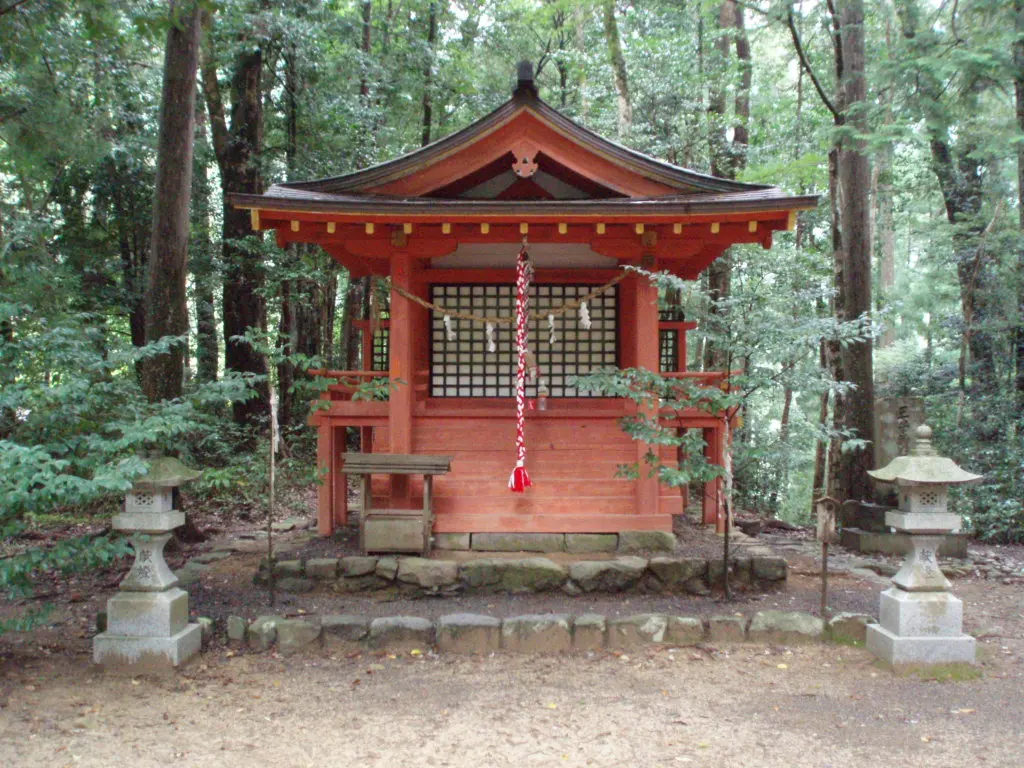
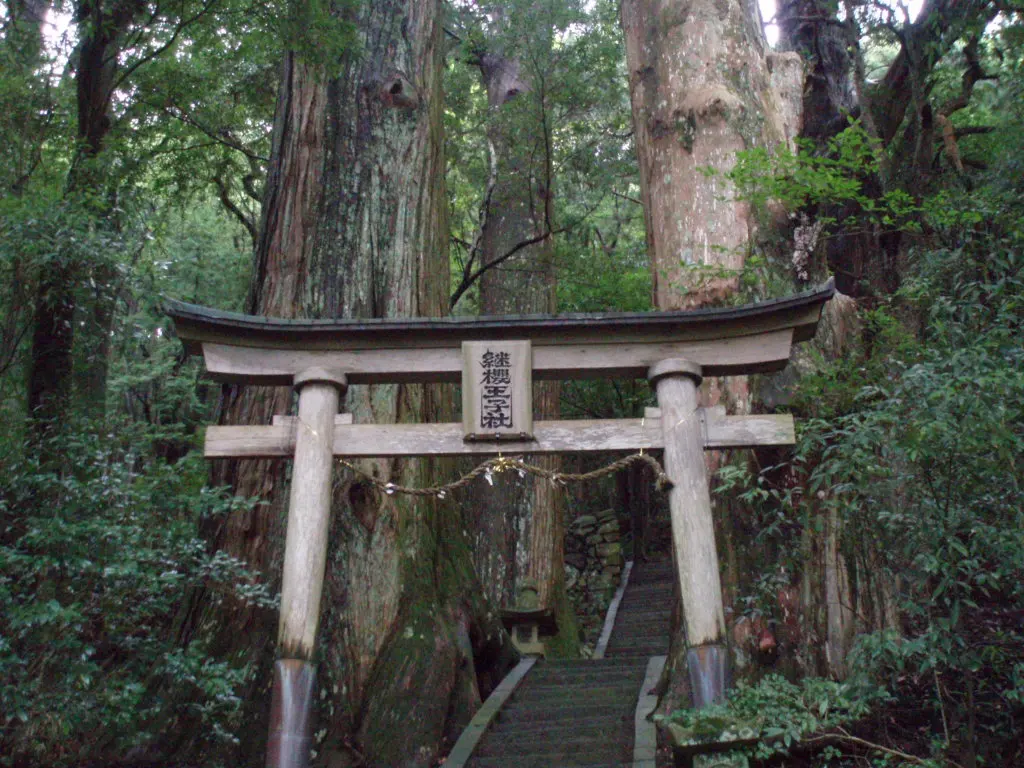
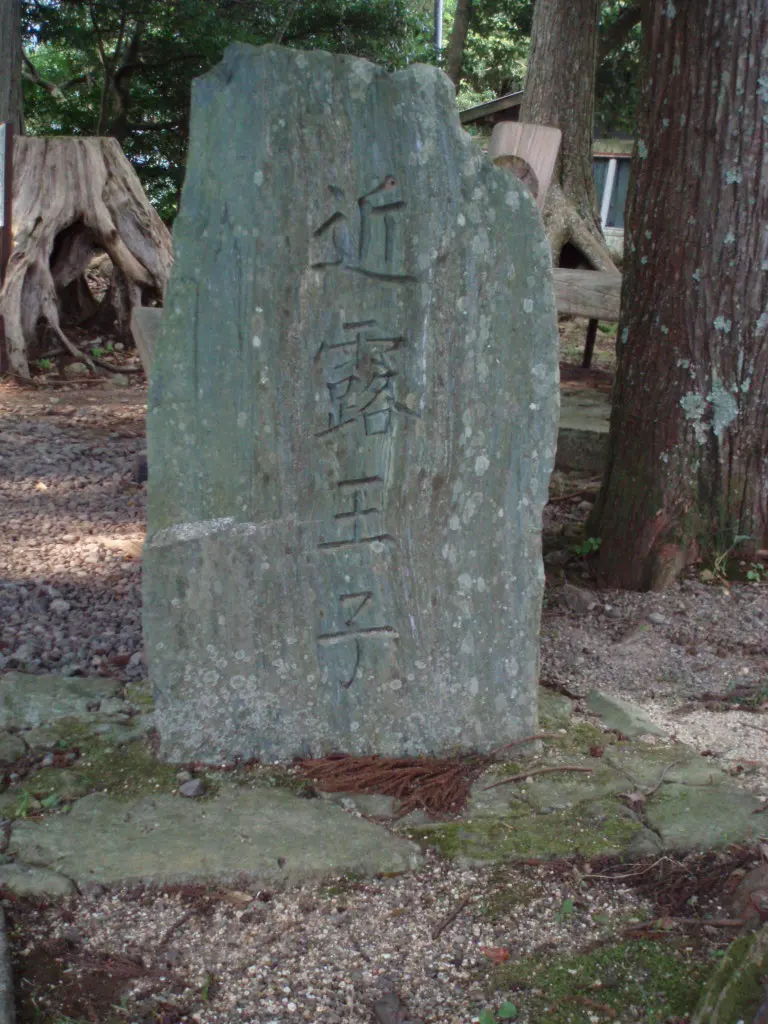
References
Sources consulted for this page. Source categories describe the publication, not a guarantee that every claim is verified. Traditional accounts and outside interpretations may differ.
- 01Kumano Hongu Taisha - Tanabe City Kumano Tourism Bureau — Tanabe City Kumano Tourism BureauofficialOfficial tourism bureau with detailed shrine and pilgrimage information
- 02Kumano Hongu Taisha - Hongu Tourism Association — Hongu Tourism AssociationSource contextOfficial local tourism association for the shrine area
- 03Kumano Kodo Pilgrimage Route - Japan National Tourism Organization — Japan National Tourism OrganizationofficialOfficial Japanese government tourism resource
- 04The Yatagarasu: The Three-legged Crow That Guided Emperor Jimmu — Kokugakuin UniversityacademicAcademic institution specializing in Shinto studies
- 05Oyunohara - Japan National Tourism Organization — Japan National Tourism OrganizationofficialOfficial information about the original shrine site
- 06Kumano Hongu Taisha Spring Festival — Tanabe City Kumano Tourism BureauofficialDetailed festival and ceremony information
- 07Aikido - Tanabe City Kumano Tourism Bureau — Tanabe City Kumano Tourism BureauofficialInformation on Aikido's connection to Kumano
- 08Kumano Hongū Taisha - Wikipedia — Wikipedia contributorsencyclopediaComprehensive overview with well-cited historical information
- 09Kumano Hongu Taisha - Japan Guide — Japan GuideguideReputable travel resource with practical visitor information
- 10Yatagarasu - Wikipedia — Wikipedia contributorsencyclopediaDetailed article on the three-legged crow mythology
- 11How to walk the Kumano Kodo, Japan's most sacred pilgrimage trail — National GeographicacademicReputable travel journalism with pilgrimage context
- 12Kumano Kodō - Wikipedia — Wikipedia contributorsencyclopediaOverview of the pilgrimage route network
- 13Walking the Land of Gods: The Kumano Grand Shrines — Centrip JapanguideDetailed guide to the three grand shrines
- 14Kumano Hongu Taisha and the Great Ōtorii of Oyunohara — SEN. RetreatguideCultural context and historical details
- 15Shinbutsu-shūgō - Wikipedia — Wikipedia contributorsencyclopediaContext on Shinto-Buddhist syncretism
- 16Kumano Sanzan: The Three Grand Shrines — Vivid JapanguideOverview of the three grand shrines complex
Photo gallery
3 curated photos
Pilgrim glossary
- Torii
- The traditional Japanese gate marking the entrance to a Shinto sacred area.
- Mikoshi
- A portable Shinto shrine carried during festivals to bring a deity into the community.
Share a photo
Help visitors recognize Kumano Hongū Taisha. Every submission is reviewed before publication.