Inglinge hög
Where Smaland's kings were buried and its laws were spoken for over a thousand years
Understand sacred places, explore living traditions, and learn how to engage respectfully with Pilgrim Map.
Access has not been verified. Check current local guidance before planning a visit.
Ingelstad, Kronoberg, Sweden

Visit essentials
A quick read before you go
- Duration
- Thirty to sixty minutes for the mound and surrounding grave field.
- Access
- Located at the edge of Ingelstad, approximately 19 km south of Vaxjo city center, Kronobergs…
Overview
Death and governance converged at Inglinge hog. The mound where a Vendel era king or chieftain was buried around the seventh century CE became the place where laws were spoken, disputes settled, and perhaps new rulers inaugurated. For over a thousand years, the living gathered at the grave of the dead to conduct the business of the living.
Snorri Sturluson, writing in the thirteenth century about Norwegian practice, described kings ascending mounds where kings used to sit, assuming the seat of authority by physically occupying the summit of an ancestral grave. Whether Snorri's description applies directly to Inglinge hog or reflects a broader Norse tradition, the arrangement at the mound's summit supports exactly this practice.
A standing stone and an ornate stone sphere, together called the Throne of the Vira Kings, form a seat of authority visible from the surrounding landscape.
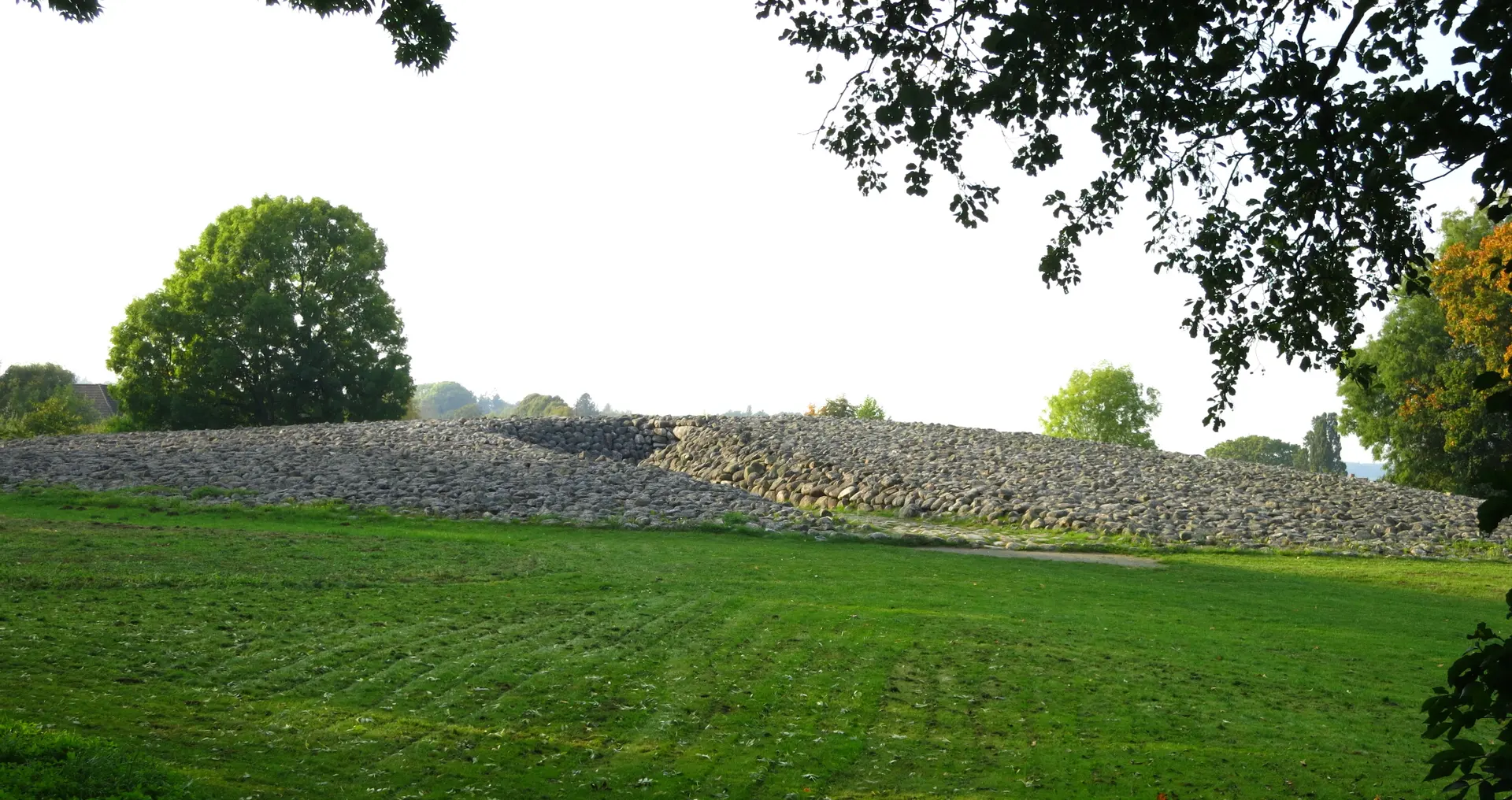
The mound itself rivals the great royal mounds of Gamla Uppsala in scale. Thirty-seven meters in diameter and six meters in height, it represents a commitment of communal labor commensurate with burying someone of the highest status. The identity of the buried individual is unknown, but the mound's size and the Throne arrangement identify them as a ruler of the Varend kingdom in Smaland.
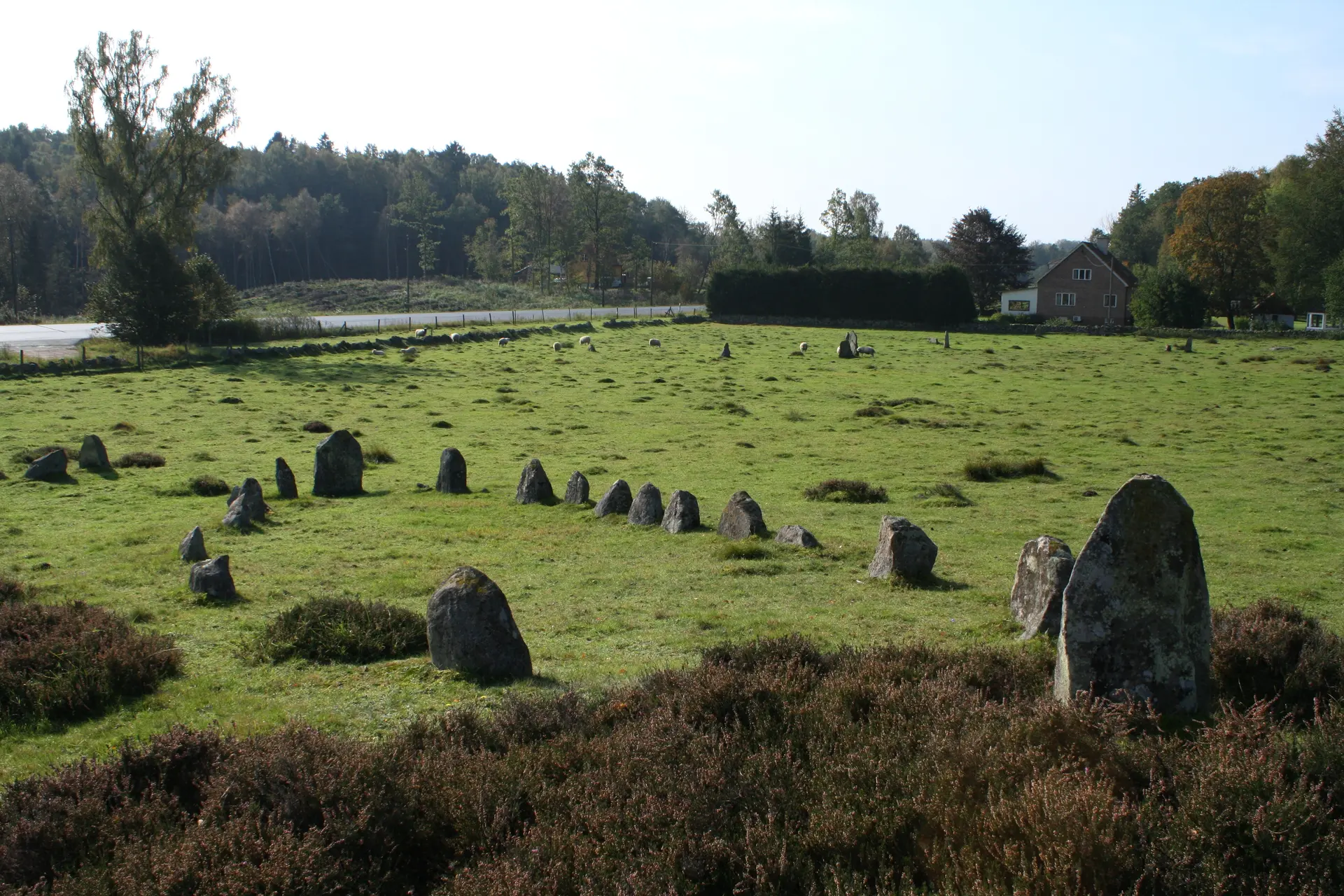
The grave field surrounding the mound extends the landscape of the dead across the terrain. Approximately 130 ancient remains have been documented: five burial mounds, two stone ships, and over a hundred stone circles of various shapes. The stone ships connect to the Norse maritime afterlife tradition, their stone outlines tracing the forms of vessels meant to carry the dead across waters both physical and metaphysical.
Thing assemblies continued at Ingelstad until 1926. The institution that began as a gathering of free men beside their king's grave persisted through the Christianization of Scandinavia, through the rise and fall of the medieval Swedish state, through the industrial revolution, arriving nearly intact in the twentieth century before finally ceasing. The dead ruled for a long time.
Why this place is sacred
The Norse understood something about authority that modern democracies have largely forgotten: power needed the dead.
A king who sat upon a mound where kings had sat before drew legitimacy not from election or inheritance alone but from physical contact with the place where ancestral power resided. The mound was not merely a grave. It was a source, a wellspring of authority that flowed from the dead to the living through the act of sitting where the dead lay beneath.
At Inglinge hog, this principle took architectural form. The standing stone and ornate stone sphere at the summit create a seat, the Throne of the Vira Kings, positioned directly above the burial chamber. Whoever sat there occupied the most symbolically charged position in the Varend landscape: above the royal dead, visible to the assembled community, connected downward to ancestral authority and outward to the living world that looked up.
The thing assembly amplified this connection. Norse thing meetings were not merely political or legal gatherings. They were communal rituals that drew their solemnity from the presence of the dead. Holding the assembly at a burial site placed every dispute, every law, every decision under the witness of ancestors who had made similar decisions in their own time. The dead did not merely lie beneath the surface. They adjudicated.
The grave field surrounding the mound extends this principle outward. The 130 ancient remains document centuries of community burial practice, each monument adding to the accumulated presence of the dead. The two stone ships trace the outlines of vessels meant for voyages beyond the mortal world, connecting the local dead to the broader Norse cosmology of death as a journey.
That thing assemblies continued at this site until 1926 represents an extraordinary durability of practice. Whatever changes in religion, politics, and social organization swept through Smaland over the intervening centuries, the connection between this place and communal governance persisted. The dead continued to authorize the living.
The mound was constructed around 600-700 CE as the burial place of a regional king or powerful chieftain of the Varend kingdom. The Throne arrangement and surrounding grave field indicate that the site served both mortuary and political functions from its inception, combining royal burial with the legitimation of authority through proximity to ancestral power.
The transition from pagan burial site to Christian-era assembly ground represents one of the most remarkable continuities in Scandinavian history. When the thing moved from sacred ritual to secular governance, the site's authority persisted. Assemblies continued at Ingelstad until 1926, spanning over a millennium of continuous use.
The modern designation as a cultural heritage site and the Sydkustleden cycling trail's inclusion of the site represent the latest phase of public engagement with a landscape that has drawn communal attention for at least 1,400 years.
Experience and orientation
The mound announces itself from a distance. Six meters of height in the relatively flat landscape around Ingelstad creates a presence that draws the eye and then the feet. Road signs direct visitors from Gamla Vaxjovagen to the parking area, and from there a path leads to the grave field.
The approach passes through the broader cemetery, where the 130 ancient remains require alert observation to fully appreciate. Stone circles of various shapes, round, oval, and rectangular, mark individual or family graves scattered across the terrain. The two stone ships stand out, their stone outlines unmistakably nautical, prows pointing toward destinations only the dead can reach. Information panels provide context for the various monument types.
The mound itself rises with a gradual slope that belies its scale. Climbing the path to the summit, the visitor gains height gradually, each step lifting them above the surrounding grave field. The transition is literal and symbolic: from the level of the ordinary dead to the elevation of the royal burial.
At the summit, the Throne of the Vira Kings commands attention. The standing stone rises vertically, its rough surface weather-beaten but still imposing. Beside it, the ornate stone sphere, the gravklot, sits with a crafted quality that distinguishes it from the surrounding natural rock. Together they form a seat of authority that even in its archaeological silence communicates power.
The view from the summit encompasses the entire grave field. Over a hundred ancient remains become visible simultaneously, their stone outlines patterning the landscape in every direction. The stone ships, the stone circles, the other burial mounds, all are visible from this elevated position, and the sight communicates something that individual monuments cannot: the density of the dead, the weight of accumulated presence that authorized whatever was spoken and decided at this spot.
The ornate stone sphere is a distinctive artifact whose precise symbolic meaning remains unclear. Its crafted surface distinguishes it from utilitarian objects, suggesting ceremonial or symbolic function. Whether it represents a royal orb, a cosmic symbol, or something else entirely, its placement atop the mound connects it to the Throne arrangement and the exercise of authority.
Approach through the grave field rather than heading directly to the mound. The stone ships and stone circles provide context that enriches the summit experience. Notice the variety of monument types: round stone circles, rectangular settings, and the distinctive ship outlines.
Climb the mound via the designated path. At the summit, stand beside the Throne of the Vira Kings and look outward. The view encompasses the entire grave field, and the perspective from above connects all the individual monuments into a single landscape of the dead.
Consider the thing assemblies that took place here until 1926. Free men gathered at this mound, beside these graves, to settle disputes and make decisions. The dead provided the authority. The living provided the judgment.
Before descending, stand quietly at the summit. The mound has held its occupant for approximately 1,400 years. The stone sphere has rested here through frost and thaw, rain and sun. Whatever the buried ruler achieved in life, their longest accomplishment was this: anchoring a place of governance for over a millennium.
Context and lineage
The Vendel era (approximately 550-790 CE) was a period of consolidated power in Scandinavia, when regional kingdoms coalesced and their rulers expressed authority through monumental burial. Inglinge hog belongs to this tradition, its scale comparable to the famous royal mounds at Gamla Uppsala. The ruler buried here governed the Varend kingdom in Smaland, and their mound became the seat from which successors exercised and transmitted authority.
Snorri Sturluson, writing in thirteenth-century Iceland, described a Norse practice of kings ascending burial mounds to assume royal authority. Whether this specific practice occurred at Inglinge hog cannot be confirmed, but the Throne of the Vira Kings arrangement is consistent with the tradition Snorri describes.
Inglinge hog connects to the broader Scandinavian tradition of monumental royal burial that includes the mounds at Gamla Uppsala, Anundshog, and other major Vendel and Viking Age burial sites. The thing assembly tradition links it to the Norse democratic governance system documented across Scandinavia and Iceland. Archaeological finds from the grave field include Viking Age buckles and a Bronze Age sword, indicating use spanning centuries before and after the mound's construction.
Unknown Vendel Era Ruler
The individual buried within Inglinge hog, believed to be a regional king or powerful chieftain of the Varend kingdom
Snorri Sturluson
Medieval Icelandic historian whose descriptions of Norse royal inauguration practices provide context for the Throne of the Vira Kings
Vaxjo Municipality
Local authority managing the site as a cultural heritage destination with visitor parking and information panels
Traditions and practice
The construction of Inglinge hog involved the communal labor of raising a thirty-seven-meter mound over a royal burial, followed by the placement of the standing stone and ornate sphere at the summit. Thing assemblies, the fundamental institution of Norse democratic governance, convened here for disputes, law-making, and the confirmation of authority. If the Throne of the Vira Kings served its implied function, royal inauguration ceremonies also took place at the summit.
The site functions as a cultural heritage destination and a stop on the Sydkustleden cycling trail. Vaxjo Municipality maintains the site with parking, pathways, and information panels. Educational visits and historical interpretation draw visitors interested in Viking Age and Iron Age Smaland.
Climb to the summit of Inglinge hog and stand beside the Throne of the Vira Kings. The position you occupy is where authority was enacted, where kings or chieftains may have assumed power by sitting above their predecessor's grave. Allow the elevation and the view to communicate the spatial relationship between ruler and ruled, dead and living.
Walk among the stone ships in the grave field. These stone outlines trace vessels designed for a journey beyond death. Stand at the prow of a stone ship and look in the direction it points. The journey it depicts is one-way.
Count the different types of monuments in the grave field: round stone circles, oval settings, rectangular arrangements, burial mounds, and stone ships. Each type may represent a different period, social rank, or burial tradition. Together they compose a cemetery spanning centuries of communal death.
Consider the continuity. Thing assemblies at this site from the Iron Age to 1926. Over a thousand years of communal governance anchored by a single burial mound. The dead ruled longer than any dynasty.
Vendel Era Royal Burial
HistoricalInglinge hog is comparable to the great royal mounds of Gamla Uppsala, marking it as the grave of a regional ruler of Smaland's Varend kingdom. The mound's exceptional size and the Throne of the Vira Kings arrangement connect burial to the exercise and transmission of royal authority.
Construction of a massive burial mound over the remains of a ruler or chieftain, placement of a standing stone and ornate stone sphere at the summit to create a visible seat of authority. The mound served as both grave and throne, combining the mortuary and the political in a single monument.
Thing Assembly Governance
HistoricalInglinge hog served as the oldest thing site in southern Sweden, where free men gathered to settle disputes, make laws, and conduct communal governance. Thing assemblies continued at Ingelstad until 1926, representing over a millennium of continuous political use of the same site.
Gathering of free men for legal proceedings, dispute resolution, and political decision-making. The mound served as the focal point of the assembly, with the Throne potentially serving as the seat of judicial authority. The presence of the burial beneath the assembly site connected present governance to ancestral legitimacy.
Cultural Heritage Stewardship
ActiveVaxjo Municipality and Kronobergs County maintain Inglinge hog as a publicly accessible cultural heritage site. The Sydkustleden cycling trail includes the site, connecting it to a broader network of cultural tourism in southern Sweden.
Site maintenance with parking, pathways, and information panels. Heritage protection under Swedish law. Integration with the Sydkustleden cycling trail and regional tourism infrastructure.
Perspectives and open questions
Inglinge hog fuses two phenomena that modern thought separates: death and governance. Understanding the site requires holding them together, seeing how the Norse world understood authority as flowing from the buried to the living.
Scholarly perspective
Inglinge hog is recognized as a Vendel era royal or chieftain burial comparable to the great mounds at Gamla Uppsala. The presence of the thing site and the Throne arrangement reflects the documented Norse practice of conducting governance in proximity to ancestral graves. The grave field's approximately 130 monuments document centuries of Iron Age community burial practice. Archaeological finds include Viking Age buckles and a Bronze Age sword, indicating long-term use of the site.
The mound's scale, thirty-seven meters in diameter, places it among the largest Iron Age burial mounds in Smaland.
Living and traditional perspectives
Swedish folk tradition attributed the mound to the Vira Kings (Virdakungar) of the Varend region. The ornate stone sphere and standing stone were understood as a throne where kings sat. Thing assemblies continued at the site until 1926, representing a tradition of communal governance spanning well over a millennium. This continuity connects the pre-Christian Norse thing to the modern Swedish legal system through an unbroken, if evolving, practice.
Alternative interpretations
Some modern visitors approach the mound as a place of power or ancestral energy. The throne arrangement is sometimes interpreted as a symbolic connection point between earthly and spiritual realms, where the ruler served as intermediary between the living and the dead. The ornate stone sphere attracts attention as a possible symbol of cosmic order or royal authority beyond the mundane.
Open questions
The identity of the person buried in Inglinge hog remains unknown. Whether the Throne of the Vira Kings was actually used for royal inauguration or is a later interpretation of the stone arrangement cannot be confirmed. The exact date of the mound's construction, and its relationship to the broader political landscape of Vendel era Smaland, remain subjects of scholarly inquiry. The ornate stone sphere is a distinctive artifact whose precise symbolic meaning has not been determined.
Plan your visit
Access and arrival
Located at the edge of Ingelstad, approximately 19 km south of Vaxjo city center, Kronobergs lan. Visitor parking along Gamla Vaxjovagen with road signs to the burial ground. The mound can be climbed via a path. The site is free to visit. No mobile phone signal information was available at time of writing; the proximity to Ingelstad and the road network suggests standard coverage. The Sydkustleden cycling trail passes through the site.
Ingelstad offers limited accommodation. Vaxjo, approximately 19 km north, provides a full range of hotels, guesthouses, and camping options.
Respectful visit
Comfortable walking shoes for exploring the grave field and climbing the mound. No specific dress code.
Photography is permitted and encouraged. The Throne of the Vira Kings and the stone ships are particularly compelling subjects. The view from the summit captures the full scope of the grave field.
Do not leave objects at the site. The monument is a protected archaeological site.
All archaeological remains are legally protected under Swedish heritage law. Do not disturb burial mounds, standing stones, stone ships, or stone circles.
Do not disturb the burial mounds, standing stones, stone ships, or stone circles. The mound path may be slippery in wet conditions.
Current practical details
Address
355 71 Ingelstad, Sweden
Hours
Hours, fees, and access can change — verify on the official source before you travel. Practical details last checked Jun 2026.
Location
Map loads as you approach this section.
Pilgrim reflections
A portrait of encounter, not a score
Pilgrims describe what they felt, how present they could become, and whether the place would shape a journey. There are no stars and no ranking of traditions.
No reviewed reflections yet
The first pilgrims can help describe the character of being here.
Share a reflection
Available after an account-backed “Been there.” Every reflection is reviewed before publication.
Nearby sacred places
Explore other sacred places in the region. Proximity does not establish access or travel time; check each place’s guidance.


Share a photo
Help visitors recognize Inglinge hög. Every submission is reviewed before publication.