Iglesia de La Tirana
Where the driest desert on earth erupts with two hundred thousand dancing pilgrims
Understand sacred places, explore living traditions, and learn how to engage respectfully with Pilgrim Map.
Access has not been verified. Check current local guidance before planning a visit.
Pozo Almonte, Tarapacá, Chile

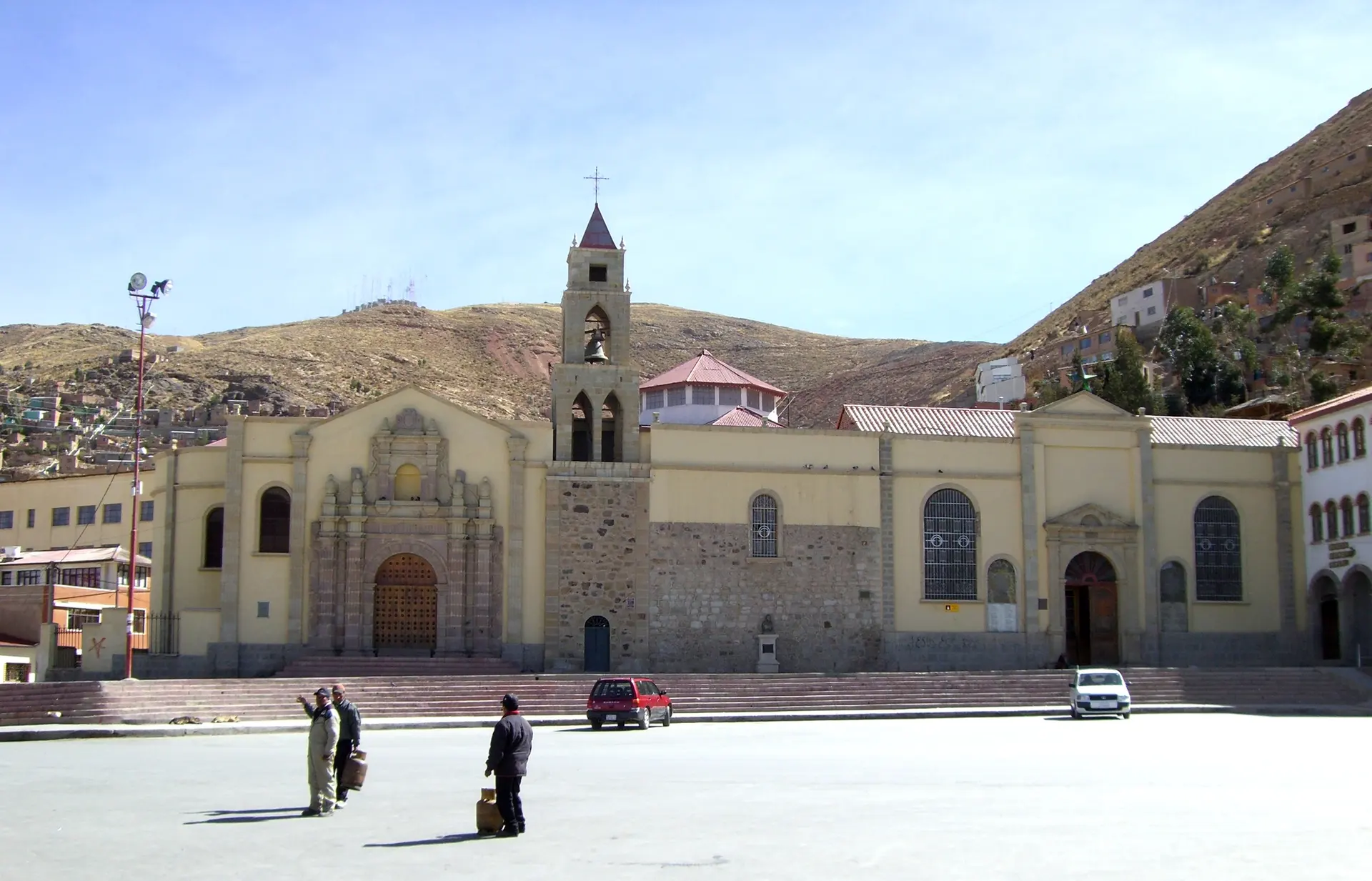
Image of Iglesia de La Tirana. Image source · CC-BY-SA-3.0
Visit essentials
A quick read before you go
- Duration
- One full day minimum to experience the festival.
- Access
- La Tirana is located in the Pampa del Tamarugal, Tarapacá Region, Chile.
Overview
In the Pampa del Tamarugal, fifteen kilometers from the nearest town and surrounded by the world's driest desert, La Tirana spends three hundred and fifty days a year as a quiet village of eight hundred people beneath tamarugo trees. In mid-July, two hundred thousand arrive.
The Fiesta de La Tirana—named for the Inca princess called The Tyrant, whose legend of love, conversion, and death haunts the site—centers on the July 16 Feast of Our Lady of Mount Carmel. The Virgen del Carmen is Chile's patron saint, and La Tirana her desert throne. Hundreds of Bailes Religiosos perform for hours before the church, offering physical exhaustion as prayer.
In the Diablada or Devil Dance, ornate costumes and masks enact the cosmic struggle of good and evil; the dancers are worshippers, not entertainers, and their bodies instruments of devotion.
Built partly of Oregon pinewood and holding a revered image of the Virgin, the church anchors sacred space extending through the plaza, streets, and campgrounds where pilgrims sleep beneath desert stars. The barren landscape's contrast with color, sound, and movement is the festival's signature: faith fills the desert rather than remaining indoors.
Why this place is sacred
What makes La Tirana more than a festival is the collision of opposites that defines it.
The first is landscape. The Atacama Desert is the driest non-polar region on earth. Parts of it have never recorded rainfall. The Pampa del Tamarugal where La Tirana sits receives minimal precipitation, and the landscape is brown, stark, and seemingly inhospitable to any expression of abundance. Yet into this emptiness pours the most extravagant religious celebration in Chile — color, noise, movement, and bodies in quantities that seem to contradict the land. The desert does not nurture the festival.
The festival defies the desert.
The second is the body. The Bailes Religiosos are not performances. They are physical offerings. Dancers train for months to perform for hours in the desert heat, wearing costumes that can weigh tens of kilograms. The brass bands play until their lips bleed. The exertion is deliberate — it is the offering.
In a tradition that understands prayer as something the body does, not merely something the mind thinks, the physical ordeal of dancing in the Atacama is a sacrifice offered to the Virgin.
The third is the syncretic depth. The Diablada's devil costumes incorporate serpents and dragons that trace back to Andean cosmological imagery predating the Spanish by centuries. The dance forms preserve Aymara and Inca ritual movement inside a Catholic devotional framework. The result is not a compromise but a third thing — neither purely indigenous nor purely European, but Chilote, shaped by the encounter itself.
The fourth is the legend. Ñusta Huillac — the Inca princess who resisted the Spanish with such ferocity that they called her The Tyrant — fell in love with a Portuguese miner, asked for baptism, and was killed by her own people. A cross was found on her body. The site of her death became sacred. Love, betrayal, conversion, death: the founding story of La Tirana contains the entire history of Latin American spirituality compressed into a single life.
The site became sacred through the legend of Ñusta Huillac, whose death and the cross found on her body consecrated the ground. The first chapel was built in the colonial period to mark this consecration. The devotion to the Virgen del Carmen grew around the chapel over centuries, intensifying during the saltpeter mining era when thousands of workers in the Atacama adopted La Tirana's Virgin as their protector.
The festival's growth mirrors the economic and social history of northern Chile. During the saltpeter mining boom of the late nineteenth and early twentieth centuries, miners from across the Atacama brought their devotional practices to La Tirana, expanding the festival from a local observance to a regional phenomenon. The introduction of the Diablada dance in 1956, drawn from Bolivian carnival traditions, added the most iconic visual element.
The transition from Andean flute music to brass bands reflected broader cultural shifts while maintaining the devotional intensity. As mining declined, the festival's identity shifted from a miners' gathering to a national cultural event, now recognized as Chile's National Intangible Cultural Heritage.
Experience and orientation
Arriving at La Tirana during the festival is arriving at a different reality. The road from Pozo Almonte traverses fifteen kilometers of desert — flat, brown, featureless — before depositing you at the edge of a temporary city. Tents, vehicles, cooking fires, and vendor stalls spread outward from the church in every direction. The population has multiplied by a factor of three hundred.
The sound reaches you before the sight. Brass bands compete with each other from different corners of the plaza, each supporting a different cofradía — dance society — in its performance. The effect is not cacophony but a kind of sonic saturation, as though the desert itself is vibrating. Dust rises from hundreds of dancing feet.
Costumes flash in the sunlight — the elaborate devil masks of the Diablada, the flowing skirts of the Morenos, the feathered headdresses of the Chunchos and Indios. Each society has its own choreography, its own music, its own history. Some have been dancing at La Tirana for generations, membership passing from parents to children.
The church stands at the center, relatively modest against the spectacle surrounding it. Inside, the image of the Virgen del Carmen occupies the main altar. Pilgrims press forward to light candles, make offerings, and fulfill mandas — vows made to the Virgin in exchange for her intercession. The interior offers a pocket of relative quiet amid the external intensity.
The daytime experience is overwhelming, sensory, and exhausting. The nighttime experience is different. On the evening of July 15, thousands of candles are lit across the festival ground, and the desert darkness fills with flickering light. The brass bands quiet. The atmosphere shifts from ecstasy to intimacy.
The vigil that follows — pilgrims holding candles through the cold desert night, waiting for the dawn of the Virgin's feast day — is widely described as the most powerful moment of the entire festival.
July 16 itself brings the climactic Mass and procession. The image of the Virgin is carried through the streets, and the entire gathered community — a quarter million strong — moves with her. The despedida ceremonies, as each dance society bids farewell to the Virgin before departing, carry a tenderness that cuts through the festival's scale.
The festival runs July 12 through 18, centering on July 16. The vigil night of July 15-16 and the main Mass on the morning of July 16 are the essential experiences. Arrive from Iquique or Pozo Almonte; buses run frequently during festival dates. Bring water, sun protection for the daytime, and warm layers for the cold desert nights. There is no shade in the festival area. Food vendors are abundant.
The church is open for devotional visits throughout the festival period.
Context and lineage
The legend tells of Ñusta Huillac, an Inca princess among the captives of Diego de Almagro's expedition across the Atacama in the 1530s. She escaped into the Pampa del Tamarugal with a band of followers and became a guerrilla leader of such ferocity that the Spanish called her La Tirana — The Tyrant. For years she raided caravans and killed any indigenous person who had converted to Christianity.
Then she fell in love with a Portuguese miner named Vasco de Almeyda, who taught her about his faith. When she asked to be baptized, her followers killed them both. A Spanish priest later found a cross on her body and built a chapel at the site.
Whether the legend has a historical kernel or is wholly mythological remains unclear. What is certain is that it provides the founding narrative for a sacred site whose power derives from the collision of worlds — indigenous and colonial, resistance and conversion, love and death.
The church that grew around the chapel became the center of Marian devotion in northern Chile, its significance expanding as the saltpeter mining industry brought workers from across the region who adopted the Virgen del Carmen as their protector.
La Tirana belongs to a network of Andean-Catholic syncretic festivals that stretches across Chile, Bolivia, and Peru. Its closest relative is the Carnival of Oruro in Bolivia, a UNESCO Masterpiece of Intangible Cultural Heritage, from which the Diablada dance was introduced to La Tirana in 1956. The festival also connects to the broader tradition of Marian pilgrimage in Latin America, from Guadalupe in Mexico to Aparecida in Brazil.
What distinguishes La Tirana is the desert setting, the intensity of the dance tradition, and the depth of Andean-Catholic fusion in a nation that does not always acknowledge its indigenous spiritual inheritance.
Ñusta Huillac (La Tirana)
Legendary Inca princess whose resistance, love affair, conversion, and death at the hands of her own followers established the sacred origin of the site. Whether historical or mythological, her story embodies the violent transformation at the root of Latin American Catholic culture.
Virgen del Carmen (Our Lady of Mount Carmel)
Patron saint of Chile and the object of devotion at La Tirana. Her image at the sanctuary is the focal point of the festival, and her feast day (July 16) structures the entire celebration. Declared patron of Chile's armed forces and later of the nation, she bridges sacred and civic identity.
Bailes Religiosos Cofradías
The hundreds of religious dance societies that perform at La Tirana represent a collective cultural institution. Each cofradía maintains its own traditions, costumes, music, and choreography, training year-round for the July festival. Membership often spans generations, making the societies repositories of syncretic religious knowledge.
Traditions and practice
The festival's historical core is the manda — the personal vow made between devotee and Virgin. A person in crisis promises to make the pilgrimage, to dance, to walk, or to perform some act of physical devotion in exchange for the Virgin's intercession. The fulfillment of mandas drives the festival: many dancers are not performing for an audience but completing a sacred contract.
The Diablada dance, introduced in 1956 from Bolivian tradition, represents the cosmic battle between good and evil through masked performers in elaborate devil costumes. Older dance forms — the Morenos, Gitanos, Indios, Chunchos — preserve Aymara and Inca ritual movement within Catholic frameworks. The saltpeter miners of the late nineteenth century were among the most devoted pilgrims, traveling across the desert to dance for the Virgin who protected them in the dangerous mines.
The festival runs from July 12 through July 18. Dance societies begin arriving from July 12, setting up camp around the village and commencing performances in the plaza. The dancing continues for hours each day, with multiple cofradías performing simultaneously. The candlelit vigil on the night of July 15-16 is the emotional pivot of the festival. On July 16, the main Mass is celebrated and the image of the Virgin is carried in procession through the streets.
The despedida — the farewell ceremony in which each dance society formally bids goodbye to the Virgin before departing — closes the festival with a quality of tenderness. Year-round, the sanctuary serves as a parish with regular Masses, and devotees visit for individual prayer, candle-lighting, and the fulfillment of personal mandas.
Allow the festival to overwhelm you before you try to understand it. Stand in the plaza and let the competing brass bands, the flashing costumes, the dust, and the desert sun work on your senses. Watch the dancers' faces — not their costumes but their expressions. You will see concentration, exhaustion, and something that looks like prayer. When the music stops between sets, notice the silence that falls over the desert.
If you are present for the vigil on the night of July 15-16, light a candle and hold it through the cold desert darkness with the other pilgrims. You do not need to share the faith to participate in the waiting. At dawn, when the first Mass of July 16 begins, something has shifted. The desert that was featureless and brown has become the setting for a quarter million people's deepest hopes.
Roman Catholicism (Marian devotion to Virgen del Carmen)
ActiveThe Virgen del Carmen is Chile's patron saint, and La Tirana is the most important site of her veneration outside Santiago. The sanctuary houses a revered image that draws pilgrims from across northern Chile and beyond. The devotion centers on the mandas system — personal vows made to the Virgin in exchange for her intercession.
Andean-Catholic syncretism (Bailes Religiosos)
ActiveHundreds of religious dance societies perform at La Tirana in costumes and choreographies that fuse pre-Columbian Aymara and Inca ritual forms with Catholic devotional intent. The Diablada, introduced in 1956 from Bolivian tradition, is the most iconic form. The dance tradition represents the most visible and sustained expression of Andean-Catholic syncretism in Chile.
Perspectives and open questions
La Tirana draws the attention of anthropologists, musicians, theologians, and political theorists. It is a religious festival, a cultural performance, a statement about syncretic identity, and a challenge to any neat separation of indigenous and colonial heritage.
Scholarly perspective
Religious anthropologists study La Tirana as one of the most important examples of Andean-Catholic syncretism in South America, alongside Bolivia's Carnival of Oruro. The festival is analyzed as a site where indigenous communities preserved their ritual practices by embedding them within Catholic frameworks, maintaining continuity through transformation. Ethnomusicologists study the transition from Andean flute music to brass bands as a case of cultural adaptation that preserved devotional function while changing expressive form.
The Diablada is interpreted as a complex theological statement drawing on both Christian and Andean dualist cosmologies. The festival's expansion during the saltpeter era demonstrates how migrant labor communities create sacred geography in inhospitable landscapes.
Living and traditional perspectives
For devotees, the Virgen del Carmen of La Tirana is present and responsive. She grants favors, heals the sick, and protects her children, but she expects devotion in return. The mandas system establishes a binding reciprocity between devotee and Virgin. The dance is prayer made physical — the exertion of hours of movement in the desert is the offering itself.
For families whose participation in a cofradía spans generations, the festival is not an annual event but an ongoing relationship, maintained through year-round training and preparation.
Alternative interpretations
The desert setting connects La Tirana to a global tradition of seeking the sacred in inhospitable landscapes — the desert as a place of testing and revelation. The legend of Ñusta Huillac, with its themes of love, betrayal, conversion, and sacrificial death, resonates with archetypal narratives of transformation through suffering. The Diablada's masks, with their serpents and dragons, carry Andean cosmological imagery that predates Christianity by millennia.
Open questions
The historical basis of the Ñusta Huillac legend remains unresolved. The specific Aymara and Inca rituals preserved within the Bailes Religiosos dance forms are incompletely documented. The relationship between the tamarugo oasis and pre-Columbian sacred geography of the Atacama is largely unexplored. How the transition from Andean flute music to brass bands affected the spiritual content of the dances has not been fully studied.
Plan your visit
Access and arrival
La Tirana is located in the Pampa del Tamarugal, Tarapacá Region, Chile. From Pozo Almonte: 15 km, ten to fifteen minutes by car. From Iquique: 72 km, approximately one hour by car. From Santiago: fly to Iquique (two and a half hours), then drive or take a bus. During the festival, buses run frequently from Iquique and Pozo Almonte. Parking is available but fills quickly. Entry to the church and festival is free.
Mobile phone signal is available in the village. Medical and emergency services are stationed at the festival during the July celebration.
La Tirana has minimal accommodation. During the festival, most pilgrims camp in designated areas or sleep in their vehicles. Hotels in Iquique (72 km) and Pozo Almonte (15 km) are available but book well in advance for festival dates. Bringing camping equipment and supplies is the most practical approach.
Respectful visit
Inside the church, cover shoulders and knees. For the outdoor festival, sun protection is essential: hat, sunscreen, sunglasses. Light, breathable clothing for daytime. Warm layers for the cold desert nights — temperatures can drop dramatically after sunset.
Photography is welcomed during outdoor dance performances and is part of the festival culture. Ask before photographing individual dancers at close range. Photography inside the church is generally permitted but not during Mass. The visual richness of the festival is a legitimate subject for photography, but avoid treating devotees as spectacle.
Candles are the primary offering at the sanctuary and can be purchased nearby. Monetary donations support the church. The deepest form of offering at La Tirana is the manda — the personal vow — but this belongs to the devotional community rather than to visitors.
Do not interfere with dance performances. Do not block procession routes. Be prepared for extreme conditions and bring all supplies you need. The village has limited resources, and the festival strains them. Carry out your waste.
The Atacama Desert is extreme. Daytime temperatures during the July festival can be warm despite winter, and nighttime temperatures drop sharply. There is no shade in the festival area. Bring water, sun protection, and warm layers. Dust is pervasive. The village's infrastructure is overwhelmed during the festival — expect limited sanitation and crowded conditions. If you have respiratory issues, the combination of dust and altitude (approximately 1,000 meters) may be challenging.
Do not interfere with the dance performances or block procession routes.
Current practical details
Address
Pza de La La Tirana,, 1180650 La Tirana, Pozo Almonte, Tarapacá, Chile
Phone
Hours, fees, and access can change — verify on the official source before you travel. Practical details last checked Jun 2026.
Location
Map loads as you approach this section.
Pilgrim reflections
A portrait of encounter, not a score
Pilgrims describe what they felt, how present they could become, and whether the place would shape a journey. There are no stars and no ranking of traditions.
No reviewed reflections yet
The first pilgrims can help describe the character of being here.
Share a reflection
Available after an account-backed “Been there.” Every reflection is reviewed before publication.
Nearby sacred places
Explore other sacred places in the region. Proximity does not establish access or travel time; check each place’s guidance.


Share a photo
Help visitors recognize Iglesia de La Tirana. Every submission is reviewed before publication.