Havängsdösen Dolmen
A Neolithic tomb on the Baltic coast, oriented to face the equinox sunrise over the sea
Understand sacred places, explore living traditions, and learn how to engage respectfully with Pilgrim Map.
Access has not been verified. Check current local guidance before planning a visit.
Simrishamns kommun, Skåne, Sweden

Visit essentials
A quick read before you go
- Duration
- Thirty to sixty minutes for the dolmen and immediate surroundings.
- Access
- Located approximately 3 km north of Vitemolla in Simrishamn Municipality, southeastern Skane.
Overview
For centuries, the dolmen slept beneath sand. The wind that shapes the Osterlen coast had buried it, grain by grain, until no trace remained on the surface. Then a storm in 1843 tore the sand away and the stones reappeared, as if the landscape had decided to remember.
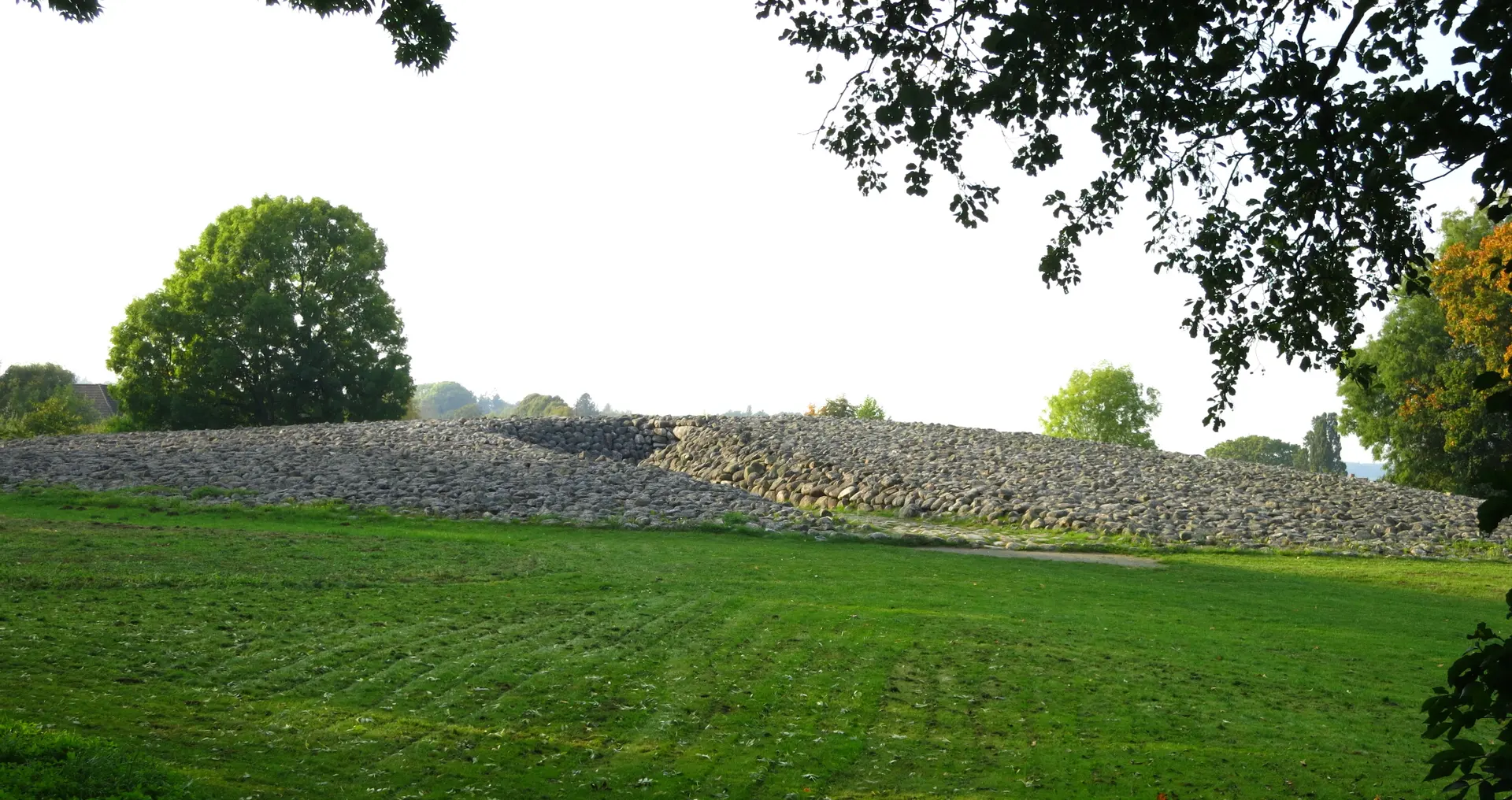
Havangsdosen is among Sweden's most photographed megalithic monuments, and the reason is immediate: its setting. The dolmen stands on the steppe landscape above the Baltic, surrounded by free-range sheep and windblown grass, the sea visible beyond. The capstone rests on supporting stones, forming a chamber that opens toward the east, toward the water, toward the point on the horizon where the sun rises on the spring and autumn equinoxes.
The equinox alignment is the detail that elevates the monument from archaeological curiosity to contemplative destination. The builders did not orient the chamber arbitrarily. They positioned it so that on the two days each year when light and darkness are perfectly balanced, the rising sun enters the chamber directly. The dead were placed facing this moment of cosmic equilibrium, their relationship to the sun and the sea encoded in stone.
The 1869 excavation found what the sand had preserved: fragments of a human skeleton and a flint axe, the standard equipment for a Neolithic burial. The individual whose remains were found had been placed in a chamber oriented to receive equinox light across the waters of the Baltic. Their community built them a house that connected death to the turning of the year.
Sixteen stones form a rectangular enclosure around the dolmen, defining a sacred precinct eleven by five meters. These stones mark the boundary between the ordinary steppe and the space devoted to the dead. Crossing between them, the visitor enters a demarcated zone of significance that 5,500 years have not erased.
The sheep that graze the surrounding steppe maintain a pastoral landscape that may not differ substantially from what the Neolithic builders knew. The wind carries salt from the coast. The grass bends and springs back. The stones endure.
Why this place is sacred
The Osterlen coast is a borderland. The Baltic stretches east to infinity. The flat steppe stretches west to the interior. Between them, the dolmen occupies the margin.
The Funnel Beaker Culture builders who chose this location approximately 5,500 years ago were positioning their dead at a convergence of boundaries. Land meets sea. The cultivated world meets the wild. The chamber opening faces east, toward the water and the rising sun, as if the dead were meant to watch for something approaching from beyond the horizon.
The equinox alignment adds a temporal boundary to the spatial ones. The equinox is itself a threshold, the day when light and darkness are held in exact balance before one yields to the other. Orienting the burial chamber to receive equinox sunrise means that twice each year, the sun enters the space of the dead at the precise moment of cosmic equilibrium. The dead do not merely face the sun. They face the balance point.
The rectangular stone enclosure creates a fourth boundary. Sixteen stones define a precinct that separates the dolmen from the surrounding steppe. Inside the enclosure, the rules are different. The grass is the same, the wind is the same, but the stones mark a transition. The builders made the boundary visible, literal, requiring the visitor to cross a defined threshold.
The 1843 revelation adds a narrative dimension that the builders could not have anticipated. The dolmen was concealed, lost beneath accumulating sand for centuries, then suddenly exposed by a storm. The image is potent: the earth covering and then uncovering its dead, as if breathing. The storm did not destroy the monument. It restored it to visibility, undoing centuries of burial with a single act of atmospheric violence.
The sheep grazing within sight of the dolmen contribute a quality of timelessness. Their presence on the steppe connects the contemporary landscape to the pastoral communities who built the dolmen. The continuity of land use, sheep on grass beside stone, bridges the gap between then and now.
The dolmen was constructed approximately 3500 BCE as a burial chamber by Funnel Beaker Culture farming communities on the Osterlen coast. The chamber held at least one individual accompanied by a flint axe, placed facing the equinox sunrise over the Baltic Sea. The sixteen-stone rectangular enclosure defined the sacred boundary of the burial precinct.
The dolmen's period of active burial use ended as Neolithic traditions evolved. Sand gradually covered the monument, concealing it for centuries. The 1843 storm revealed the stones, and the 1869 excavation documented the human remains and flint axe within. The modern designation as a protected monument within the Havang och Vitemolla strandbackar nature reserve ensures its preservation. The Skaneleden hiking trail passes by the site, integrating it into a contemporary walking landscape.
Experience and orientation
The walk to Havangsdosen crosses open steppe. Depending on the access path chosen, the approach may pass through the Havang och Vitemolla nature reserve, where sheep graze among wind-bent grasses and the Baltic is audible before it becomes visible. The landscape is horizontal. The dolmen, when it appears, is the first vertical interruption.
The capstone sits on its supporting stones at a height that invites closer inspection rather than commanding from afar. This is not a monumental structure designed to impress through scale. Its power is positional: the dolmen's placement on the steppe, the sea beyond, the sky above. The architecture is minimal, but the setting amplifies everything.
The sixteen enclosure stones become visible as you approach, their arrangement defining the rectangular precinct. Walking between them, into the enclosure, the quality of the space shifts. The stones are not tall, but they are present. They mark a boundary that has held for 5,500 years.
At the chamber opening, face east. The Baltic stretches to the horizon. Somewhere beyond that horizon, the sun rises each morning, and on the spring and autumn equinoxes, it rises in exact alignment with the chamber axis. The dead were placed to face this moment. Standing at the opening, you occupy their line of sight.
The wind is a constant companion. The Osterlen coast is rarely calm, and the dolmen stands fully exposed. The wind wraps around the stones, carrying salt and the sound of distant waves. After a few minutes, it becomes part of the experience rather than a distraction, the atmosphere within which the dolmen has existed since its construction.
The sheep add an unexpected quality. Free-range flocks graze the steppe around the dolmen, their woolly bodies dotting the landscape. Their presence removes any sense of the site as a museum piece. This is working land, as it was for the Neolithic farmers who built the dolmen. The sheep connect the present to the deep past through the simplest possible continuity: animals on grass.
Visiting at equinox sunrise is the optimal experience, though it requires planning and favorable weather. Arriving before dawn, watching the light build over the Baltic, and then seeing the first rays enter the chamber in alignment creates a direct encounter with the builders' intention. The experience is not reconstructed or imagined. It is the actual phenomenon the dolmen was designed to produce.
Approach from the nature reserve paths, allowing the steppe landscape to establish the dolmen's setting before you reach the stones. The walk itself is part of the experience.
At the enclosure, walk the perimeter of the sixteen stones before entering. Notice how they define the precinct. Then step between them and approach the chamber.
Face east from the chamber opening. The equinox sunrise alignment is the dolmen's central feature, and even outside the equinox period, facing the direction of alignment connects you to the builders' intention.
If visiting near an equinox (around March 20 or September 22), arrive before sunrise and position yourself at the chamber to observe the sun rising in alignment with the opening. This is the moment the dolmen was built to frame.
After the dolmen, walk through the nature reserve toward the coast. The transition from the steppe to the Baltic shore completes the landscape that the dolmen was designed to occupy: the threshold between cultivated land and open water.
Context and lineage
The Funnel Beaker Culture brought megalithic building traditions to southern Scandinavia during the early Neolithic period. Havangsdosen was built during this tradition's older phase, approximately contemporaneous with the Egyptian pyramids, as part of a coastal community's response to death. The builders chose a steppe location above the Baltic and oriented the chamber to face the equinox sunrise over the sea.
The dolmen was buried under sand for centuries, hidden from human knowledge, until a powerful autumn storm in 1843 swept the sand away and revealed the stones. The 1869 excavation discovered fragments of a human skeleton and a flint axe within the chamber, confirming the site's function as a burial place.
Havangsdosen connects to the broader European megalithic tradition that produced chambered tombs from Ireland to the Mediterranean. Within Sweden, it belongs to the Funnel Beaker Culture's coastal dolmen tradition, which placed burial chambers in relationship to the sea. The equinox alignment connects it to the wider Neolithic practice of incorporating astronomical knowledge into monumental architecture, a practice documented at sites from Newgrange to Mnajdra.
The dolmen's location on the Osterlen coast places it within a sacred landscape corridor that includes the King's Grave at Kivik and Stenshuvud National Park, creating a chain of sacred sites spanning from the Neolithic through the Bronze Age.
Funnel Beaker Culture Coastal Community
Neolithic farming community that constructed the dolmen with equinox alignment on the Osterlen coast
1843 Storm
The natural event that revealed the dolmen after centuries of concealment beneath sand
1869 Excavators
Archaeologists who discovered the human remains and flint axe within the chamber
Stiftelsen Skanska Landskap
Foundation managing the recreation area and nature reserve containing the dolmen
Traditions and practice
Burial ceremonies involved placing the dead within the chamber with a flint axe, oriented to face the equinox sunrise over the sea. The sixteen-stone rectangular enclosure defined the sacred precinct within which these ceremonies took place. Possible equinox ceremonies, when sunlight entered the chamber at sunrise, may have accompanied burial or commemorative rites.
Hikers on the Skaneleden and Backaleden trails pass the dolmen as part of longer walking routes through the Osterlen coast. The nature reserve attracts visitors for its coastal landscape, grazing sheep, and steppe ecology. Equinox visits by those interested in archaeoastronomy occur but are not formally organized.
Walk to the dolmen across the steppe rather than driving as close as possible. The approach across open landscape, with the Baltic visible ahead, replicates the spatial relationship the builders established between the dolmen and its environment.
At the chamber opening, crouch and look east through the opening toward the sea. This is the axis the builders aligned to the equinox sunrise. Even on an ordinary day, the alignment is present. The dead were placed to face this direction permanently.
Lay your attention on the sixteen enclosure stones. Walk their perimeter. These stones define a sacred boundary that has persisted for fifty-five centuries. Crossing between them is not merely a physical act.
If visiting near an equinox, arrive before dawn. Position yourself at the chamber and watch the sun rise. The alignment will confirm itself through the quality of light entering the chamber. This is not a reconstructed experience. The sun still rises where the builders intended.
After visiting the dolmen, walk to the coast. The Baltic shore that the dolmen faces is accessible through the nature reserve. Standing at the water's edge, you occupy the far end of the axis that begins at the chamber opening.
Funnel Beaker Culture Coastal Burial Tradition
HistoricalHavangsdosen exemplifies the Funnel Beaker Culture tradition of dolmen construction in a coastal setting, with deliberate orientation of the chamber opening toward the equinox sunrise and the sea. The sixteen-stone rectangular enclosure defines a sacred precinct around the burial, marking the boundary between ordinary landscape and funerary space.
Burial of the dead in a stone chamber oriented toward the equinox sunrise over the Baltic Sea. Placement of a flint axe as grave goods alongside the deceased. Construction of a rectangular stone enclosure defining the sacred boundary of the burial precinct.
Equinox-Aligned Funerary Architecture
HistoricalThe chamber opening faces the direction of the equinox sunrise, demonstrating that the builders incorporated astronomical knowledge into their funerary architecture. This alignment connects Havangsdosen to the broader Neolithic tradition of embedding astronomical significance in monumental structures, documented at sites across Europe.
Construction of the burial chamber with precise orientation to the equinox sunrise. Possible ceremonies timed to the equinoxes when sunlight would have entered the chamber at sunrise. The sea-facing orientation adds a maritime dimension to the solar alignment.
Nature Reserve Conservation and Heritage Access
ActiveHavangsdosen is protected within the Havang och Vitemolla strandbackar nature reserve, managed by Stiftelsen Skanska Landskap. The Skaneleden hiking trail provides public access while conservation measures protect both the archaeological monument and the surrounding steppe ecology.
Nature reserve management including grazing livestock to maintain steppe character, trail maintenance for the Skaneleden, and archaeological heritage protection under Swedish law.
Perspectives and open questions
Havangsdosen holds its secrets lightly. The equinox alignment is visible to anyone who visits at the right moment, but the full meaning of that alignment, what the builders understood about death, the sun, and the sea, remains beyond recovery.
Scholarly perspective
Havangsdosen is classified as a dolmen of the Funnel Beaker Culture (TRB), dating to approximately 3500 BCE. Scholars recognize it as one of the oldest forms of megalithic architecture in Scandinavia. The equinox orientation of the chamber opening has been noted by multiple observers but has not been the subject of a dedicated archaeoastronomy study. The 1869 archaeological finds (human skeleton fragments and flint axe) confirm its burial function.
The rectangular stone enclosure is consistent with other TRB dolmens in southern Sweden.
Living and traditional perspectives
No specific folk traditions are documented for this site. The dolmen was hidden under sand for centuries before its 1843 discovery, so any pre-modern associations were interrupted by the period of concealment. The storm revelation itself has become part of the site's narrative, a story of landscape memory and recovery.
Alternative interpretations
Some visitors experience the equinox alignment and coastal setting as evidence of deliberate landscape spirituality by the builders. The dolmen is occasionally interpreted as a portal or energy point connected to the earth's ley line network. The sea-facing orientation is sometimes read as representing the soul's journey across water to an afterlife realm. These interpretations, while lacking archaeological support, often emerge from genuine experiences at the site.
Open questions
How much the landscape has changed since the Neolithic is uncertain. The coastline has shifted and sand has covered and uncovered the monument repeatedly. Whether additional buried structures exist nearby remains unknown. What happened to the human remains and flint axe found in 1869 is unclear from available sources. The exact precision of the equinox alignment, whether it is exact or approximate, has not been rigorously measured through a published archaeoastronomical study.
Plan your visit
Access and arrival
Located approximately 3 km north of Vitemolla in Simrishamn Municipality, southeastern Skane. The dolmen is within the Havang och Vitemolla strandbackar nature reserve. Parking available along roads near the reserve. Accessed via walking paths across the steppe landscape. The Skaneleden Stage 6 (Kivik-Vantalangan) passes by the site. No mobile phone signal information was available at time of writing; the proximity to Vitemolla suggests standard network coverage. Contact Stiftelsen Skanska Landskap for current nature reserve information.
Vitemolla and the surrounding Osterlen area offer seasonal accommodations including hotels, guesthouses, and rentals. Simrishamn, approximately 15 km south, provides year-round options. The area is popular for summer tourism.
Respectful visit
Wind-proof and weather-appropriate clothing is essential. The Osterlen coast is exposed and can be cold even in summer. Sturdy walking shoes suitable for steppe terrain.
Photography is permitted and the dramatic coastal setting produces compelling images. Low-angle morning or evening light is most effective. Equinox sunrise photography requires advance planning and pre-dawn arrival.
Do not leave objects at the dolmen or within the enclosure. The monument is a protected archaeological site.
Within the nature reserve: no camping, dogs on leash year-round, no disturbing wildlife or vegetation. Do not climb on or disturb the dolmen stones. The monument is legally protected under Swedish heritage law.
The nature reserve has specific regulations: no camping, dogs on leash year-round. The exposed coastal setting can be windy and cold, particularly during the March equinox. Wear wind-proof clothing and sturdy shoes for the steppe terrain.
Current practical details
Address
277 37 Simrishamn N, Sweden
Hours
Hours, fees, and access can change — verify on the official source before you travel. Practical details last checked Jun 2026.
Location
Map loads as you approach this section.
Pilgrim reflections
A portrait of encounter, not a score
Pilgrims describe what they felt, how present they could become, and whether the place would shape a journey. There are no stars and no ranking of traditions.
No reviewed reflections yet
The first pilgrims can help describe the character of being here.
Share a reflection
Available after an account-backed “Been there.” Every reflection is reviewed before publication.
Nearby sacred places
Explore other sacred places in the region. Proximity does not establish access or travel time; check each place’s guidance.


Share a photo
Help visitors recognize Havängsdösen Dolmen. Every submission is reviewed before publication.