Dwarfie Stane (Dwarf's Stone)
Britain's only Neolithic rock-cut tomb, where 5,000 years of presence meet Norse dwarf mythology
Understand sacred places, explore living traditions, and learn how to engage respectfully with Pilgrim Map.
Access has not been verified. Check current local guidance before planning a visit.
Hoy, Scotland, United Kingdom
Read the sources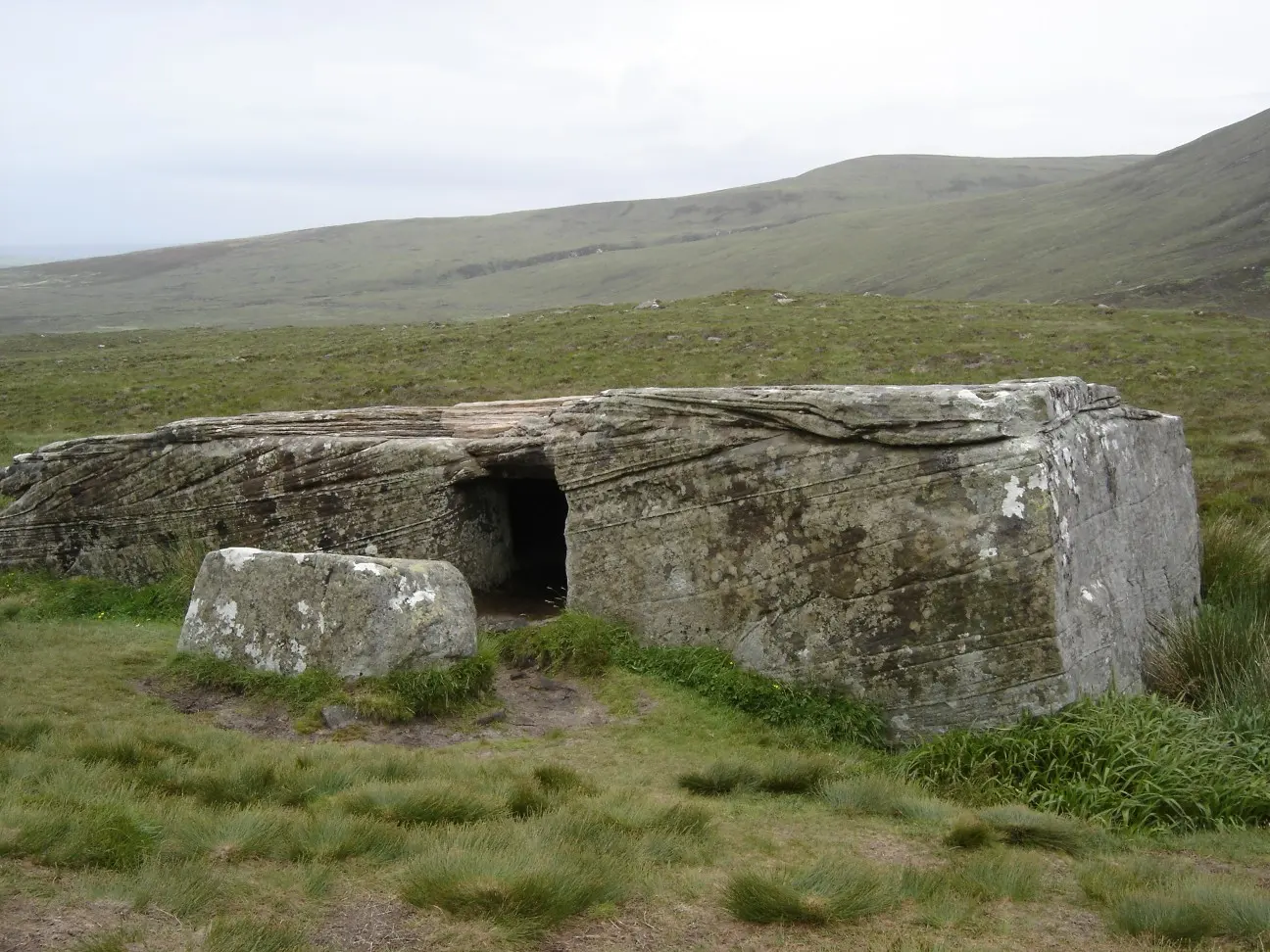
Visit essentials
A quick read before you go
- Duration
- 2-3 hours for full experience including contemplation
- Etiquette
- The stone has waited 5,000 years.
Overview
Across Hoy's vast moorland, within a steep-sided valley, a sandstone block roughly 8.5 metres long and 2 metres high lies angled in peat like a giant building stone or sleeping animal. A 91-centimetre-square opening cut into its western face leads into shadow.
Five thousand years ago, Neolithic people hollowed this glacial erratic with stone tools and antler picks; their marks remain inside. A central passage and two side cells form Britain's only rock-cut Neolithic tomb. Chipping sandstone grain by grain must have taken months or years, an effort matched by its purpose.
Later Norse settlers called it Dvergasteinn—Dwarf Stone—and imagined supernatural inhabitants suited to its cramped rooms. One legend says Trollid's silhouette appeared at sunrise and sunset; another tale says giants carved the chamber before a rival sealed them in. Walter Scott popularized such stories in The Pirate in 1822. Outside, a Victorian spy's 1850 Persian inscription reads, “I have sat two nights and so learnt patience.” The stone still teaches patience.
Why this place is sacred
The Dwarfie Stane's thinness operates through constriction. Unlike open-air monuments that invite broad contemplation, this site demands that you make yourself small. The entrance is 91 centimetres square. The interior stands only 76 centimetres high. You cannot enter standing; you must crawl. This physical diminishment creates encounter. Inside the chamber, you occupy space shaped by hands 5,000 years dead. The pick-marks they left remain visible on the walls. The sandstone they carved contains you.
The cells that flank the passage would have held—what? Bodies, perhaps, laid out for the long sleep. One cell features a raised platform like a pillow or headrest. Someone imagined comfort for the dead. The layers of interpretation add to the site's power. Neolithic builders created a tomb. Norse settlers saw a dwarf's home. Walter Scott imagined the necromancer Trolld. Major Mounsey spent two nights here in 1850 and learned patience, carving his lesson in Persian script.
Each layer is true to its time. None exhausts the meaning. The remoteness matters too. Hoy is an island reached by ferry; the Stane lies a 3/4-mile walk from the road across trackless moorland (boardwalks now ease the way). You must want to come here. The effort filters out the casual. What remains is encounter with something that has waited 5,000 years for those willing to make the journey and small enough—in body or spirit—to enter.
The Dwarfie Stane was carved as a chambered tomb, its form matching the Orkney-Cromarty class of burial chambers despite its unique rock-cut construction. The effort required indicates profound significance—perhaps the tomb of someone important, perhaps a statement about community identity, perhaps something we cannot imagine. No burial remains have been found within.
The Neolithic builders' intentions were overlaid by Norse folklore associating the stone with dwarves and giants. Medieval and early modern visitors added their own layers. Antiquarians documented the site. Hugh Miller carved his initials in 1846; Major Mounsey added his Persian meditation in 1850. Today the site is managed by Historic Environment Scotland, preserved for future generations.
Experience and orientation
The ferry from Houton on the Orkney Mainland deposits you at Moaness pier. From there, drive or walk to the car park near the road to Rackwick. The track to the Dwarfie Stane begins here—3/4 mile across rough ground, though boardwalk sections now make the going easier than it once was. The landscape is Hoy at its most dramatic: steep hillsides, moorland, a sense of vastness that the rest of Orkney lacks. The Stane comes into view gradually.
It resolves from a shape in the landscape into a massive presence: red sandstone, 8.5 metres long, lying at a slight angle in the peat. Walk around it first. Note its scale, its weathered surface, the displaced entrance stone lying nearby. On the western face, find the entrance—a square opening in the rock.
On the exterior, seek out the historical graffiti: Major Mounsey's elegant Persian script ('I have sat two nights and so learnt patience'), carved in 1850; Hugh Miller's initials from 1846. If you choose to enter—and you can, if you fit—prepare for cramped quarters. The entrance is 91cm square. Beyond it, the chamber stands only 76cm high. You must crawl. Inside, a central passage leads to cells on either side. The pick-marks of Neolithic tools remain visible on the walls.
You are occupying space hollowed out 5,000 years ago. Let that sink in. One cell contains a raised platform that resembles a pillow or headrest. Someone shaped this for a purpose we can only guess. Emerge back into the Hoy light. The world looks different after such encounter.
The Dwarfie Stane lies between Quoys and Rackwick on Hoy, Orkney. Access is via ferry from Houton on the Orkney Mainland, then approximately 3/4 mile walk from the roadside car park. The entrance faces west; the historical graffiti is on the exterior.
Context and lineage
Between 3500 and 3000 BCE, Neolithic people on Hoy began an extraordinary project. They selected a massive glacial erratic—a block of Devonian Old Red Sandstone deposited by ice age glaciers—and started carving. Using stone tools and antler picks, they hollowed out the interior grain by grain. The work must have taken months or years. They created an entrance passage and two flanking cells, matching the Orkney-Cromarty class of chambered tomb in form though utterly unlike them in construction.
No other rock-cut Neolithic tomb exists in Britain. Why this method? What significance justified such labor? The stone offers no answers, only pick-marks on the walls. Millennia later, Norse settlers arrived. They named the stone Dvergasteinn—Dwarf Stone—and told tales of supernatural beings who dwelt within. Giants too feature in the legends: one carved the chamber for his pregnant wife; another sealed them inside.
Walter Scott, visiting Orkney to research his novel The Pirate (1822), wove these traditions into fiction, creating the necromancer Trolld as the stone's inhabitant. In 1850, Major William Mounsey—a British spy fluent in Persian—camped at the Stane for two nights and learned something. He carved his lesson in elegant Persian script: 'I have sat two nights and so learnt patience.' Above it he wrote his name backwards in Latin. The stone still teaches patience to those who make the journey.
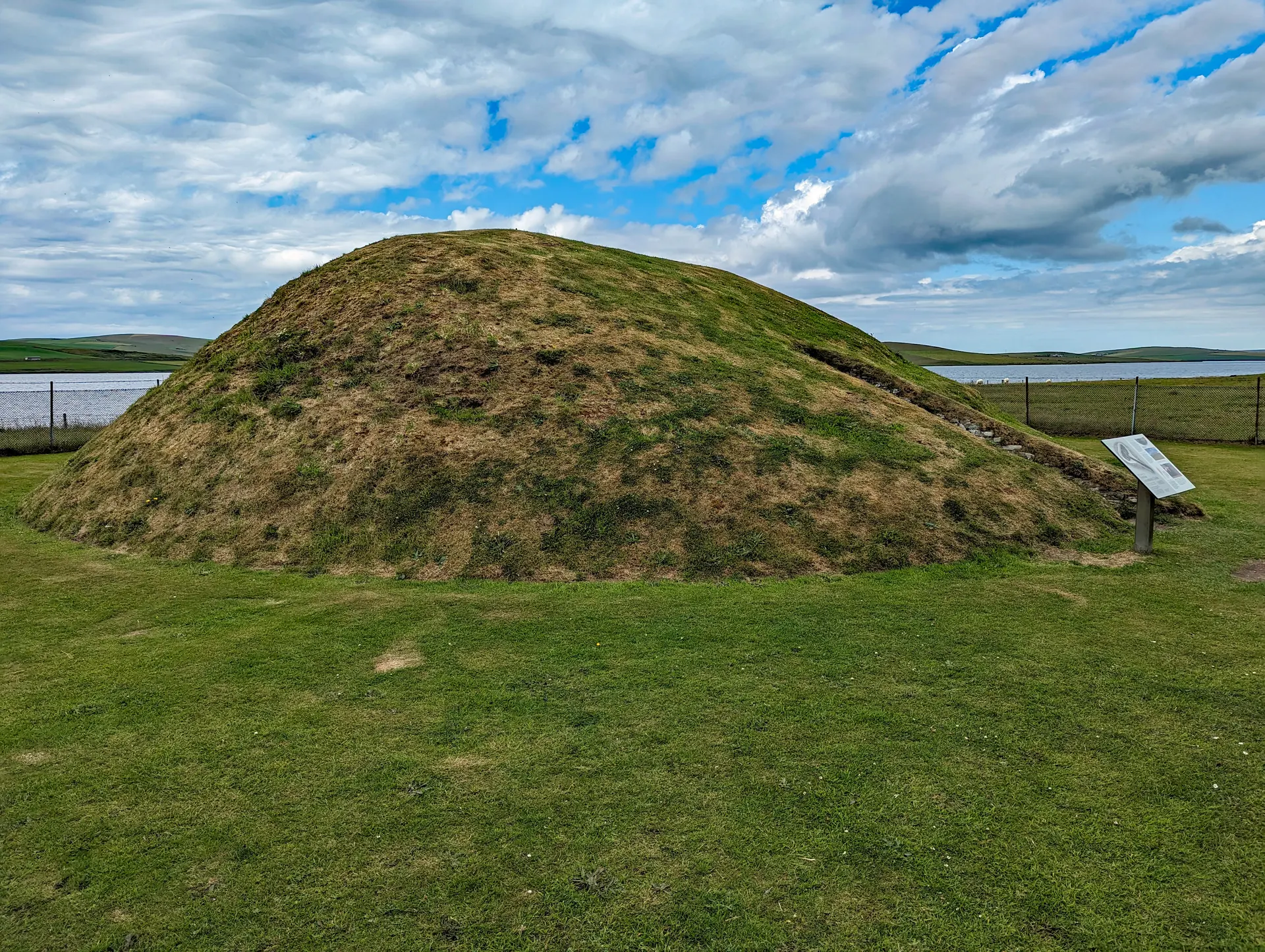
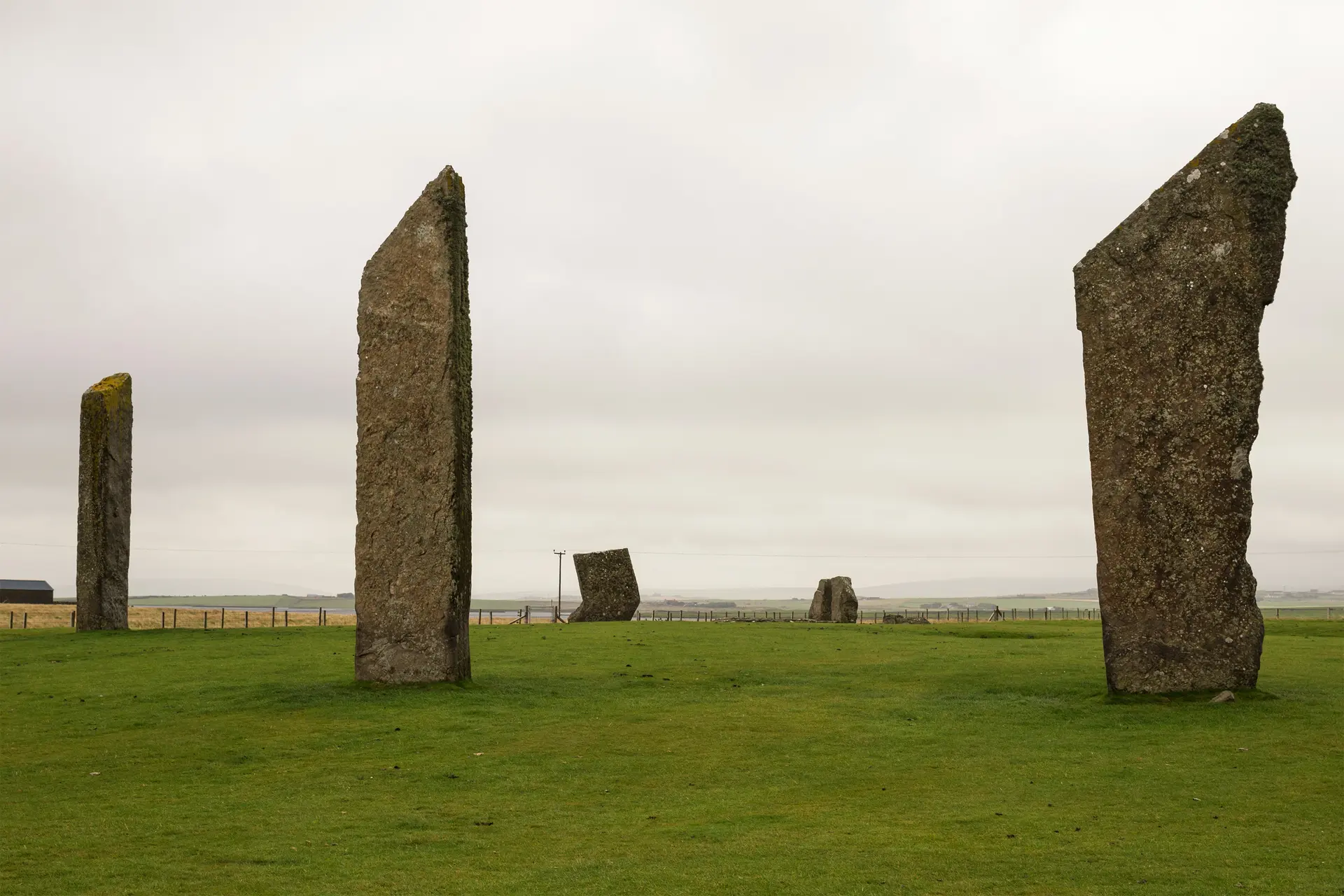
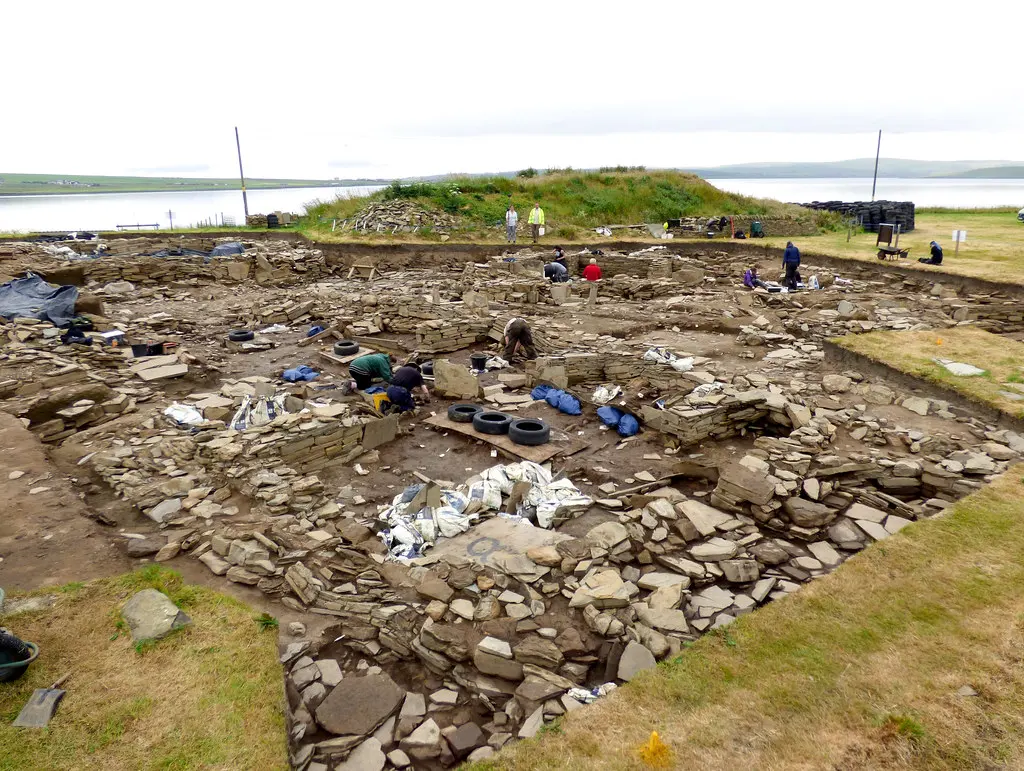
The Dwarfie Stane belongs to Orkney's extraordinary Neolithic heritage, which includes the Ring of Brodgar, Stones of Stenness, Maeshowe, and Skara Brae. While unique in its rock-cut construction, it matches other Orkney-Cromarty class tombs in its internal arrangement. The site connects to Norse mythology through its later naming and to Scottish literary tradition through Walter Scott.
William Mounsey
Hugh Miller
Walter Scott
Traditions and practice
Original Neolithic practices are unknown. The tomb's form suggests funerary use, but no burial remains have been found. Norse settlers may have avoided the stone due to its supernatural associations. The displaced entrance stone suggests the chamber was once sealed.
Contemporary visitors walk to the stone, examine the historical graffiti, and often enter the chamber. The physical experience of squeezing through the entrance and occupying the Neolithic interior is itself a form of practice. The remote location makes the journey a kind of pilgrimage.
Allow the walk to settle you. Approach the stone without hurry. Examine the exterior—the graffiti, the displaced entrance block, the weathered sandstone. Then, if you choose and can fit, enter. Crawl through the passage. Sit in the cramped chamber. Let your eyes adjust. See the pick-marks on the walls. Consider the hands that made them. Stay as long as you wish. Emerge changed.
Neolithic funerary practice
HistoricalThe Stane was carved as a chambered tomb, unique in Britain for its rock-cut construction.
Original practices unknown. The form suggests burial; the labor indicates profound significance.
Norse/Orcadian folklore
HistoricalNorse settlers named the stone Dvergasteinn and associated it with supernatural beings.
Shepherds avoided the stone. The dwarf Trollid's silhouette appeared at sunrise and sunset. Giants featured in alternative legends.
Contemporary pilgrimage
ActiveModern visitors come for encounter with unique Neolithic heritage in dramatic setting.
Walking to the stone, entering the chamber, reading the graffiti, contemplation.
Perspectives and open questions
The Dwarfie Stane invites interpretation through archaeology, folklore, and personal encounter. Each perspective reveals something; none exhausts the meaning.
Scholarly perspective
Archaeologists date the Dwarfie Stane to approximately 3500-3000 BCE based on its form matching Orkney-Cromarty class chambered tombs and comparison with Mediterranean rock-cut tombs. It is unique as Britain's only Neolithic rock-cut tomb. The pick-dressing marks confirm stone and antler tools were used. No burial remains have been found, so the funerary function rests on form alone. The historical graffiti is itself considered heritage.
Living and traditional perspectives
Orcadian tradition associates the stone with dwarves (Norse trows) who lived within rocks. The name Dvergasteinn (Dwarf Stone) comes from Norse settlers. Giant legends offer an alternative explanation. Walter Scott's novel The Pirate (1822) popularized the figure of Trolld the necromancer. Ernest Marwick noted that dwarves survive in Orkney mainly in place-names, making the Dwarfie Stane's associations unusual.
Alternative interpretations
Contemporary spiritual seekers recognize the Dwarfie Stane as a place of power. The unique construction and remote setting suggest special significance. The cramped interior may be experienced as a place for meditation or vision-seeking. Some perceive the stone as a portal or threshold.
Open questions
Why Neolithic builders chose this unique construction method remains unknown. What became of any burial remains is uncertain. Major Mounsey's 'patience' and what he learned in two nights he did not explain in English.
Plan your visit
Access and arrival
Very limited accommodation on Hoy. Most visitors stay on Orkney Mainland (Stromness or Kirkwall) and visit Hoy as a day trip.
Respectful visit
Dress for rough terrain and changeable weather. Waterproofs essential. Sturdy footwear required. Clothing that allows you to crawl if you choose to enter.
Photography permitted. The historical graffiti and chamber interior are popular subjects.
Not traditionally associated with offerings. Your presence and attention are sufficient.
Do not add graffiti. Do not damage the stone. Leave no trace.
The entrance is small (91cm) and the interior cramped (76cm high). Do not attempt if you have claustrophobia or limited mobility. The walk is rough; dress appropriately. Weather on Hoy changes quickly.
Current practical details
Address
Hoy, Stromness KW16 3NJ, UK
Hours
Hours, fees, and access can change — verify on the official source before you travel. Practical details last checked Jun 2026.
Location
Map loads as you approach this section.
Pilgrim reflections
A portrait of encounter, not a score
Pilgrims describe what they felt, how present they could become, and whether the place would shape a journey. There are no stars and no ranking of traditions.
No reviewed reflections yet
The first pilgrims can help describe the character of being here.
Share a reflection
Available after an account-backed “Been there.” Every reflection is reviewed before publication.
Nearby sacred places
Explore other sacred places in the region. Proximity does not establish access or travel time; check each place’s guidance.

References
Sources consulted for this page. Source categories describe the publication, not a guarantee that every claim is verified. Traditional accounts and outside interpretations may differ.
- 01Dwarfie Stane — Historic Environment ScotlandofficialOfficial heritage body
- 02The Dwarfie Stane — Ness of BrodgaracademicArchaeological research project
- 03Dwarfie Stane — WikipediaencyclopediaWell-referenced encyclopedia article
- 04The Dwarfie Stane in Hoy — NorthLink FerriesguideVisitor-focused information
- 05Dwarfie Stane — Atlas ObscuraguidePopular guide with historical context
- 06Stories of the Dwarfie Stane — Orkney.comguideLocal folklore and stories
Share a photo
Help visitors recognize Dwarfie Stane (Dwarf's Stone). Every submission is reviewed before publication.