Church of the Assumption of the Blessed Virgin Mary
Croatia's spiritual heart, where a Black Madonna was twice hidden from invaders and twice revealed by light
Understand sacred places, explore living traditions, and learn how to engage respectfully with Pilgrim Map.
Access has not been verified. Check current local guidance before planning a visit.
Marija Bistrica, Krapina-Zagorje, Croatia
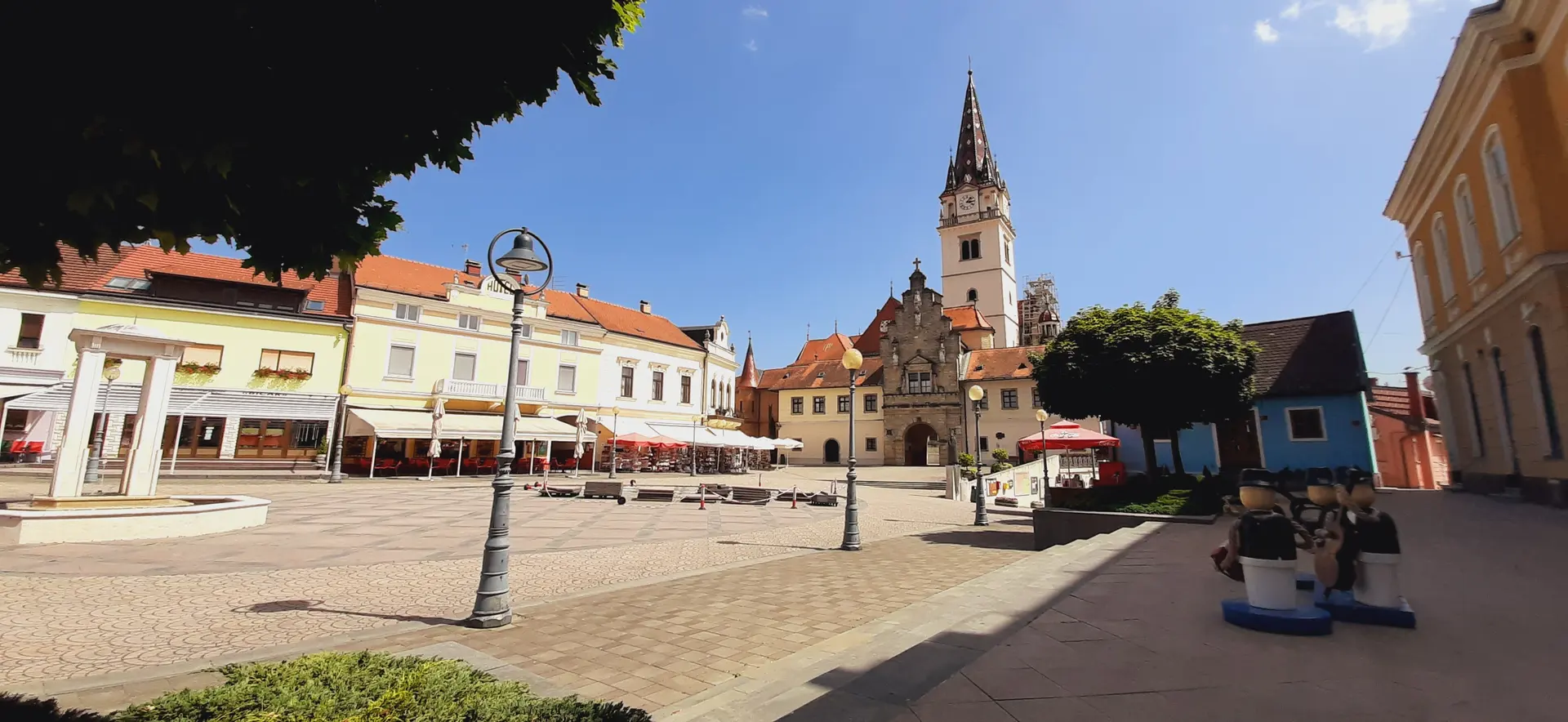
Image of Church of the Assumption of the Blessed Virgin Mary. Image source · CC-BY-SA-4.0
Visit essentials
A quick read before you go
- Duration
- One to two hours for the basilica and Stations of the Cross.
- Etiquette
- Standard Catholic basilica etiquette applies.
Overview
A small town in the green hills of the Zagorje region, approximately 37 kilometers northeast of Zagreb, holds the spiritual center of Croatian Catholicism. The Church of the Assumption of the Blessed Virgin Mary in Marija Bistrica is a neo-Renaissance basilica designed by Hermann Bolle, but the building is not the point.
The point is the wooden statue above the altar: a Black Madonna approximately 53 centimeters tall, holding the infant Jesus, whose history of concealment and revelation has made it the most venerated sacred image in Croatia.
This double narrative of concealment and miraculous rediscovery gives the Black Madonna of Marija Bistrica a power that transcends ordinary devotion. The statue embodies the experience of a people who repeatedly faced the destruction of what they held sacred and repeatedly found that it survived.
The papal visit of 1998, when John Paul II beatified Cardinal Stepinac, a figure who endured imprisonment under communist rule, added another layer: the shrine became the site where Croatian Catholic resilience was affirmed before the world.
Why this place is sacred
The pattern at Marija Bistrica is distinctive: concealment, loss, light, recovery. Twice the Black Madonna was walled up in darkness. Twice light revealed where it was hidden. The narrative structure resonates beyond the specific Catholic context because it addresses a universal human experience: the fear that what we hold sacred can be taken from us, and the hope, against evidence, that it will return.
For Croatian Catholics, this pattern carries national as well as spiritual weight. The Ottoman invasions that prompted the statue's concealment were existential threats to Croatian culture, identity, and faith. Hiding the Madonna was an act of preservation — not only of a religious object but of everything it represented. Its rediscovery was experienced as confirmation that the faith, the culture, the identity could not be permanently suppressed.
The 1998 papal visit deepened this narrative. Cardinal Stepinac, beatified by John Paul II at Marija Bistrica, was the Archbishop of Zagreb who was imprisoned by the communist Yugoslav regime in 1946 and died under house arrest in 1960. His beatification at the national shrine connected Marian devotion to the broader story of Catholic perseverance through political persecution.
The estimated 500,000 people who gathered for the event constituted one of the largest assemblies in Croatian history, a concentration of devotion and national feeling that marked the shrine as a place where the spiritual and the political are inseparable.
Hermann Bolle's neo-Renaissance architecture, built between 1879 and 1882, frames the Black Madonna in a space designed to direct attention toward the altar. The Stations of the Cross on the hillside behind the basilica extend the sacred space into the landscape, offering a physical path that leads both upward and inward.
The village of Marija Bistrica, nestled in the Zagorje hills, provides a pastoral setting that contrasts with the shrine's national significance — an intimacy of place holding an immensity of meaning.
The original purpose of the Black Madonna statue, created in the 15th century or earlier by an unknown sculptor, was devotional: an image of the Virgin Mary for veneration in the parish church. The concealment of 1545, in response to the Ottoman threat, transformed the statue from a local devotional object into a symbol of cultural survival. The first miraculous rediscovery in 1588 elevated it from symbol to miracle.
The shrine's significance has grown in stages. The first hiding and rediscovery (1545-1588) established the statue's miraculous reputation. The second cycle (1650-1684), involving the Croatian Parliament's formal search for the statue, elevated Marija Bistrica from a local to a national pilgrimage site. The construction of Bolle's neo-Renaissance church (1879-1882) gave the shrine architectural dignity. The designation as a minor basilica in 1923 by Pope Pius XI confirmed its ecclesiastical importance. The 1998 papal visit and Stepinac beatification brought international recognition.
Today, with approximately 800,000 annual visitors, Marija Bistrica functions as Croatia's spiritual capital.
Experience and orientation
The drive from Zagreb through the Zagorje hills introduces the landscape that defines Marija Bistrica: green, rolling, vine-covered, a countryside that feels gentler than the dramatic coastline most visitors associate with Croatia. The town itself is organized around the basilica, with the church occupying the visual and spiritual center.
Entering the basilica, the eye is drawn to the altar where the Black Madonna occupies its elevated position. The statue is small, approximately 53 centimeters, and its power lies not in scale but in presence. The dark-faced Virgin holds the infant Jesus with a composure that has witnessed 43 years of concealment, a miraculous revelation, another concealment, another revelation, centuries of devotion, war damage, restoration, and a papal visit. The expression is serene. It has seen everything and remains.
Bolle's interior is neo-Renaissance, spacious and dignified without being ornate. The architecture serves the devotion rather than competing with it. Light enters through high windows, illuminating the nave and drawing the eye toward the altar. On an ordinary weekday, the basilica may hold a handful of visitors and a few people in prayer. This quietness is its own kind of encounter.
On pilgrimage days, especially August 15 and other Marian feast days, the space fills and the accumulated devotion of 800,000 annual visitors becomes palpable.
The Stations of the Cross on the hillside behind the basilica offer the most contemplative part of a visit. The path climbs through trees, with each station providing a pause for reflection. The elevation gain is modest but sufficient to create a sense of separation from the town below.
At the top, looking down at the basilica roof and the village of Marija Bistrica, the visitor sees the shrine in its landscape context: a place of concentrated meaning in a pastoral setting.
Marija Bistrica is approximately 37 km northeast of Zagreb, reachable in about 45 minutes by car. Regular buses run from Zagreb's main bus station. The basilica is open daily. Allow one to two hours for the basilica and Stations of the Cross, or a half-day for a more contemplative visit. The August 15 pilgrimage is the most significant annual event.
Context and lineage
The first origin event occurred in 1545, when Ottoman forces threatened the Croatian lands and the parish priest of Bistrica concealed the Black Madonna statue within the church walls. The statue remained hidden for 43 years. In 1588, a miraculous light shone from the wall, revealing the hiding place. The rediscovered Madonna was restored to public veneration.
The second origin event occurred a century later. In 1650, the Ottoman threat renewed, and the statue was hidden again in a wall niche. In 1684, the Croatian Parliament sent a formal committee to search for the statue. They found it in the wall, reportedly again accompanied by supernatural light. This second recovery, authorized by the national parliament and validated by the bishop of Zagreb, transformed Marija Bistrica from a local devotion into a shrine of national importance.
The fact that the same pattern repeated, concealment followed by light, gave the narrative a quality of divine confirmation.
Marija Bistrica belongs to the Roman Catholic Marian tradition and specifically to the European tradition of Black Madonna veneration. The Black Madonna statues and icons found across Europe, from Czestochowa to Montserrat, form a network of deeply venerated dark-skinned Marian images whose origins and darkening are variously attributed to age, candle smoke, or original artistic intention.
The Marija Bistrica Black Madonna's significance within this network is amplified by its narrative of concealment and miraculous rediscovery, a pattern that appears unique in its double occurrence.
The Unknown Sculptor
Creator of the Black Madonna statue, believed to date to the 15th century or earlier. The sculptor's identity and the circumstances of the statue's creation are unknown, adding to the image's sense of timeless, sourceless sanctity.
Hermann Bolle
German-born architect (1845-1926) who designed the current neo-Renaissance basilica between 1879 and 1882. Bolle became one of the most prominent architects in Zagreb and shaped the appearance of multiple Croatian churches and public buildings.
Pope John Paul II
Visited Marija Bistrica on October 3, 1998, and beatified Cardinal Alojzije Stepinac before an estimated 500,000 pilgrims, one of the largest gatherings in Croatian history.
Cardinal Alojzije Stepinac
Archbishop of Zagreb during World War II and the early communist period. Imprisoned in 1946, died under house arrest in 1960. Beatified at Marija Bistrica in 1998, becoming a symbol of Catholic perseverance through political persecution.
Traditions and practice
The veneration of the Black Madonna at Marija Bistrica follows the Catholic Marian devotional tradition: prayer before the image, lighting candles, offering intentions, and participating in the Eucharist. The walking pilgrimage from surrounding towns, particularly for the Feast of the Assumption on August 15, is the most physically demanding traditional practice. Rosary devotions and Marian hymns in the Croatian tradition are an integral part of worship at the shrine.
The Way of the Cross on the hillside offers a contemplative practice connected to the Passion narrative.
Daily Mass and sacramental services are celebrated at the basilica. Major pilgrimage events occur throughout the liturgical year, with the Feast of the Assumption (August 15) as the annual focal point. Youth pilgrimages and pastoral programs engage younger generations. Guided tours of the basilica and its history can be arranged through the parish office. The commemoration of the 1998 papal visit, typically in October, adds a modern dimension to the pilgrimage calendar. Confessions are available.
Enter the basilica and take a seat. Before approaching the altar, allow the space to work on you: the light, the proportions, the quiet or the murmur of prayer. When you are ready, approach the Black Madonna. The statue is small, which means you must look closely. Consider what it means for an object this modest to have been hidden twice to save it from destruction. Walk the Stations of the Cross on the hillside behind the basilica.
The path requires only modest effort but provides a physical component to the visit and a change in perspective, both literal and figurative. If you are present during Mass, participating or observing, you witness the continuation of what began when the statue was first carved: a community oriented around a shared object of devotion.
Roman Catholic Marian Devotion — Black Madonna of Marija Bistrica
ActiveMarija Bistrica houses Croatia's most revered sacred image, a wooden Black Madonna whose double narrative of concealment from Ottoman invaders and miraculous rediscovery has made it the spiritual center of Croatian Catholicism. The shrine receives approximately 800,000 visitors annually and was designated a minor basilica in 1923. The 1998 papal visit and beatification of Cardinal Stepinac cemented its status as both a spiritual and national symbol.
Veneration of the Black Madonna above the main altar. Annual pilgrimage on the Feast of the Assumption (August 15). Walking pilgrimage from surrounding towns. Rosary devotions and Marian hymns in Croatian tradition. Way of the Cross on the hillside behind the basilica. Daily Mass and sacramental services. Candle lighting and votive offerings.
Papal Legacy and Stepinac Veneration
ActivePope John Paul II's visit to Marija Bistrica on October 3, 1998, and his beatification of Cardinal Stepinac before 500,000 pilgrims, was a defining event in modern Croatian Catholic history. The event connected the shrine to the narrative of Catholic perseverance through communist persecution and affirmed Croatian Catholic identity on the global stage.
Veneration of Blessed Alojzije Stepinac at the shrine. Annual commemoration of the papal visit. Pilgrimage combining Marian devotion with Stepinac devotion. Monument at the site commemorating the papal visit.
Perspectives and open questions
Marija Bistrica invites reflection on the relationship between faith and nationhood, on what people choose to protect at all costs, and on the capacity of sacred objects to survive what should have destroyed them.
Scholarly perspective
Historians confirm the documented history of the Black Madonna's two concealments (1545, 1650) and rediscoveries (1588, 1684). The 1684 rediscovery is well documented as it was conducted by an official committee of the Croatian Parliament. The miraculous light reported at both rediscoveries is understood within Catholic tradition as a sign of divine presence; secular historians note these reports without endorsing supernatural claims.
The shrine's significance in Croatian national identity, particularly as a site of resistance to Ottoman and later communist suppression of religion, is well studied. The 1998 papal visit is documented as one of the largest gatherings in Croatian history.
Living and traditional perspectives
For Croatian Catholics, Marija Bistrica is where faith and national identity converge. The Black Madonna's survival through centuries of threat embodies the Croatian experience of maintaining faith under existential pressure. The statue is not simply a devotional image but a participant in national history, an object that has shared the fate of the people who venerate it.
The 1998 beatification of Stepinac at this specific location was understood as providential, a confirmation that the shrine's role as the spiritual center of Croatian Catholicism carries divine endorsement.
Alternative interpretations
The Black Madonna tradition across Europe has attracted attention from scholars interested in pre-Christian goddess survivals and earth-mother symbolism. Whether the Marija Bistrica Black Madonna has pre-Christian roots is speculative and not supported by available evidence. The darkened appearance of the statue, whether original, from aging, or from centuries of candle smoke, remains debated.
Open questions
The original sculptor and precise date of the Black Madonna statue remain unknown. Whether a pre-Christian sacred site existed at the location before the church has not been determined. The nature of the supernatural light reported at both rediscoveries is a matter of faith rather than historical verification. The cause of the statue's dark coloration is debated among art historians.
Plan your visit
Access and arrival
Marija Bistrica has several guesthouses and small hotels. Zagreb (37 km) offers full range of accommodations. The Zagorje region surrounding the shrine has numerous rural accommodation options. Mobile phone signal is reliable. The site is fully accessible for visitors with mobility limitations. Ample parking near the basilica.
Respectful visit
Modest dress appropriate for a Catholic basilica. Shoulders and knees should be covered. Remove hats inside the church.
Photography is generally permitted inside the basilica. Flash photography near the altar and during services is discouraged. Respect signage and instructions from staff. Do not photograph worshippers without consent.
Candles may be purchased and lit. Donations are welcome. Votive offerings are a long tradition at the shrine.
Maintain reverent silence inside the basilica | Do not interrupt services | Do not touch the Black Madonna statue | Follow crowd management instructions during major pilgrimages | Modest dress required
During major pilgrimage events, especially August 15, the site can be extremely crowded. Arrive early for these events. The basilica is an active place of worship; maintain appropriate reverence at all times.
Current practical details
Address
Trg Pape Ivana Pavla II 32, 49246, Marija Bistrica, Croatia
Phone
Hours
Hours, fees, and access can change — verify on the official source before you travel. Practical details last checked Jun 2026.
Location
Map loads as you approach this section.
Pilgrim reflections
A portrait of encounter, not a score
Pilgrims describe what they felt, how present they could become, and whether the place would shape a journey. There are no stars and no ranking of traditions.
No reviewed reflections yet
The first pilgrims can help describe the character of being here.
Share a reflection
Available after an account-backed “Been there.” Every reflection is reviewed before publication.
Nearby sacred places
Explore other sacred places in the region. Proximity does not establish access or travel time; check each place’s guidance.

Remete Marian Shrine
Zagreb, Zagreb, City of Zagreb, Croatia
19.1 km away

Sanctuary of Saint Mary of Jerusalem at Trški Vrh
Trški Vrh, Trški Vrh, Krapina, Krapina-Zagorje County, Croatia
25.3 km away

Olimje Minorite Monastery
Olimje, Olimje, Podčetrtek Municipality / Savinja, Slovenia
45.3 km away

Basilica of the Patroness Mary at Ptujska Gora
Ptujska Gora, Ptujska Gora, Majšperk Municipality / Podravje, Slovenia
47.6 km away
Share a photo
Help visitors recognize Church of the Assumption of the Blessed Virgin Mary. Every submission is reviewed before publication.