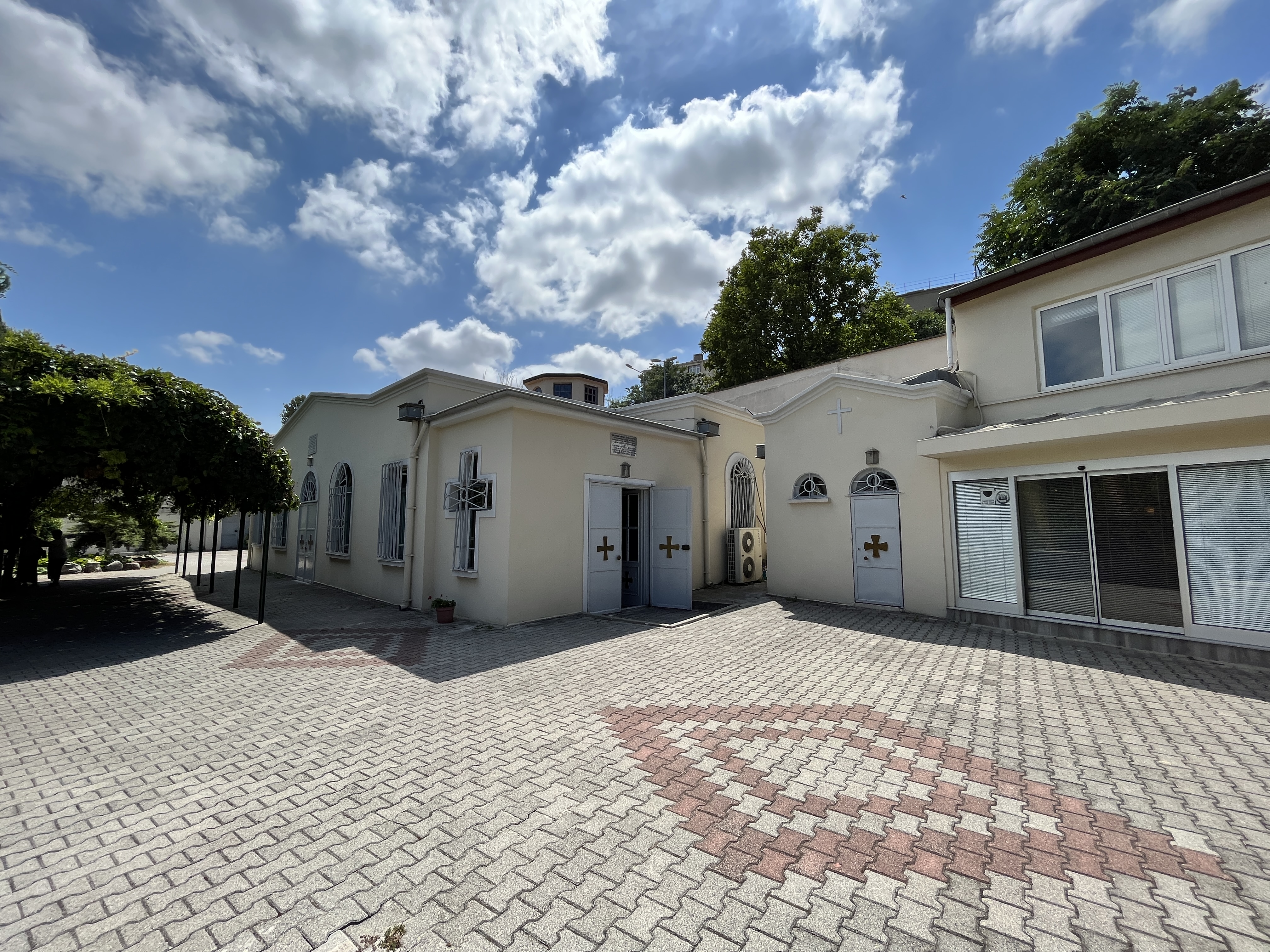
"Where the Virgin's veil once shielded an empire, and her spring still flows for the weary"
Church of St. Mary of Blachernae (Ayın Biri Kilisesi), Istanbul
Istanbul, Istanbul, Turkey
At the edge of Istanbul's Byzantine walls, a small church marks one of Christianity's most storied Marian shrines. For a thousand years, emperors and commoners came here seeking the Virgin's protection. The great church is gone, but the holy spring still flows, and Orthodox liturgies still echo where Mary was believed to spread her protective veil over the faithful.
Weather & Best Time
Plan Your Visit
Save this site and start planning your journey.
Quick Facts
Location
Istanbul, Istanbul, Turkey
Tradition
Site Type
Coordinates
41.0363, 28.9388
Last Updated
Jan 14, 2026
Learn More
Blachernae's history spans the entire arc of Byzantine Christianity. Founded in the fifth century, it became the empire's foremost Marian shrine, guardian of the Virgin's relic, credited with protecting Constantinople through multiple sieges. Fire destroyed the great church in 1434, but the holy spring ensured the site's continued veneration. The modest church standing today was built in 1867, a humble successor to one of Christendom's most significant sanctuaries.
Origin Story
The story begins with two brothers, Galbius and Candidus, who traveled to Palestine in the fifth century. While lodging near Nazareth, they stayed with an elderly Jewish woman who guarded a secret: a chest containing a garment passed down through her family for generations, believed to be the robe or veil of the Virgin Mary herself. According to tradition, Mary had given this cloth to a pious maiden before her Dormition.
The brothers brought the relic to Constantinople, where Emperor Leo I enshrined it in a specially built chapel—the Hagia Soros, the Holy Relic. Thus began Blachernae's transformation from a healing spring to the empire's sacred armory. The Theotokos, through her relic, would guard Constantinople as she had promised to guard all who sought her protection.
A second origin story intertwines with the first. In 911, during a military crisis, a holy fool named Andrew and his disciple Epiphanius were praying in the church when they witnessed a vision. The doors opened, and the Virgin Mary entered, accompanied by saints and angels. She prostrated herself in prayer at the ambo, then rose, removed her veil, and spread it over all the faithful present. This vision gave birth to the Feast of the Protection—Pokrov—beloved throughout the Orthodox world as a reminder that Mary's mantle shelters all who come to her.
Key Figures
Empress Aelia Pulcheria
historical
Daughter of Emperor Arcadius, Pulcheria was instrumental in promoting Marian devotion in Constantinople. She founded the original church at Blachernae around 450-453 CE, combining sacred shrine with charitable hospital.
Emperor Leo I
historical
Leo I (r. 457-474) built the Hagia Soros chapel to house the Virgin's relic, transforming Blachernae from a healing shrine to the empire's most important Marian sanctuary.
St. Andrew the Fool-for-Christ
saint
A 'holy fool' who renounced worldly concerns for radical devotion. His vision of Mary spreading her veil over the faithful at Blachernae originated the Feast of the Protection.
The Theotokos (Virgin Mary)
Θεοτόκος
deity
The God-Bearer, Mother of Christ, understood in Orthodox tradition as the most powerful intercessor with her Son. Blachernae was dedicated to her veneration and her protection of Constantinople.
Spiritual Lineage
The lineage of Blachernae is the lineage of Byzantine Christianity itself. For a thousand years, emperors processed here in triumph and in crisis. Patriarch Sergios carried the maphorion along the walls while the city trembled. Justinian added his dome. Artists created icons that would become models for all subsequent depictions of Mary as Protectress. The 1434 fire ended the Byzantine chapter. The Greek Orthodox community that survived Ottoman conquest maintained quiet veneration at the spring. The 1867 rebuilding restored formal worship. Today, the church operates under the Ecumenical Patriarchate of Constantinople, maintaining the Orthodox liturgical tradition in a space that remembers—even if it cannot recreate—its former significance.
Know a Sacred Site We Should Include?
Help us expand our collection of sacred sites. Share your knowledge and contribute to preserving the world's spiritual heritage.