Beiyue Hengshan Mountain
The northern peak, a Daoist sacred mountain distinct from Southern Hengshan
Understand sacred places, explore living traditions, and learn how to engage respectfully with Pilgrim Map.
Access has not been verified. Check current local guidance before planning a visit.
Datong, Shanxi, China
Read the sources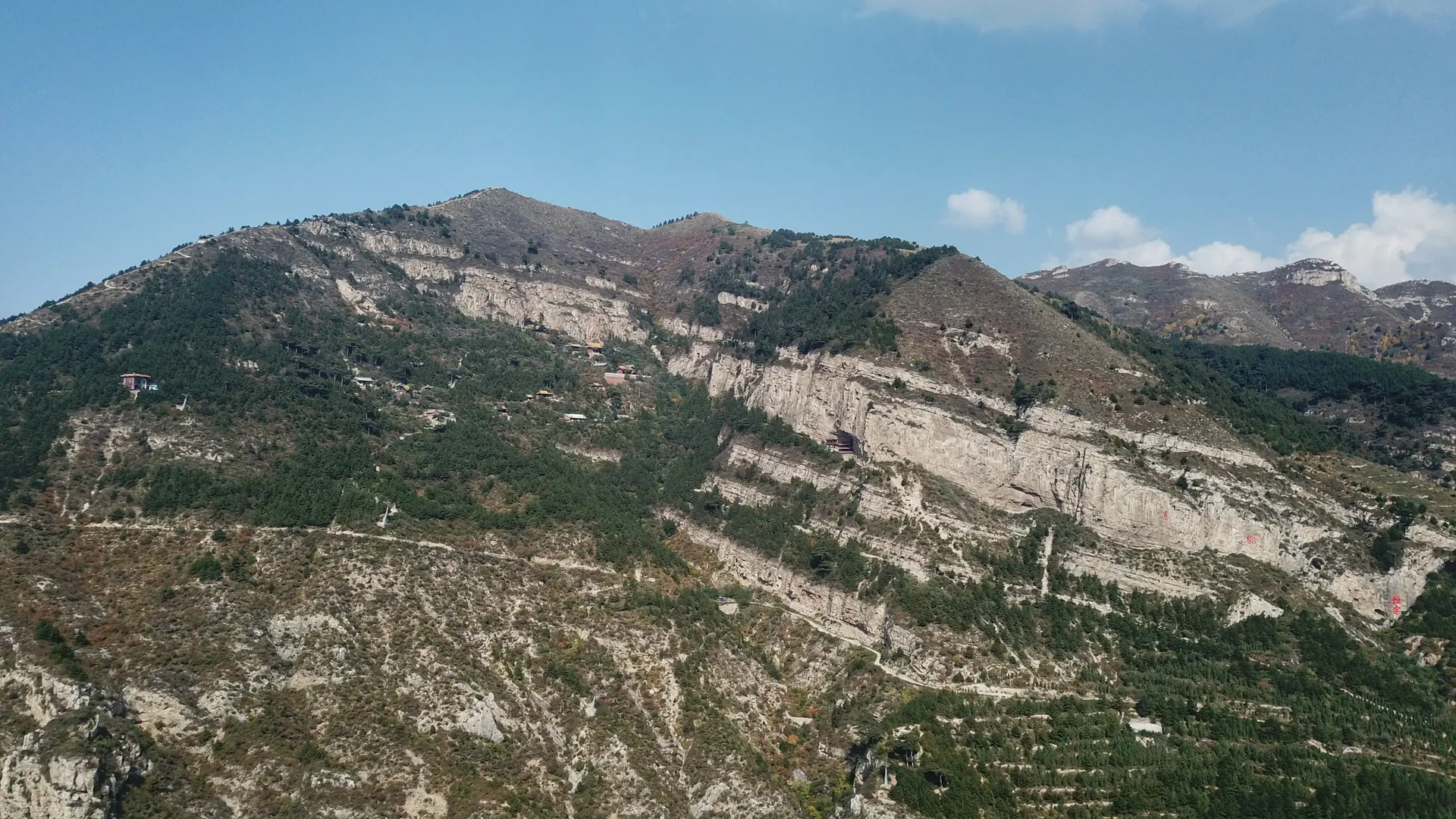
Image of Beiyue Hengshan Mountain. Image source · CC-BY-SA-4.0
Visit essentials
A quick read before you go
- Duration
- No single duration applies to the whole mountain.
- Access
- The reviewed location is Hunyuan County, Shanxi.
Overview
Mount Heng in Shanxi is the northern mountain of China's Five Great Mountains. It is a separate sacred landscape from Mount Heng in Hunan. The State Party's UNESCO tentative-list submission identifies Northern Hengshan as the Shanxi member of the Wuyue system, and Datong's municipal portal places the mountain near Hunyuan and describes its religious and built heritage. This profile treats Mount Heng (Shanxi) as both a sacred place and a protected mountain landscape.
Its inclusion in the Five Great Mountains is a relationship within a cultural system, not proof that the five form one continuous trail or that they share one ritual, community, or present-day visitor policy.
Why this place is sacred
Within the Wuyue system, the northern peak helped express directional order, territory, and imperial sacrificial practice. Daoist identity, local devotion, architecture, mountain routes, and later heritage interpretation should remain visible as different layers. The famous Xuankong or Hanging Temple is associated with the wider Hengshan area but should not automatically be treated as identical to the whole mountain record or as a required station on this five-mountain page.
The language of sacredness here follows the cited authorities and inherited cultural record. It does not authorize Pilgrim Map to speak for every contemporary practitioner or to convert belief into scientific fact.
Mount Heng (Shanxi) is a mountain landscape rather than a single-purpose building. The Wuyue relationship developed through long histories of mountain veneration, state ritual, religious institutions, travel, writing, and protected heritage.
Meanings have changed across dynasties, communities, religious lineages, state institutions, and modern tourism. The page keeps those layers visible rather than presenting an unbroken, uniform practice.
Experience and orientation
Mountain and monument access can be separately managed. Verify current roads, paths, tickets, weather restrictions, temple access, and photography rules with the responsible authorities. Respect barriers and worship spaces; do not climb closed structures or assume that a scenic-area admission grants ritual participation. Read inscriptions and interpretation in place, remain on lawful routes, avoid touching protected surfaces, and give worshippers and custodians space. The most meaningful encounter may be attentive observation rather than reproducing a rite you do not know.
The reviewed record is Mount Heng (Shanxi) (北岳恒山), the northern member of the Five Great Mountains, in Hunyuan County, Shanxi. It is not interchangeable with another similarly named mountain or with any one temple inside the landscape.
Context and lineage
Within the Wuyue system, the northern peak helped express directional order, territory, and imperial sacrificial practice. Daoist identity, local devotion, architecture, mountain routes, and later heritage interpretation should remain visible as different layers. The famous Xuankong or Hanging Temple is associated with the wider Hengshan area but should not automatically be treated as identical to the whole mountain record or as a required station on this five-mountain page.
The reviewed sources support Northern Hengshan's Daoist sacred identity and its place in a wider history of imperial and folk mountain veneration. More specific ritual claims require a named temple or custodian source.
Traditions and practice
The sources document mountain veneration and histories of imperial, religious, and popular practice. Specific offerings, prayers, processions, and restrictions belong to named communities and sites.
Visitors may encounter active worship alongside heritage tourism. Observe before approaching, follow posted instructions, and do not interrupt ceremonies or private devotion.
Pause at public thresholds, read the site-specific guidance, keep conversation low near worship, and leave natural and built features exactly as found.
Chinese sacred mountain traditions
ActiveThe reviewed sources support Northern Hengshan's Daoist sacred identity and its place in a wider history of imperial and folk mountain veneration. More specific ritual claims require a named temple or custodian source.
Practice is site-specific; follow the relevant temple or community.
Perspectives and open questions
This profile distinguishes inherited religious meaning, documented history, heritage interpretation, state-party claims, and a visitor's personal response.
Scholarly perspective
The UNESCO materials provide a strong system-level and heritage baseline but do not replace specialist scholarship or community knowledge for every monument and practice.
Living and traditional perspectives
The reviewed sources support Northern Hengshan's Daoist sacred identity and its place in a wider history of imperial and folk mountain veneration. More specific ritual claims require a named temple or custodian source.
Alternative interpretations
Personal experiences may be meaningful to visitors, but claims about energy, healing, portals, or guaranteed transformation are not published as site facts.
Open questions
Current operations and site-specific practices can change and require confirmation from the responsible authority or community.
Plan your visit
Access and arrival
The reviewed location is Hunyuan County, Shanxi. Confirm current transport, tickets, path conditions, and emergency guidance locally.
Use current local information; no lodging or temple-stay availability is asserted by this profile.
Respectful visit
Wear clothing suitable for mountain conditions and modest enough for active temples; follow any site-specific requirements.
Do not photograph worshippers, ceremonies, restricted interiors, or protected details where permission is absent.
Leave offerings only where the responsible religious community explicitly permits and guides the practice.
Stay on open paths, obey barriers, and confirm rules with the relevant scenic-area or religious authority.
Do not reenact sacrifices, leave improvised offerings, climb closed structures, or repeat supernatural, medical, or safety claims as facts.
Current practical details
Address
MP4G+RGJ, Hunyuan County, Datong, Shanxi, China, 037400
Phone
Hours, fees, and access can change — verify on the official source before you travel. Practical details last checked Jun 2026.
Location
Map loads as you approach this section.
Pilgrim reflections
A portrait of encounter, not a score
Pilgrims describe what they felt, how present they could become, and whether the place would shape a journey. There are no stars and no ranking of traditions.
No reviewed reflections yet
The first pilgrims can help describe the character of being here.
Share a reflection
Available after an account-backed “Been there.” Every reflection is reviewed before publication.
Nearby sacred places
Explore other sacred places in the region. Proximity does not establish access or travel time; check each place’s guidance.


References
Sources consulted for this page. Source categories describe the publication, not a guarantee that every claim is verified. Traditional accounts and outside interpretations may differ.
- 01The Four Sacred Mountains as an Extension of Mt. Taishan — Ministry of Construction of the People's Republic of China via UNESCO World Heritage CentreSource contextSupports the finite five-mountain system, directional identities, imperial sacrifice history, and continuing religious and cultural significance. UNESCO notes that tentative-list content is submitted by the State Party.
- 02Mt. Hengshan, North Holy Mountain — Datong municipal governmentSource contextSupports the northern-peak identity, Hunyuan setting, Daoist context, and associated historic architecture.
Share a photo
Help visitors recognize Beiyue Hengshan Mountain. Every submission is reviewed before publication.