Basilica of Virgin of Itatí, Corientes, Argentina
A neo-Gothic sanctuary rising from the Molise hills, born of shepherdesses' visions and a miraculous spring
Understand sacred places, explore living traditions, and learn how to engage respectfully with Pilgrim Map.
Access has not been verified. Check current local guidance before planning a visit.
Municipio de Itatí, Corrientes, Argentina
Read the sources
Visit essentials
A quick read before you go
- Duration
- 1.5-2.5 hours for basilica and Via Matris
- Access
- Castelpetroso is in the province of Isernia, accessible by car via the SS17 or A1 motorway (exit…
Overview
The Basilica Santuario di Maria Santissima Addolorata rises from the slopes above Castelpetroso like something between a cathedral and a castle — its neo-Gothic spires and pinnacles appearing almost improbable against the green hills of Molise. It is one of those places where the scale of the architecture seems to exceed the scale of the settlement, suggesting that what happened here was addressed to a wider audience than the local population.
What happened was this: on March 22, 1888, two shepherdesses named Serafina and Bibiana reported seeing the Virgin Mary in the form of the Mater Dolorosa at a place called Cesa tra Santi. The apparitions were investigated by the Bishop of Bojano, Monsignor Francesco Macarone Palmieri, who — in a rare turn for ecclesiastical investigations — reported seeing the vision himself. A miraculous spring emerged at the site.
A young man named Augusto Acquaderni, suffering from bone tuberculosis, was reportedly healed after drinking from it. His father, Carlo Acquaderni, a prominent Catholic layman, became the driving force behind the construction of a sanctuary.
Designed by the Bolognese engineer Francesco Gualandi in French Gothic style, the basilica was begun in 1890 and consecrated in 1975. Its seven chapels correspond to the Seven Sorrows of Mary, creating an architectural meditation on grief. In 1973, Pope Paul VI proclaimed Maria Santissima Addolorata patroness of Molise — a region often overlooked, whose patroness is herself a figure defined by being overlooked in the shadow of more celebrated Marian titles.
A 750-metre path called the Via Matris connects the basilica to the original apparition site, tracing the Virgin's sorrows through the landscape. The walk is the heart of the pilgrimage — a physical passage from monumental architecture to the humble ground where two shepherdesses saw something that changed this hillside.
Why this place is sacred
The most affecting quality of Castelpetroso may be its dissonance. The neo-Gothic basilica is grand, formal, aspirational — it reaches toward the architectural vocabulary of northern European cathedrals. But the apparitions that gave rise to it occurred on a hillside, to shepherdesses, in a region that most Italians could not locate on a map. The thinness lies precisely in this gap between the small and the large, the humble and the monumental.
The Via Matris makes this tension walkable. Seven hundred and fifty metres separate the basilica from the apparition site, and along this path the pilgrim moves from the institutional to the intimate. The stations recall the sorrows of Mary, but the landscape itself — green Molise hills, the smell of grass and stone — provides its own commentary. By the time you reach the place where Serafina and Bibiana knelt, the architecture has fallen away.
What remains is ground, rock, water, and whatever the shepherdesses encountered here.
The miraculous spring adds another register. Water emerging from the earth at a place of reported divine encounter echoes patterns found across the world's sacred geography — from Lourdes to the holy wells of Ireland to the sacred springs of Sardinia. Whether one interprets this theologically or phenomenologically, the convergence of vision, water, and healing at a single site creates a density of meaning that the landscape seems barely able to contain.
The sanctuary was built to commemorate and enshrine the 1888 Marian apparitions at Cesa tra Santi, providing a monumental place of worship for pilgrims drawn to the site of the visions and the miraculous spring.
From a rural apparition site to a neo-Gothic basilica whose construction spanned nearly a century (1890-1975). The proclamation of Maria Santissima Addolorata as patroness of Molise in 1973 elevated the sanctuary from a local devotion to a regional symbol. Today it serves as both pilgrimage destination and cultural landmark of a region seeking greater recognition.
Experience and orientation
The basilica announces itself from a distance — its neo-Gothic profile visible across the Volturno Valley, spires rising above a landscape of gentle hills and scattered villages. Approaching, the scale becomes clearer: this is a substantial building, its seven chapels radiating from a central dome that reaches fifty-four metres. The style, designed by Francesco Gualandi to evoke northern European Gothic, feels deliberately aspirational — Molise reaching beyond its own horizon.
Inside, the seven chapels dedicated to the Seven Sorrows of Mary create a sequence of contemplative spaces. The architecture invites circling — moving from sorrow to sorrow as Mary's grief unfolds in spatial form. Light enters through Gothic windows, casting colored patterns across stone floors worn by decades of pilgrims.
But the essential experience lies outside. The Via Matris descends from the basilica toward the apparition site, and as it does, the architecture recedes and the landscape takes over. The path is modest — a pilgrim's track through Molise countryside. At the site where the shepherdesses reported their vision, the spring still flows. The contrast is complete: from the grandeur of Gothic revival to the simplicity of water emerging from rock.
This movement — from the monumental to the elemental — is what Castelpetroso offers that other Marian sanctuaries may not.
Begin at the basilica and spend time in the seven chapels. Then walk the Via Matris to the apparition site, allowing the transition from architecture to landscape to work on you. Drink from the spring if you wish. The return walk allows the basilica to reassert itself gradually against the sky.
Context and lineage
On March 22, 1888, shepherdesses Serafina and Bibiana reported seeing the Madonna Addolorata at Cesa tra Santi, on the slopes of Monte Patalecchia above Castelpetroso. The vision showed Mary holding the dead Christ, pierced by seven swords — the traditional iconography of the Mater Dolorosa. When Bishop Francesco Macarone Palmieri of Bojano investigated, he reported witnessing the same apparition. A spring emerged at the site, and its waters were credited with healing young Augusto Acquaderni of bone tuberculosis.
His father Carlo, moved by gratitude and his own reported vision, championed the construction of a sanctuary.
The sanctuary belongs to the tradition of 19th-century Marian apparition sites — contemporary with Lourdes (1858) and anticipating Fatima (1917). Its neo-Gothic architecture connects it to the broader European revival of medieval forms in Catholic sacred building. Its designation as patroness-church of Molise (1973) ties it to the region's identity.
Serafina and Bibiana
Shepherdesses who witnessed the first apparitions on March 22, 1888
Francesco Macarone Palmieri
Bishop of Bojano who investigated the apparitions and reported witnessing the vision himself
Carlo Acquaderni
Catholic layman whose son was healed; promoted the construction of the sanctuary
Francesco Gualandi
Bolognese engineer who designed the basilica in neo-Gothic style
Traditions and practice
The anniversary of the apparitions is celebrated from mid-March through March 22, with special Masses, Eucharistic adoration, and community gatherings. The Feast of Our Lady of Sorrows, around September 15, draws pilgrims from across Molise and beyond. The Via Matris — the 750-metre path connecting the basilica to the apparition site, with stations for the seven sorrows — is the central devotional practice.
Daily Mass and confessions continue year-round. The sanctuary participates in the broader pastoral life of the diocese of Isernia. Summer cultural events in the nearby village complement the religious calendar.
Walk the Via Matris with attention to the transition from architecture to landscape. If visiting in March or September, the liturgical celebrations provide the fullest context. At other times, the quiet of the basilica and the solitude of the apparition site offer their own form of encounter.
Roman Catholicism - Marian devotion
ActiveSanctuary of the patroness of Molise, built on the site of 1888 Marian apparitions
Daily Mass, Via Matris devotion, annual feast celebrations, pilgrimage
Perspectives and open questions
Castelpetroso sits at the intersection of Marian devotion, 19th-century ecclesiastical architecture, and the identity of Italy's least-populated region.
Scholarly perspective
The apparitions have been recognized within Catholic tradition but have not received the formal supernatural declaration given to Lourdes or Fatima. Art historians note the basilica as a significant example of neo-Gothic sacred architecture in southern Italy — a style more commonly associated with the north.
Living and traditional perspectives
Within Catholic devotion, the sanctuary holds particular significance as the seat of the patroness of Molise. The bishop's own reported vision during investigation — an unusual event in the history of Marian apparitions — lends the tradition a distinctive character.
Alternative interpretations
Some observers have drawn parallels between Castelpetroso and Lourdes — both involving humble visionaries, miraculous springs, and neo-Gothic architecture. The comparison invites reflection on how similar patterns of encounter, healing, and architectural response repeat across different times and places.
Open questions
The private experience of Serafina and Bibiana — what they actually perceived on that March hillside — remains beyond historical recovery. The bishop's corroboration adds a layer of institutional weight but does not resolve the fundamental mystery of what happens when human beings report encountering the divine.
Plan your visit
Access and arrival
Castelpetroso is in the province of Isernia, accessible by car via the SS17 or A1 motorway (exit Isernia). Limited public transport; nearest train station is Isernia.
Limited options in Castelpetroso village. More choices available in Isernia (about 20 km) and Campobasso (about 40 km).
Respectful visit
Shoulders and knees covered throughout the complex.
Photography without flash is generally permitted inside the basilica. Be discreet at the apparition site and during devotional activities.
Candles and votive offerings available at the basilica.
Maintain silence during services and at the apparition site | Respect pilgrims on the Via Matris | Do not disturb the spring or its surroundings
The Via Matris involves a walk of 750 metres with some incline. The sanctuary's location in rural Molise means limited services in the immediate area.
Current practical details
Address
W3414 Itatí, Corrientes Province, Argentina
Phone
Hours
Hours, fees, and access can change — verify on the official source before you travel. Practical details last checked Jun 2026.
Location
Map loads as you approach this section.
Pilgrim reflections
A portrait of encounter, not a score
Pilgrims describe what they felt, how present they could become, and whether the place would shape a journey. There are no stars and no ranking of traditions.
No reviewed reflections yet
The first pilgrims can help describe the character of being here.
Share a reflection
Available after an account-backed “Been there.” Every reflection is reviewed before publication.
Nearby sacred places
Explore other sacred places in the region. Proximity does not establish access or travel time; check each place’s guidance.
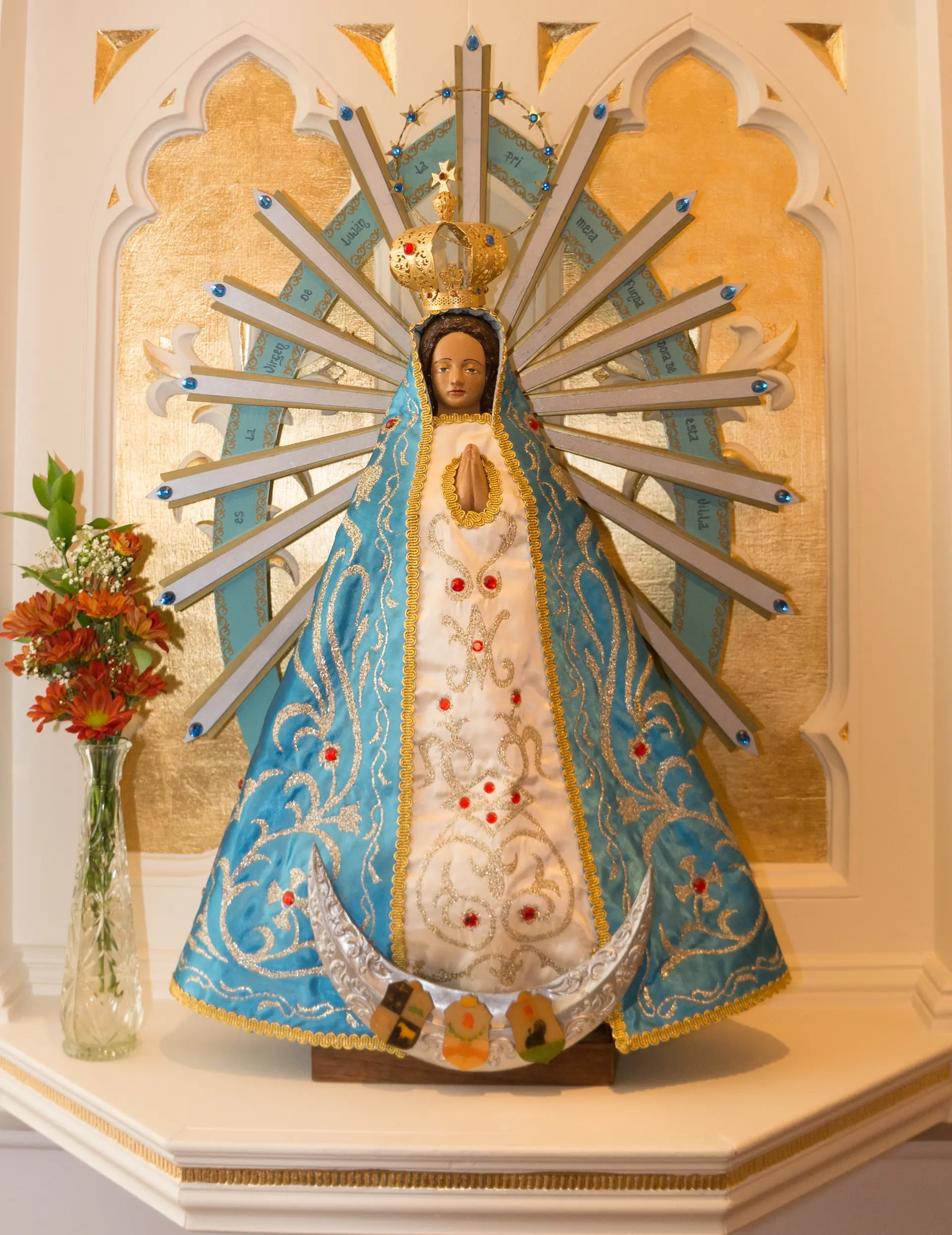
Our Lady of Luján
Luján, Buenos Aires Province, Argentina
815.5 km away
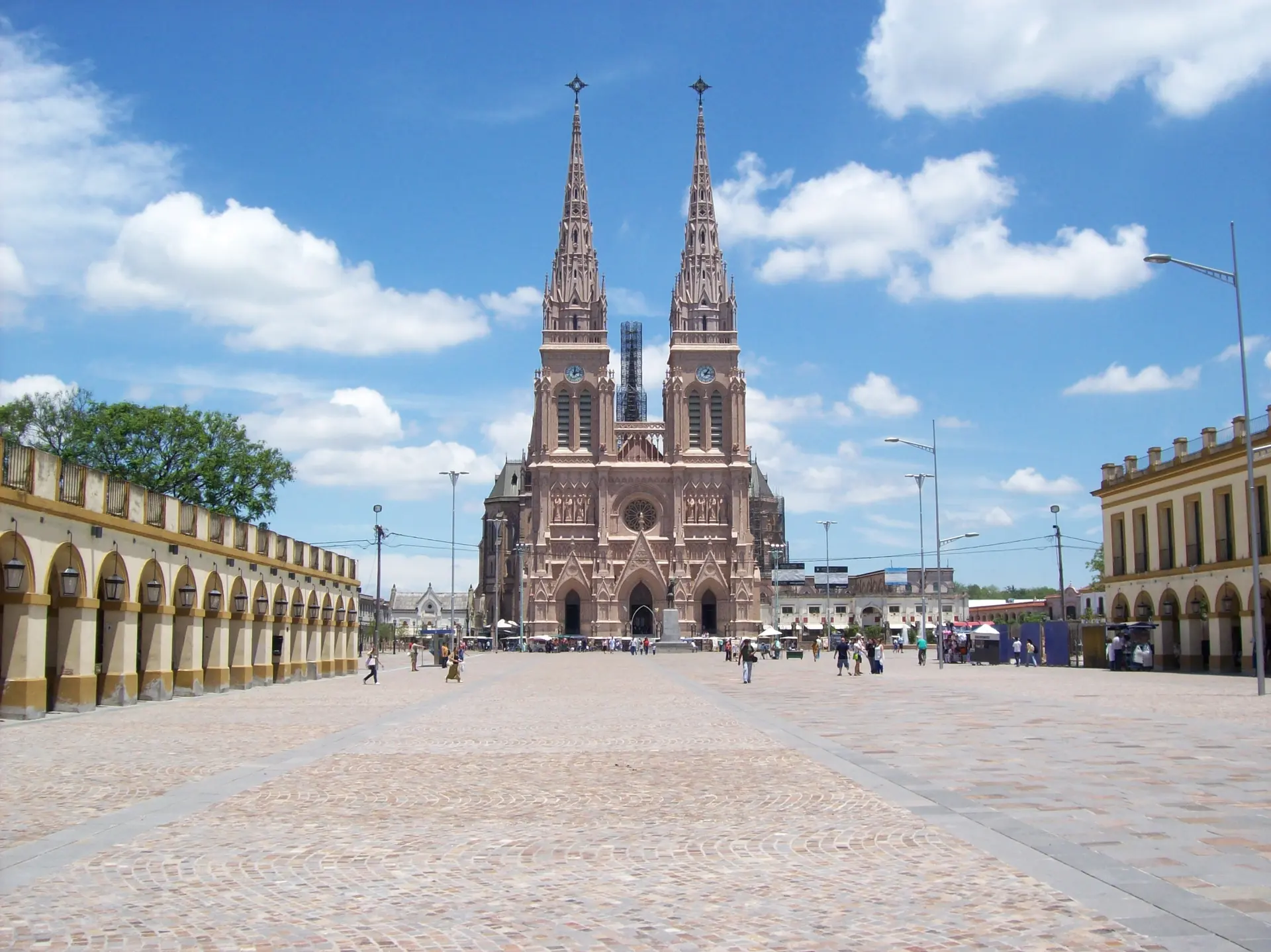
Basilica of the Virgin of Luján, Luján
Luján, Buenos Aires Province, Argentina
815.5 km away

San Ramon Nonato Sanctuary, Buenos Aires
Buenos Aires, Argentina
818.7 km away

San Cayetano Sanctuary, Liniers
Buenos Aires, Buenos Aires, Argentina
819.8 km away
References
Sources consulted for this page. Source categories describe the publication, not a guarantee that every claim is verified. Traditional accounts and outside interpretations may differ.
- 01Corrientes tourism - Basílica de Itatí — Corrientes Tourism MinistryofficialOfficial tourism
- 02Our Lady of Itatí - Wikipedia — WikipediaencyclopediaComprehensive overview
- 03Basilica of Our Lady of Itati - Catholic Travel Guide — Catholic Travel GuideguidePilgrimage guide
- 04300,000 youths make pilgrimage - CNA — Catholic News AgencynewsRecent pilgrimage
- 05Mary APParitions - Itatí — University of DaytonspiritualAcademic religious source
- 06Ser Argentino - Itatí pilgrimage — Ser ArgentinoguideTravel overview
Photo gallery
3 curated photos
Share a photo
Help visitors recognize Basilica of Virgin of Itatí, Corientes, Argentina. Every submission is reviewed before publication.