Basilica of Nuestra Señora de la Salud, Patzcuaro
Where a bishop's utopian dream raised a cathedral on Purepecha sacred ground, housing the first Virgin made in American lands
Understand sacred places, explore living traditions, and learn how to engage respectfully with Pilgrim Map.
Access has not been verified. Check current local guidance before planning a visit.
Pátzcuaro, Michoacán, Mexico
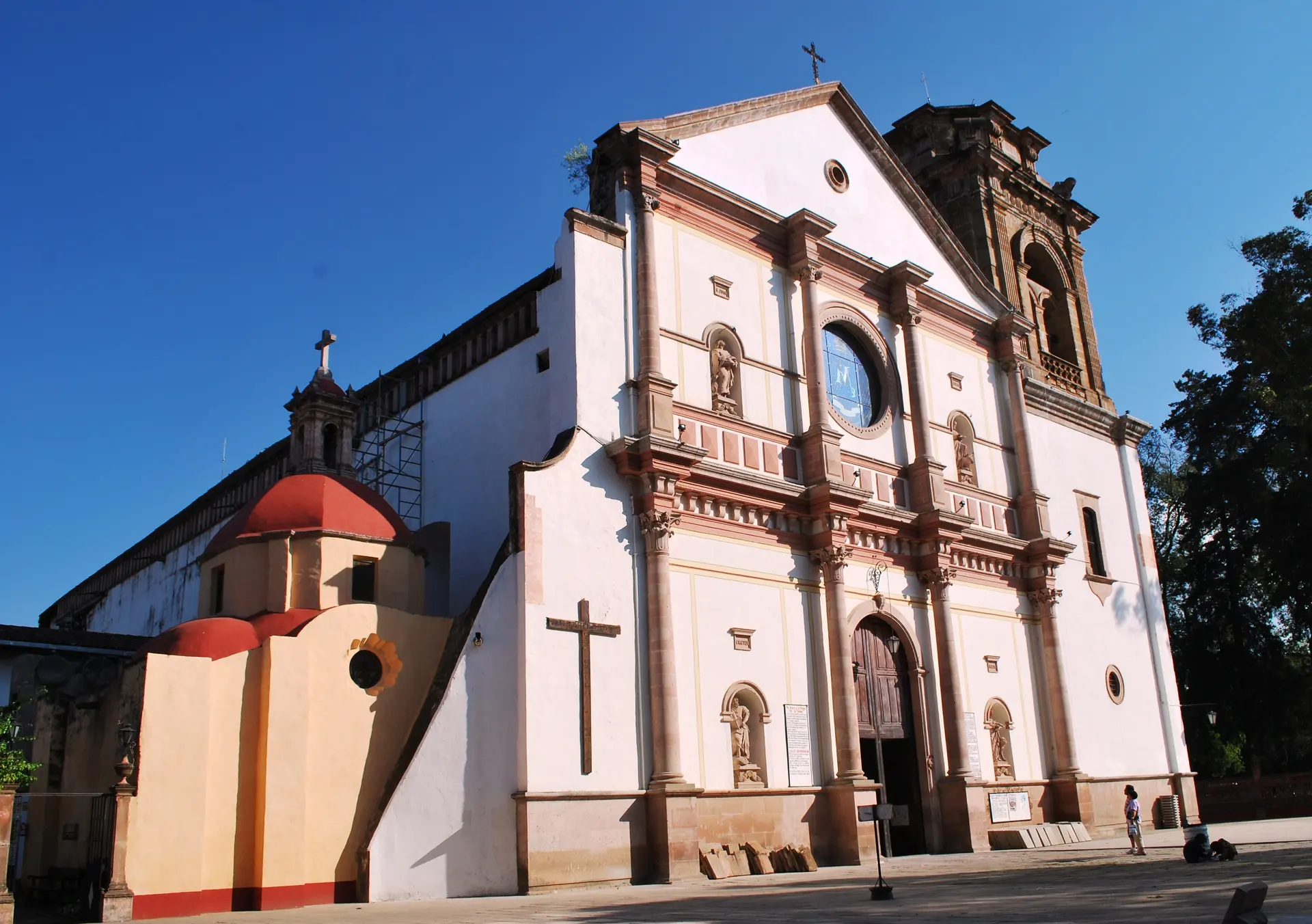
Image of Basilica of Nuestra Señora de la Salud, Patzcuaro. Image source · CC-BY-SA-3.0
Visit essentials
A quick read before you go
- Duration
- 1-2 hours for full visit including Virgin, Quiroga's tomb, and contemplation.
- Etiquette
- Approach as pilgrims approach: with reverence for the Virgin, respect for those who crawl on…
Overview
The Basilica of Nuestra Senora de la Salud rises on a Patzcuaro hilltop that was sacred long before Christianity arrived. Below it, Lake Patzcuaro spreads across a valley the Purepecha people had inhabited for centuries. Above it, the sky of Michoacan holds what the first bishop of this region saw when he looked up from his impossible project: the dome of heaven that his five-nave cathedral would have mirrored, if earthquakes and engineering had not forced compromise.
The original design called for five naves of equal size meeting at a central altar—a solution to accommodate the multitudes he expected while creating architecture worthy of the faith he served. Construction experts warned him: too ambitious, too dangerous in earthquake country. They were right. Only the central nave was completed, serving as cathedral from 1565 until the diocese transferred to Morelia in 1580.
But the basilica's treasure does not depend on architectural completion. Between 1538 and 1539, before his cathedral rose, Quiroga commissioned indigenous Purepecha craftsmen to create an image of the Virgin. They used their traditional materials: tazingue (a natural glue) binding a paste made from the heart of the cornstalk. The result stands nearly life-sized, considered the first image of the Virgin Mary made in American lands.
She began manifesting healings almost immediately. By 1540 she received public worship; soon after, she was called Our Lady of Health—Nuestra Senora de la Salud. In 1899, Pope Leo XIII decreed her pontifical coronation. She is patroness of the Archdiocese of Morelia and of the Pastoral de la Salud throughout Mexico.
Pilgrims still arrive from across Mexico, many crawling on their knees across the plaza, into the church, and along its nave to reach her. They come for what she has provided since Quiroga's time: health, healing, the hope that what seems impossible might bend to faith. The bishop who dreamed of utopia created something he may not have intended: a place where the desperate find response.
Why this place is sacred
What makes this basilica thin is the meeting of traditions in a single form. The Virgin of Our Lady of Health stands cornstalk-made and Christian-venerated, indigenous craft holding Catholic meaning, the synthesis visible in her very material.
The Purepecha who made her knew what cornstalk paste could do. Their tradition of creating religious images from this material predated Christianity; Quiroga's genius was recognizing that indigenous craft could serve Christian purpose. The Virgin they created is not Spanish wood imported across an ocean but American corn transformed by American hands. She is native in composition while bearing universal meaning.
The hill beneath the basilica carries its own accumulated sanctity. This was Purepecha ceremonial ground, a height where priests performed what Spanish observers called idolatry and indigenous memory calls tradition. When Quiroga built here, he followed colonial strategy—new faith claiming old sacred site—but the ground remembers what it held before. Pilgrims who climb to the basilica climb what was always a sacred ascent.
The healings that gave her name multiply the thinness. Since 1540, petitioners have brought their illnesses to Our Lady of Health and many have left healed. The accumulation of answered prayers creates thickness of meaning: each new supplicant enters a history of response, their petition joining centuries of petition, their hope supported by documented transformation.
The unfinished architecture participates too. Quiroga's five-nave design would have created cathedral splendor; what exists is single nave plus ambition. The incompleteness speaks to human limitation, to dreams that exceed capacity, to the gap between vision and execution that characterizes every utopian project. Yet within this unfinished space, the cornstalk Virgin accomplishes what the architecture could not: she makes present what the faithful seek.
Pilgrims crawling across the plaza on their knees embody the transition. Their physical discomfort, like their physical approach, creates offering through effort. By the time they reach the Virgin behind the altar, they have crossed threshold not just of church door but of their own resistance. The knee-crawled approach is itself thinning of the membrane between petition and response.
Quiroga's tomb lies in the side chapel, his utopian dreams now bones in the building he could not complete. But the Virgin he commissioned continues his work: healing, hope, the possibility that faith might accomplish what human effort cannot.
Don Vasco de Quiroga began construction in 1540 to create a grand cathedral for evangelization. The Virgin was commissioned earlier (1538-1539) to provide indigenous peoples with a familiar image of Mary.
Served as cathedral 1565-1580; parish church until 1908; elevated to basilica status in 1908 (officially 1923). The Virgin was pontifically crowned in 1899.
Experience and orientation
Patzcuaro is itself an experience—a Pueblo Magico of colonial architecture, lakeside setting, and Purepecha culture that survives five centuries of pressure. The basilica rises above it all, visible from the main plaza a few blocks away, drawing the eye upward as it has since Quiroga raised what his design permitted.
Climb to the church through streets that the colonial period shaped. The approach is not dramatic stairway but gradual ascent through town, devotion woven into daily geography. When you reach the basilica grounds, the building reveals its incomplete grandeur: what exists is impressive; what was planned would have astonished.
Enter through doors that have admitted pilgrims since the sixteenth century. The single nave—all that construction permitted of Quiroga's five-nave design—leads your eye toward the altar and what waits behind it: the Virgin of Our Lady of Health, cornstalk-made, nearly life-sized, crowned since 1899 with papal authority.
Climb the steps behind the altar for close encounter. She is not large by cathedral standards, but she carries weight that size cannot measure. Made between 1538 and 1539, she is considered the original Virgin Mary image created in the Americas. Indigenous Purepecha hands shaped her from cornstalk paste; Catholic devotion gave her meaning; nearly five centuries of petitioners have brought her their health needs and received response.
Descend and find the side chapel to the left of the main entrance. Here lies Don Vasco de Quiroga, the utopian bishop whose dreams built this church and commissioned this Virgin. His tomb grounds the experience in human story: a man who believed the New World could be different, who founded hospitals and universities and communities of justice, who could not complete his cathedral but left something more enduring.
Watch the pilgrims if they come while you visit. Many crawl on their knees from the plaza, across the church threshold, along the nave to the altar. The practice continues what has continued since Quiroga's time: physical offering accompanying spiritual petition, effort embodying devotion, pain participating in the healing that is sought.
On December 8, the Virgin is processed through Patzcuaro's streets—the patroness leaving her basilica to move among her people. If your visit coincides, you witness the town gathered around what it has venerated since before the word 'Mexico' existed.
Leave the basilica and walk the town. Patzcuaro's indigenous character persists: Purepecha language, traditional crafts, the lake that shaped this culture before and after conquest. The Virgin in the basilica draws from this context—her cornstalk body, her American making, her capacity to receive what indigenous and mestizo and all pilgrims bring.
Located at Gral. Benigno Serrato S/N, Centro, 61600 Patzcuaro, Michoacan. A few blocks from the main plaza. The Virgin is behind the altar; Quiroga's tomb in the side chapel to the left of main entrance.
Context and lineage
Don Vasco de Quiroga arrived in New Spain as a judge, became bishop of Michoacan, and dreamed of better worlds. Thomas More's Utopia shaped his vision: communities of justice, indigenous peoples protected, faith shared through kindness rather than force. His hospital-communities, the University of Michoacán, and his protective legislation all expressed the same conviction that the New World could be what the Old had failed to become.
The cathedral he planned for Patzcuaro would have expressed this conviction in stone. Five naves of equal size meeting at a central altar: architecture democratic in its symbolism, grand in its ambition. He began in 1540, building on a hill where Purepecha priests had served their gods. Colonial strategy—new faith claiming old sacred site—but Quiroga may have meant something more: transformation rather than erasure, the sacred ground continuing sacred under new form.
The design proved impossible. Earthquake country does not forgive architectural ambition. Only the central nave was completed, serving as cathedral from 1565 until the diocese moved to Morelia in 1580.
But between 1538 and 1539, before the construction began, Quiroga commissioned what would matter more than architecture. Indigenous Purepecha craftsmen, using traditional materials—tazingue binding cornstalk paste—created an image of the Virgin nearly life-sized. She was native in composition, Christian in meaning, the synthesis Quiroga's utopia required.
She began healing almost immediately. By 1540, public worship began. By custom, she was called Nuestra Senora de la Salud—Our Lady of Health. Pope Leo XIII decreed her pontifical coronation in 1899. She is patroness of the Archdiocese of Morelia and of health ministry throughout Mexico.
Quiroga died in 1565, his cathedral incomplete, his utopia partial. But pilgrims still crawl across the plaza to reach the Virgin he commissioned, still find in the cornstalk figure what they could not find elsewhere. The unfinished church holds finished power.
Founded by Don Vasco de Quiroga; diocesan administration after his death; elevated to basilica status 1908/1923. Pontifical coronation of the Virgin 1899.
Don Vasco de Quiroga
First bishop of Michoacan, founder
Purepecha craftsmen (unnamed)
Created the Virgin (1538-1539)
Traditions and practice
The knee-crawling pilgrimage represents colonial-era devotional practice. Cornstalk paste image-making continued Purepecha tradition. Health petitions have characterized devotion since the Virgin's creation.
Continuous pilgrimage for health petitions. December 8 procession through Patzcuaro. Veneration of Quiroga's tomb. Mass and regular worship in the basilica.
Visit the Virgin behind the altar with awareness of the nearly five centuries of health petitions she has received. Spend time with Quiroga's tomb, understanding his utopian dreams. If possible, witness pilgrims crawling on their knees—their devotion teaches what documentation cannot.
Roman Catholicism / Marian Healing Devotion
ActiveOur Lady of Health represents one of Mexico's oldest Marian cults, with the first American-made Virgin image and nearly five centuries of continuous healing devotion.
Knee-crawling pilgrimage, health petitions, December 8 procession, veneration of the cornstalk Virgin, visiting Quiroga's tomb.
Perspectives and open questions
The basilica can be understood as expression of colonial utopianism, as example of indigenous-Christian synthesis, as healing shrine drawing continuous pilgrimage, or as unfinished architectural ambition that nevertheless achieved its purpose.
Scholarly perspective
Art historians analyze the cornstalk paste Virgin as example of indigenous craft serving colonial devotion. Historians study Quiroga's utopian projects and their partial realization. Anthropologists document the continuity of pilgrimage and healing petition.
Living and traditional perspectives
For the faithful, the Virgin of Our Lady of Health simply heals. Quiroga's intentions and the Virgin's construction matter less than her demonstrated response to petition across nearly five centuries.
Alternative interpretations
Some note that the Purepecha sacred hill beneath the basilica carried power before Christianity named it. The Virgin made of American corn by American hands represents indigenous tradition claiming space within colonial imposition.
Open questions
The specific circumstances of the Virgin's early miracles are traditional rather than documented. The extent of Purepecha ceremonial activity on the hill before Quiroga's construction is not fully known.
Plan your visit
Access and arrival
Full services in Patzcuaro. The town is a designated Pueblo Magico with colonial charm.
Respectful visit
Modest dress appropriate for Catholic churches.
Photography restrictions may apply near the altar and Virgin. Respect those in prayer and pilgrimage.
Candles and prayers are traditional. Donations support the basilica.
Do not disturb pilgrims crawling on their knees. Do not touch the Virgin's image.
The knee-crawling practice is for devotees, not tourists. Respect those in prayer and pilgrimage. Approach the Virgin's image with the reverence due nearly five centuries of veneration.
Current practical details
Address
Gral. Benigno Serrato S/N, Centro, 61600 Pátzcuaro, Mich., Mexico
Phone
Hours
Hours, fees, and access can change — verify on the official source before you travel. Practical details last checked Jun 2026.
Location
Map loads as you approach this section.
Pilgrim reflections
A portrait of encounter, not a score
Pilgrims describe what they felt, how present they could become, and whether the place would shape a journey. There are no stars and no ranking of traditions.
No reviewed reflections yet
The first pilgrims can help describe the character of being here.
Share a reflection
Available after an account-backed “Been there.” Every reflection is reviewed before publication.
Nearby sacred places
Explore other sacred places in the region. Proximity does not establish access or travel time; check each place’s guidance.

Cristo Rey, Cerro del Cubilete
Silao, Guanajuato, Mexico
168.3 km away

Nevado de Toluca
Estado de México, Mexico
198.6 km away
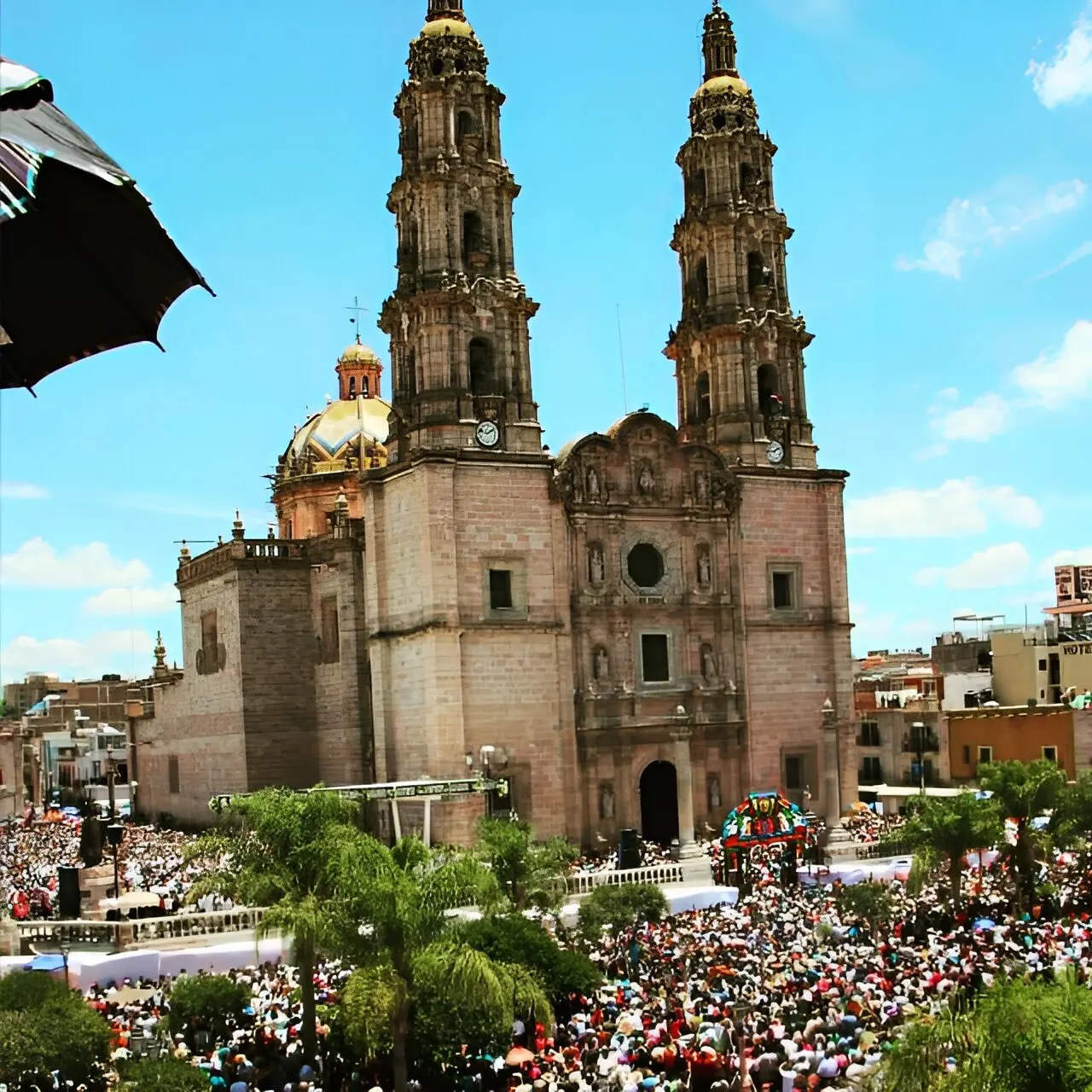
Cathedral Basilica of Our Lady of San Juan de los Lagos
San Juan de los Lagos, Jalisco, Mexico
206.7 km away

Basilica of Our Lady of Zapopan, Guadalajara
Zapopan, Jalisco, Mexico
229.2 km away
Photo gallery
3 curated photos
Share a photo
Help visitors recognize Basilica of Nuestra Señora de la Salud, Patzcuaro. Every submission is reviewed before publication.