Ashab-i Kehf, Nakhchivan, Azerbaijan
A cave where, according to the Quran, youths fled persecution and slept for over three hundred years
Understand sacred places, explore living traditions, and learn how to engage respectfully with Pilgrim Map.
Access has not been verified. Check current local guidance before planning a visit.
Julfa, Azerbaijan
Read the sources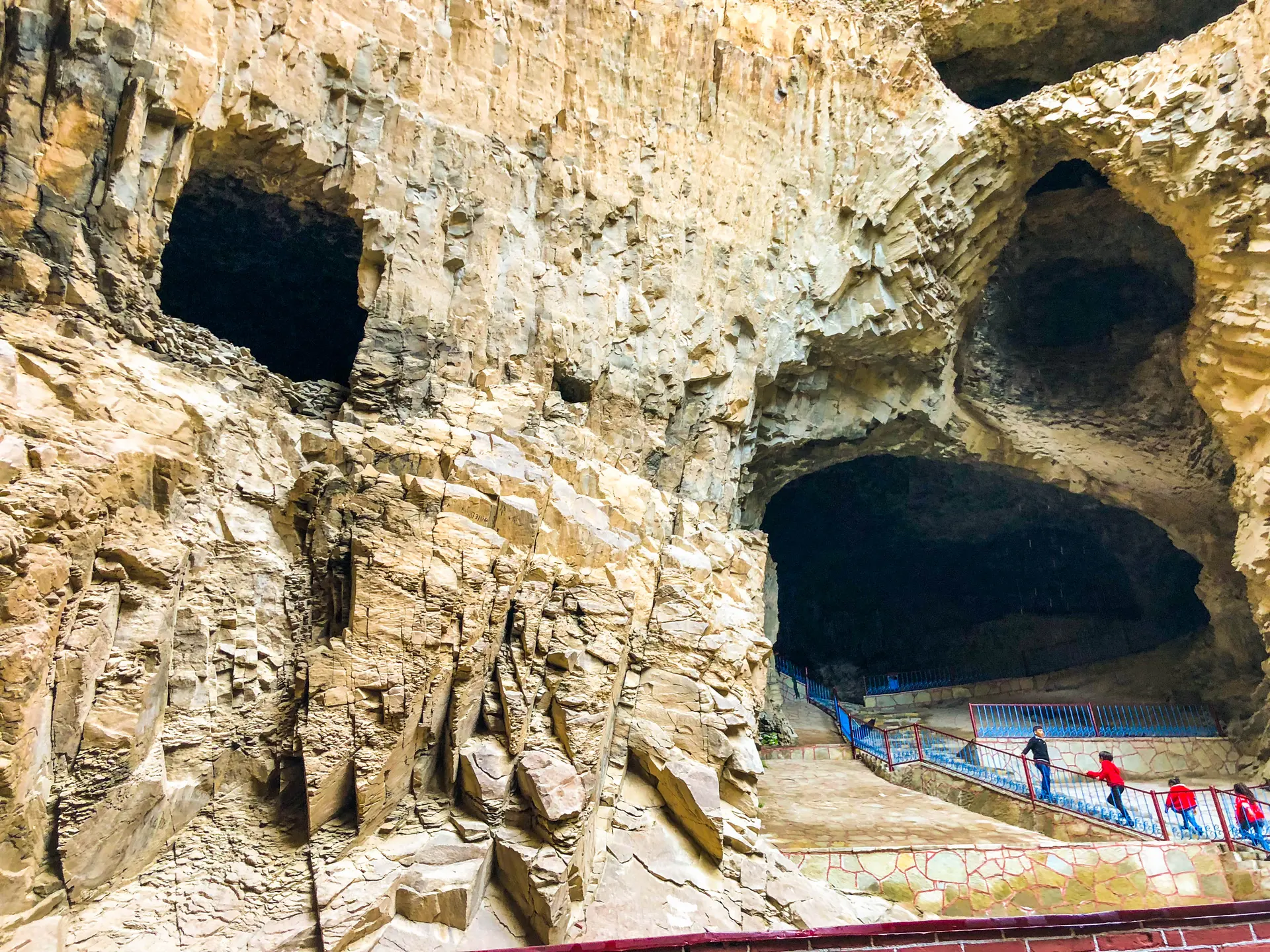
Image of Ashab-i Kehf, Nakhchivan, Azerbaijan. Image source · CC-BY-SA-4.0
Visit essentials
A quick read before you go
- Duration
- 1-2 hours.
- Access
- Approximately 12 km east of Nakhchivan City, off the road to Julfa.
Overview
In the hills east of Nakhchivan, Islamic tradition identifies the natural cave of Ashab-i Kehf with Surah Al-Kahf, Chapter 18 of the Quran. An indeterminate number of young believers fleeing a despotic ruler took refuge with their dog and slept; they awoke more than 300 years later to a world transformed while they remained unchanged. Other sites across the Mediterranean and Middle East, including Ephesus in Turkey and Amman in Jordan, claim the same identification.
Muslims of Nakhchivan and the wider region hold this cave to be authentic, a conviction sustained through centuries of pilgrimage and devotion. A mosque and shrines connected by stairs surround the cave, which visitors can enter. The Sleepers' story carries the possibility that faith preserves the faithful through otherwise destructive time; the cave becomes its dark container, where ordinary duration ceased and something else took its place.
Why this place is sacred
What makes this cave different from other caves is a narrative about time. The Sleepers entered; time stopped for them while continuing for everyone else. When they emerged, everything had changed except themselves. The cave was the mechanism of this preservation — not merely a shelter but a threshold between one kind of time and another.
Entering the cave, a visitor enters a space that tradition marks as having held this temporal anomaly. The darkness, the enclosure, the descent via stairs — all contribute to a sensation of leaving ordinary time behind. Whether one holds the Quranic narrative as literal truth or as parable, the cave's physical qualities align with its story: it is dark, enclosed, and separate from the world above in ways that are felt before they are interpreted.
The dog, mentioned in both Christian and Islamic versions of the story, adds an unexpected element of tenderness. The Sleepers did not flee alone; they brought a companion who kept watch while they slept for centuries. The faithfulness of both the youths and the dog is part of the cave's meaning.
Natural cave; identified in Islamic tradition as the cave of Surah Al-Kahf.
From natural cave to Islamic pilgrimage site to a complex with mosque, shrines, and stairs. The site has grown in infrastructure while maintaining its core identity as the cave of the Sleepers.
Experience and orientation
The approach from Nakhchivan City crosses open landscape before arriving at the cave complex. The mosque and shrine buildings provide the entrance, and from there, stairs descend and wind through the complex toward the cave itself. The transition from built structure to natural cave is gradual — walls give way to rock, light diminishes, the air changes.
Inside the cave, the space is dark and enclosed. The shrines within are places of concentrated devotion — pilgrims pray, make wishes, and seek blessings. The atmosphere is charged with the accumulated intention of tens of thousands of annual visitors, each bringing their own needs and hopes to a place that tradition says once held time at bay.
The cave does not reveal its age or its story through its appearance. It is a cave — dark, cool, mineral. What makes it more than a geological feature is the narrative that has been mapped onto it and the centuries of pilgrimage that have confirmed that mapping.
Enter through the mosque complex and follow the stairs down into the cave. Allow your eyes to adjust to the darkness. Observe pilgrims in prayer. The cave's meaning is not visible; it is narrated and believed.
Context and lineage
Around 2,000 years ago, young believers fled persecution and took refuge in a cave with their dog. They fell asleep and awoke more than 300 years later to find the world transformed. The story appears in both Christian tradition (5th century) and Surah Al-Kahf of the Quran (7th century).
The pilgrimage tradition at this site has sustained itself over centuries. The mosque and shrine complex has been expanded and maintained through successive periods.
Traditions and practice
Pilgrimage to the cave, prayer at the shrines, wish-making.
The mosque and cave complex serve as active places of worship. Regular pilgrimage visits, especially during Islamic holidays.
Enter the cave with awareness of its narrative — that this is a space where, according to scripture, time operated differently. The darkness is part of the experience. Observe pilgrims in prayer.
Islam (Shia and Sunni)
ActiveThe cave is identified as the setting of Surah Al-Kahf, one of the most recited chapters of the Quran. The story of the Sleepers — faith preserving the faithful through impossible duration — is central to Islamic devotion.
Pilgrimage, prayer, wish-making. Annual pilgrim gatherings.
Perspectives and open questions
Ashab-i Kehf holds a narrative about the relationship between faith and time — the possibility that sincere devotion can place one outside the ordinary flow of history.
Scholarly perspective
The Seven Sleepers legend appears in both Christian (5th century) and Islamic (7th century) traditions. Multiple sites claim the cave identification. The Nakhchivan site is one of several. The legend's appearance across religious traditions suggests a narrative with deep roots in the region's spiritual imagination.
Living and traditional perspectives
For Muslim pilgrims, this is the cave of Surah Al-Kahf — a Quranic site with the authority of scripture behind it. The identification is not tentative but certain, sustained by centuries of devotion.
Alternative interpretations
The multiplicity of Seven Sleepers cave claims across the Mediterranean and Middle East has drawn interest from scholars of comparative religion and sacred geography.
Open questions
Which, if any, of the worldwide cave claims corresponds to a historical event is genuinely unknowable. The tradition's power does not depend on archaeological proof.
Plan your visit
Access and arrival
Approximately 12 km east of Nakhchivan City, off the road to Julfa. Accessible by car or taxi from Nakhchivan.
Nakhchivan City offers accommodation.
Respectful visit
Modest clothing. Women should cover their heads in the mosque.
Photography generally permitted outside prayer times. Ask before photographing worshippers.
None formally required.
Remove shoes in the mosque | Modest dress required | Maintain silence during prayer | Follow guides through the cave
The cave and stairs can be crowded during peak pilgrimage periods.
Current practical details
Address
Ashabi-Kahf, Azerbaijan
Hours, fees, and access can change — verify on the official source before you travel. Practical details last checked Jun 2026.
Location
Map loads as you approach this section.
Pilgrim reflections
A portrait of encounter, not a score
Pilgrims describe what they felt, how present they could become, and whether the place would shape a journey. There are no stars and no ranking of traditions.
No reviewed reflections yet
The first pilgrims can help describe the character of being here.
Share a reflection
Available after an account-backed “Been there.” Every reflection is reviewed before publication.
Nearby sacred places
Explore other sacred places in the region. Proximity does not establish access or travel time; check each place’s guidance.

Alinjachay Khanagah Complex
Khanagah, Julfa District; Nakhchivan Autonomous Republic, Azerbaijan
11.4 km away

Yusif ibn Kuseyir Mausoleum
Nakhchivan, Nakhchivan Autonomous Republic, Azerbaijan
15.3 km away

Noah's Mausoleum
Nakhchivan, Nakhchivan Autonomous Republic, Azerbaijan
15.5 km away

Momine Khatun Mausoleum
Nakhchivan, Nakhchivan Autonomous Republic, Azerbaijan
15.9 km away
References
Sources consulted for this page. Source categories describe the publication, not a guarantee that every claim is verified. Traditional accounts and outside interpretations may differ.
- 01Ashabi Kahf Cave - Azerbaijan Travel — Azerbaijan TravelSource contextOfficial tourism portal
- 02Seven Sleepers Cave - Daily Sabah — Daily SabahacademicTurkish news coverage
- 03Seven Sleepers - Wikipedia — Wikipedia contributorsencyclopediaContext for the Seven Sleepers tradition
- 04Ashabi Kahf - Guided Azerbaijan — Guided AzerbaijanguideVisitor guide
Photo gallery
2 curated photos
Share a photo
Help visitors recognize Ashab-i Kehf, Nakhchivan, Azerbaijan. Every submission is reviewed before publication.