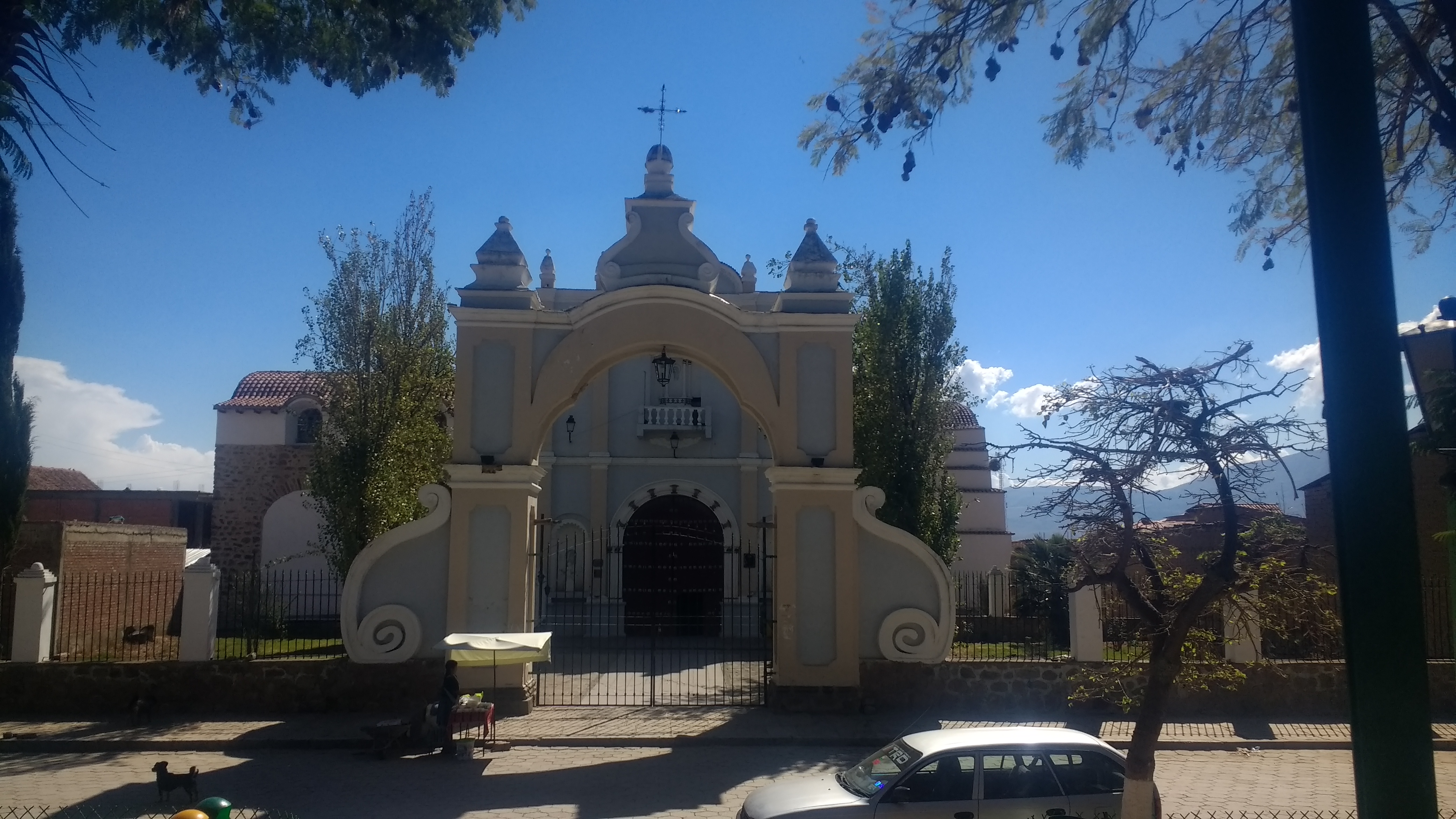
"Where a dark-skinned Virgin unites Spanish devotion and Andean earth in Bolivia's bread-making valley"
Arani, Church of San Bartolomé, Nuestra Señora La Bella
Municipio Arani, Cochabamba, Bolivia
In the Valle Alto of Cochabamba, where wind sweeps across fields of wheat and the scent of baking bread fills the streets, the Church of San Bartolomé has stood since 1610. Built by Augustinian priests on ancient ground the Quechua called Saqsayjarani, it shelters a polychrome wooden image of the Virgin Mary whose dark-skinned, indigenous features have drawn pilgrims for over four centuries. This is the Sanctuary of Nuestra Señora La Bella — Our Lady The Beautiful — patroness of the valley and living proof that faith, when transplanted across oceans, takes root in new soil and blooms with a different face.
Weather & Best Time
Plan Your Visit
Save this site and start planning your journey.
Quick Facts
Location
Municipio Arani, Cochabamba, Bolivia
Tradition
Site Type
Coordinates
-17.5729, -65.7688
Last Updated
Mar 10, 2026
Learn More
Built in 1610 by Augustinian missionaries, the church has served for over four centuries as the spiritual anchor of Bolivia's Valle Alto. Its Virgen La Bella devotion traces to southern Spain but has become a mestizo emblem of Andean Catholic faith.
Origin Story
The Augustinian order established the Church of San Bartolomé in 1610, during the period of intensive colonial evangelization in the Cochabamba region. Arani — originally called Saqsayjarani by its Quechua-speaking inhabitants — occupied a strategic position on trade routes connecting Cochabamba to La Plata, Potosi, and the eastern lowlands. The church became the most important temple in the Catholic circuit of the Valle Alto.
The devotion to the Virgen La Bella arrived with the earliest Spanish settlers in the late sixteenth century. Its origins lie in Lepe, on the coast of southern Spain, where a wooden sculpture of the Virgin was discovered and elicited the cry, 'Oh, how beautiful! She is like the one in Heaven!' — giving the image its name. Tradition holds that the image was carried from Spain to Arani, though no written documents confirm this, and the Virgin's distinctly indigenous features have led some to wonder whether she was crafted or modified by local hands.
What is beyond dispute is the devotion's power. Over four centuries, La Bella became the patroness of the entire Valle Alto of Cochabamba, drawing pilgrims from across Bolivia and beyond. The church was declared a National Monument and Colonial Heritage of Cochabamba in 1945. In August 2024, Bolivia's Ministry of Cultures awarded the temple the Blue Emblem — a designation under the 1954 Hague Convention recognizing cultural property deserving protection in times of conflict.
Key Figures
Nuestra Señora La Bella (Our Lady The Beautiful)
Patronal image
Spiritual Lineage
Roman Catholic, founded by the Augustinian order. Continuous use as a parish church and Marian sanctuary since 1610.
Know a Sacred Site We Should Include?
Help us expand our collection of sacred sites. Share your knowledge and contribute to preserving the world's spiritual heritage.