Annamalayar Shiva Temple, Tiruvanamalai, Tamil Nadu
The hill that is Shiva — agni sthalam of the Pancha Bhuta, 14-km girivalam, and the home of Ramana Maharshi
Understand sacred places, explore living traditions, and learn how to engage respectfully with Pilgrim Map.
Access has not been verified. Check current local guidance before planning a visit.
Tiruvannamalai, Tamil Nadu, India
Read the sources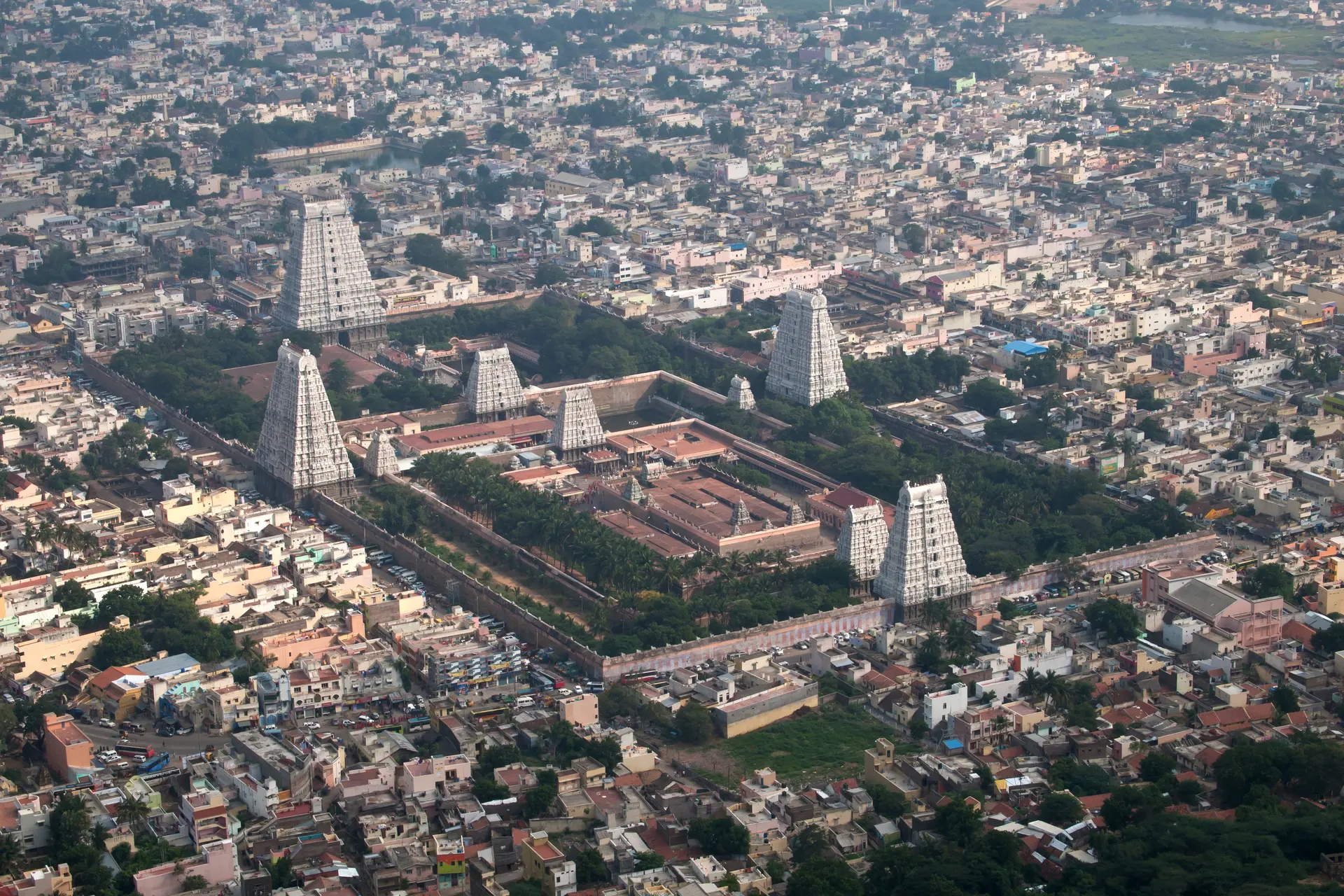
Image of Annamalayar Shiva Temple, Tiruvanamalai, Tamil Nadu. Image source · CC-BY-4.0
Visit essentials
A quick read before you go
- Duration
- Allow 2–3 hours at the main temple.
- Access
- Tiruvannamalai town, Tamil Nadu, approximately 185 km south-west of Chennai and 100 km south of…
Overview
Tiruvannamalai is one of the few major Hindu sacred sites where the central object of worship is geographic rather than an enclosed image: Arunachala, 'Annamalai' or the unreachable mountain, is Shiva as fire compressed into stone. In the foundational myth, Brahma and Vishnu fail to find the ends of Shiva's infinite column of light; compassion makes that unbearable fire present as the hill.
At its foot, the roughly 25-acre Annamalaiyar or Arunachaleswarar Temple is among India's largest temple complexes. Its 66-metre eastern Rajagopuram is attributed to Vijayanagara emperor Krishna Devaraya in the early sixteenth century. Around the larger sacred geography runs the 14-km clockwise girivalam: hundreds of thousands walk barefoot each full moon past eight directional ashta lingams. At Karthigai Deepam in November or December, a five-foot ghee-and-camphor cauldron burns at the summit, visible about 35 km away.
On the lower hill, Sri Ramana Maharshi's two caves from 1899–1922 sustain a non-dual lineage teaching Arunachala as pure consciousness.
Why this place is sacred
Arunachala condenses several distinct charges into one geography. The hill rises sharply from flat plain, visible from 30 to 40 km in any direction; the visual prominence is part of the devotional experience long before any temple structure comes into view. The Karthigai Deepam beacon — a cauldron of ghee and camphor lit at the summit on Karthikai Pournami and sustained for ten days — re-enacts the original fire-pillar of the founding myth, visible from villages across the plain.
The all-night Pournami girivalam, with hundreds of thousands of barefoot pilgrims walking the 14-km circuit in chanting groups, is among the most powerful collective sacred experiences in India. The silence of Virupaksha cave where Ramana sat for sixteen years in samadhi (1899–1916) and the Skandashram cave above it (1916–1922) hold a quality of attention that visitors describe as physically perceptible.
And the alignment of hill, east gopuram, and rising sun on key festival mornings binds the architectural and the geological into a single ritual frame.
A Tamil Shaiva site of cosmological foundation — the agni (fire) sthalam of the Pancha Bhuta, where Shiva manifests as the geographic feature itself rather than as an enclosed image.
A temple at Tiruvannamalai is attested in the Tamil Shaiva canon (Tevaram) from the 7th century. The present granite temple complex was substantially built and expanded by the Cholas from the 9th to 13th centuries, the Hoysalas (13th–14th c.), the Vijayanagara emperors (14th–16th c.), and the Nayaks. The 66-m east gopuram (Rajagopuram) was completed under Vijayanagara patronage in the 16th century and is among the tallest temple gopurams in India.
Sri Ramana Maharshi arrived in 1896 at age sixteen and lived on or beside the hill for the rest of his life, establishing the non-dual lineage that now operates Sri Ramanasramam.
Experience and orientation
Two distinct devotional rhythms coexist here. The first is the great public ritual of girivalam — the 14-km barefoot circumambulation, traditionally performed clockwise from the main temple. On a full moon night the route fills with hundreds of thousands of pilgrims; the road is lit, food and water stalls are maintained by local communities, and chanting groups move through the night.
The eight ashta lingams along the route — Indra, Agni, Yama, Niruthi, Varuna, Vayu, Kubera, and Isanya — function as waypoints, each oriented to a cardinal or intermediate direction, together mapping the hill as a mandala. The walk takes four to six hours; many pilgrims describe a sustained meditative state that emerges through the combination of physical exertion, the ashta-lingam rhythm, and the presence of the hill.
The second rhythm is the quieter pilgrimage of the Ramana lineage. Sri Ramanasramam at the foot of the hill holds daily meditation, parayana of Vedic recitation, and Tamil parayana of Ramana's hymns. The meditation hall around Bhagavan's samadhi is widely reported as exceptionally still in early morning.
Virupaksha cave (a 30- to 60-minute walk up the lower hill) and Skandashram above it are open for sitting; these are the small caves where Ramana lived for 23 years before moving down to the ashram.
The Karthigai Deepam itself, when the great beacon is lit at approximately 6 PM on Karthikai Pournami, is reported as profoundly affecting both up close at the foot of the hill and from the surrounding villages where the flame is visible against the night sky.
Allow 2–3 hours at the main temple. Girivalam: 4–6 hours walking (barefoot, 14 km, often through the night). Ramana ashram and Virupaksha/Skandashram caves: half a day. Many pilgrims spend 2–3 days minimum. For girivalam, choose a Pournami if you want the great collective experience; choose a weekday non-full-moon if you want quieter circumambulation. Avoid climbing the hill except on designated trails (Ramana Path to the caves is permitted).
Context and lineage
The Arunachala Mahatmyam (a Skanda Purana excerpt) records the linga-of-light myth: Brahma and Vishnu, contending over supremacy, saw a column of fire rising infinitely between them. They tried to find its ends and failed — Brahma flew up as a swan, Vishnu dived down as a boar; neither could reach. Shiva manifested from the column and pronounced both equal in subordination to him.
Out of compassion for those who would not bear the heat of the fire-lingam, Shiva agreed to remain on earth as Arunachala — a hill of fire whose flame is contained within stone. Each year at Karthigai Deepam (Karthikai full moon, November or December), the cauldron lit at the summit re-enacts the original column of light.
Tamil Shaiva Hinduism within the Pancha Bhuta tradition; Ramana Maharshi's non-dual (Advaita) lineage, transmitted through Sri Ramanasramam and the wider community of teachers in his line.
Nayanar poet-saints (6th–9th c.)
Sambandar, Appar, Sundarar — the Tamil Shaiva poets whose Tevaram hymns establish Arunachala as one of the supreme tirthas of the south
Chola, Hoysala, Vijayanagara, and Nayak dynasties
Successive imperial patrons over six centuries who built and expanded the present granite complex
Krishna Devaraya (Vijayanagara, early 16th c.)
Patron of the east Rajagopuram, at 66 m one of the tallest temple gopurams in India
Sri Ramana Maharshi (1879–1950)
The non-dual master who arrived at Tiruvannamalai at age sixteen and taught that Arunachala is Shiva manifest as a mountain of self-knowledge; his teaching has made the site a global pilgrimage destination for Advaita seekers
Sri Ramanasramam Trust
Current administering body of Ramana Maharshi's ashram at the foot of the hill
Traditions and practice
Daily six-time puja in the main temple; abhishekam to the Annamalaiyar lingam with milk, water, panchamrita, vibhuti; recitation of Arunachala Pancharatnam and Akshara Mana Maalai (Ramana's hymns); girivalam circumambulation; lighting of ghee lamps at the eight ashta lingams.
Temple open 5:30 AM–12:30 PM and 3:30 PM–9:30 PM. Karthigai Deepam (November–December) — the 10-day Brahmotsavam culminates on Karthikai Pournami with the lighting of a 5-foot cauldron of ghee and camphor at the summit (Mahadeepam) at approximately 6 PM, visible for tens of kilometres. The flame is sustained for 10 days. Every Pournami draws several hundred thousand to over a million girivalam pilgrims. Pradosham (twice-monthly, on the 13th day of each lunar fortnight at dusk) is heavily attended.
Many practitioners undertake the girivalam as a sustained vow — for example, every Pournami for twelve months, or fourteen girivalams in succession during a single retreat. For a first visit, walk a single Pournami night girivalam to feel the collective rhythm; on a subsequent visit, walk it on a quiet weekday morning for the contemplative version. Pair the temple darshan with at least a half-day at Sri Ramanasramam and the Virupaksha cave above it.
Tamil Shaiva Hinduism (Pancha Bhuta agni sthalam)
ActiveArunachala is the agni (fire) sthalam of the five Pancha Bhuta Sthalams. The Annamalaiyar ('Lord of the great hill') is worshipped here as fire — the lingam of light that Brahma and Vishnu could neither measure to its top nor to its base. The hill itself, rising 800 m above the plain, is the deity.
Daily six-time puja in the main temple; abhishekam to the Annamalaiyar lingam; recitation of Arunachala Pancharatnam, Akshara Mana Maalai, Tevaram hymns; ritual circumambulation of the hill (girivalam) on full moon nights and daily.
Girivalam pilgrimage tradition
ActiveGirivalam — the 14-km barefoot circumambulation of Arunachala hill — is treated as the supreme spiritual practice of Tiruvannamalai. Performed especially on Pournami nights, when the hill is said to be most charged, the walk passes the eight directional lingams (ashta lingams).
Barefoot circumambulation starting from the main temple, passing the ashta lingams in clockwise order, returning to the temple. Full moon nights see processions, bhajans, and continuous pilgrim flow through the night.
Ramana Maharshi non-dual (Advaita) lineage
ActiveSri Ramana Maharshi (1879–1950) arrived at Tiruvannamalai at age sixteen and lived on or beside the hill for the rest of his life. His teaching — that Arunachala is Shiva manifest as a mountain of self-knowledge, and that self-enquiry (Who am I?) is the most direct path to realization — has made the site a global pilgrimage destination for non-dual seekers.
Daily meditation, parayana (Vedic recitation), and Ramana's hymns at Sri Ramanasramam; pilgrimage to Virupaksha and Skandashram caves on the lower hill; reading and contemplation of Ramana's works (Saddarshanam, Upadesa Saram, the Five Hymns to Arunachala).
Perspectives and open questions
Arunachala is read in Tamil Shaiva scholarship as one of the supreme tirthas of the south; in living tradition as Shiva himself in geographic form; and in tantric and Ramana Maharshi's non-dual teaching as the fire-lingam and the embodiment of pure consciousness.
Scholarly perspective
Tamil Shaiva scholarship treats Tiruvannamalai as one of the supreme tirthas of the South Indian Shaiva canon, sung extensively by the Nayanars in the Tevaram. The temple complex is among the largest in India by area (~25 acres) and the east gopuram is one of the tallest. The Karthigai Deepam tradition is documented from the early-medieval period and is a major historical festival of Tamil Shaivism.
Living and traditional perspectives
Tamil Shaiva tradition holds Arunachala as Shiva himself in geographic form — 'Annamalai' meaning 'unreachable mountain.' The hill is not climbed; the proper devotion is circumambulation. The ashta-lingam scheme along the girivalam route maps the hill as a mandala of the eight directions, with Annamalaiyar at the centre.
Alternative interpretations
In tantric Shaiva readings, Arunachala is the fire-lingam, the central element in the Pancha Bhuta scheme — fire as the medium of transformation between gross and subtle, body and consciousness. Ramana Maharshi's teaching cast the hill as the embodiment of pure consciousness (Brahman); his Five Hymns to Arunachala (Akshara Mana Maalai, Arunachala Pancharatnam, etc.) treat the hill simultaneously as guru, beloved, and the self.
Open questions
The geological dating of Arunachala places it in the Proterozoic shield-rock formations of southern India (approximately 1–2 billion years), genuinely ancient but not uniquely so among Indian shield rocks. The exact origin of the Karthigai Deepam beacon tradition is unrecorded; it is attested by the early-medieval period. The hill's role as a continuous focus of devotional life across at least 1,500 years is itself an extraordinary continuity.
Plan your visit
Access and arrival
Tiruvannamalai town, Tamil Nadu, approximately 185 km south-west of Chennai and 100 km south of Vellore. Nearest railway: Tiruvannamalai station (~3 km from temple). Nearest airport: Chennai (~185 km) or Bengaluru (~210 km). Frequent state-transport and private buses from Chennai, Vellore, Pondicherry, and Bengaluru.
Tiruvannamalai town has extensive accommodation from ashram guest houses (Ramanasramam requires advance booking) to mid-range hotels and pilgrim lodges. Book well ahead for Karthigai Deepam season and major Pournamis.
Respectful visit
Traditional dress preferred in the temple: men in dhoti or veshti (some priests may ask men to remove shirts before sanctum entry); women in sari, half-sari, or salwar-kameez. For girivalam, comfortable cotton clothing, head covering, and no footwear (the route is traditionally barefoot — many pilgrims wear thin socks).
Permitted in the temple's outer courtyards and along the girivalam route. Prohibited in the inner sanctums.
Bilva leaves, ghee lamps (especially for the ashta lingams), milk, panchamrita, vibhuti.
Inner sanctum restrictions vary; non-Hindus may experience restricted access during specific rituals. Climbing the hill is restricted to designated trails (Ramana Path to Virupaksha and Skandashram); summit ascent is permitted only during the Karthigai Deepam preparation by temple personnel.
For girivalam, thin socks can ease the long paved barefoot route. Carry water and avoid peak heat, especially on the Tamil plain from April through June. Follow all designated-trail and summit restrictions.
Current practical details
Address
Pavazhakundur, Tiruvannamalai, Tamil Nadu 606601, India
Phone
Hours
Hours, fees, and access can change — verify on the official source before you travel. Practical details last checked Jun 2026.
Location
Map loads as you approach this section.
Pilgrim reflections
A portrait of encounter, not a score
Pilgrims describe what they felt, how present they could become, and whether the place would shape a journey. There are no stars and no ranking of traditions.
No reviewed reflections yet
The first pilgrims can help describe the character of being here.
Share a reflection
Available after an account-backed “Been there.” Every reflection is reviewed before publication.
Nearby sacred places
Explore other sacred places in the region. Proximity does not establish access or travel time; check each place’s guidance.

Arulmigu Shri Yoga Narasimha Swamy Temple, Sholinghur, Tamil Nadu
Sholinghur, Tamil Nadu, India
102.5 km away
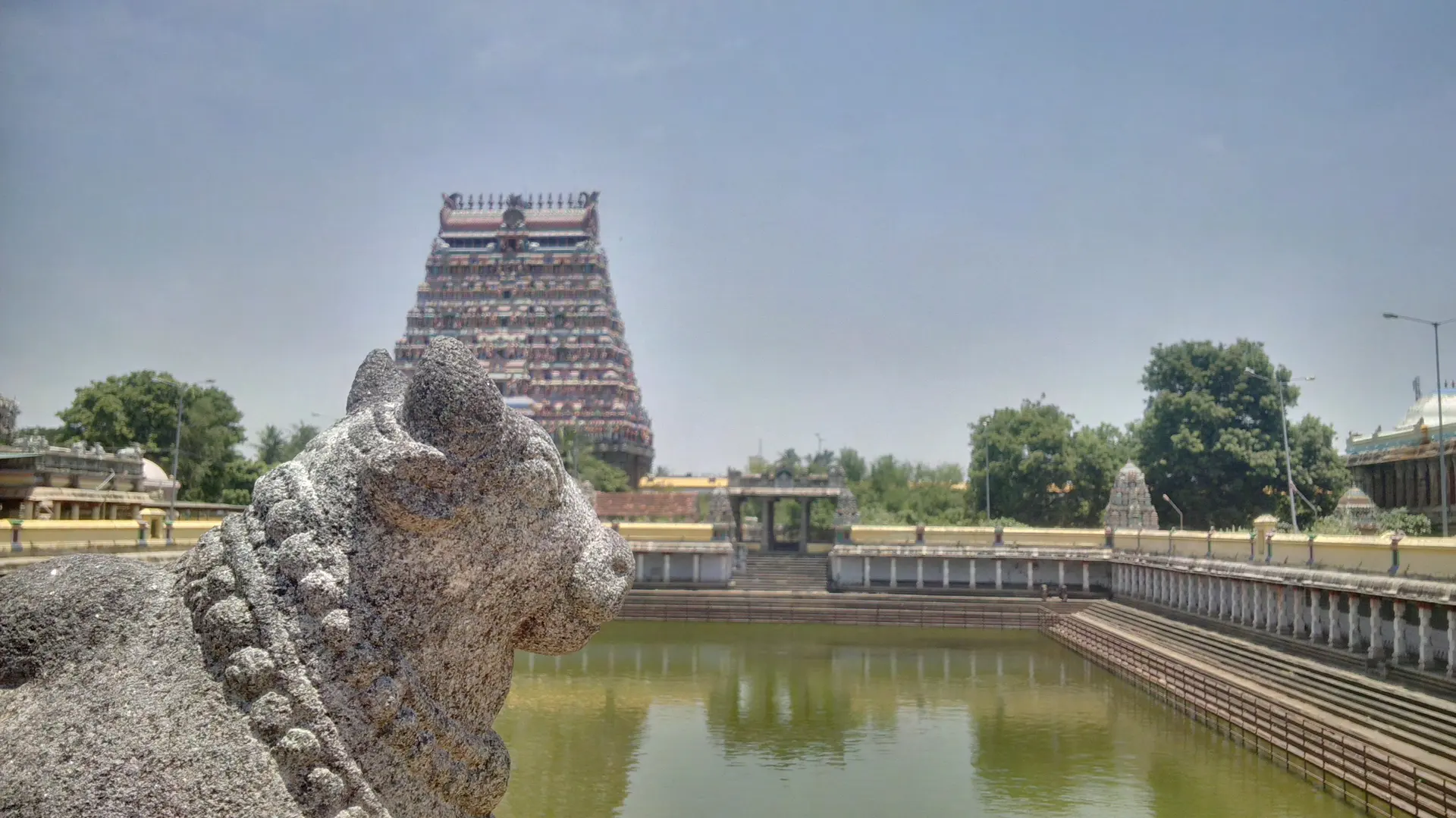
Thillai Nataraja Temple, Chidambaram, Tamil Nadu
Chidambaram, Tamil Nadu, India
115.0 km away

Arulmigu Subramanya Swamy Koil, Thiruttani, Tamil Nadu
Karamangalam, Tamil Nadu, India
119.5 km away

Vaitheeswaran Koil — Vaidyanathaswamy Temple
Vaitheeswarankoil, Tamil Nadu, India
135.1 km away
References
Sources consulted for this page. Source categories describe the publication, not a guarantee that every claim is verified. Traditional accounts and outside interpretations may differ.
- 01Annamalaiyar Temple — Wikipedia — Wikipedia contributorsencyclopediaComprehensive overview: 25-acre complex, 66-m east gopuram (one of the tallest in India), Chola foundations, Vijayanagara expansion, Pancha Bhuta Sthalam (agni), Karthigai Deepam, girivalam tradition.
- 02Pancha Bhuta Stalam — Wikipedia — Wikipedia contributorsencyclopediaConfirms Arunachala as the agni (fire) sthalam in the Pancha Bhuta listing.
- 03David Shulman, 'Tamil Temple Myths: Sacrifice and Divine Marriage in the South Indian Saiva Tradition' (Princeton, 1980) — David Dean Shulman / Princeton University PressacademicStandard scholarly treatment of the Brahma-Vishnu-Shiva linga of light myth and the Tiruvannamalai Karthigai Deepam tradition in Tamil Shaiva cosmology.
- 04Tamil Nadu Tourism — Tiruvannamalai — Tamil Nadu Tourism Development CorporationofficialTourism description: location 185 km from Chennai, the 14 km girivalam route, Karthigai Deepam beacon, Ramana ashram, Skandasram, Virupaksha cave.
- 05Sri Ramanasramam — Official Website — Sri Ramanasramam TrustspiritualOfficial ashram site of Sri Ramana Maharshi (1879-1950) at the foot of Arunachala; primary source for his teachings on the hill as Shiva-Arunachala, the Akshara Mana Maalai, and the practice of self-enquiry.
- 06Arunachala Mahatmyam (Skanda Purana excerpt) and Tamil hymns of the Nayanars — Skanda Purana / Sambandar, Appar, Sundarar (Tevaram)spiritualPrimary scriptural and Tamil-canonical sources establishing Arunachala as the linga of fire, the Mahadeepam tradition, and the supremacy of girivalam.
- 07Karthigai Deepam festival — Times of India report — Times of IndianewsAnnual press coverage of the Karthigai Deepam — the lighting of the great cauldron of camphor and ghee at the summit visible for tens of kilometres across the plain.
- 08Annamalaiyar Temple — Tripadvisor visitor reviews — Tripadvisor / pilgrim communityguideReported pilgrim logistics: full moon girivalam crowd densities (commonly cited as 1-2 million pilgrims on Pournami nights), Karthigai Deepam attendance, ashram visit pairing.
Photo gallery
3 curated photos
Pilgrim glossary
- Mandala
- A symbolic diagram of the cosmos used in meditation and ritual.
Share a photo
Help visitors recognize Annamalayar Shiva Temple, Tiruvanamalai, Tamil Nadu. Every submission is reviewed before publication.