Andacollo, Basilica of Andacollo
Where indigenous dancers have served the Virgin with their bodies for over four hundred years in Chile's arid mining hills
Understand sacred places, explore living traditions, and learn how to engage respectfully with Pilgrim Map.
Access has not been verified. Check current local guidance before planning a visit.
Andacollo, Coquimbo, Chile

Visit essentials
A quick read before you go
- Duration
- One to two hours for a quiet visit to the basilica.
- Access
- Located in Andacollo, Coquimbo Region, Chile, 54 km southeast of La Serena.
Overview
Andacollo lies at 1,050 meters in Chile's dry, mineral Norte Chico hills. Its basilica centers a devotion that has fused indigenous and Catholic traditions for over four centuries.
During the Spanish conquest, an indigenous person found a carved wooden Virgin in the hills. Whether early missionaries carried it or it appeared by unexplained means remains unknown. Indigenous and Catholic communities both claimed the image, and Andacollo's miners adopted the Virgin as patron and protector of those descending into the earth for its wealth.
The Bailes Chinos make Andacollo singular. Since at least 1584, groups have honored the Virgin through choreographed dance with flutes and drums. Chino comes from Quechua for servant: dancers serve physically for hours beneath the fierce sun, making exertion prayer. The tradition joins pre-Columbian ritual movement with Catholic devotion, preserving indigenous dance, music, and community organization. UNESCO inscribed the Bailes Chinos as Intangible Cultural Heritage in 2014.
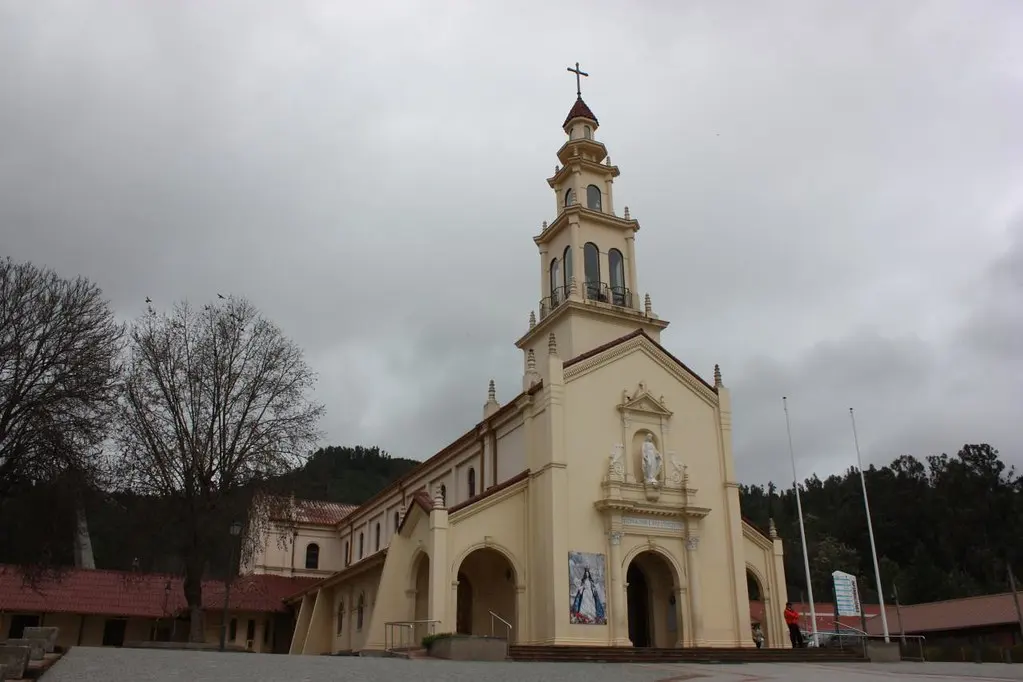
Built from 1873 to 1893 in Neo-Gothic style, the basilica houses the statue during the five-day Fiesta Grande beginning December 23. Up to 500,000 pilgrims enter a town of a few thousand on foot, bicycle, or horseback after crossing the arid landscape as an offering. For those days, Chilean popular faith fills the basilica with crowds, flutes, and bodies given to devotion.
Why this place is sacred
The thinness at Andacollo is not solitary contemplation. It is the opposite. It is the overwhelming experience of a small mining town transformed into a vessel of collective devotion, where the boundary between the sacred and the ordinary dissolves not through silence but through an excess of presence.
The Bailes Chinos dancers are the primary agents of this dissolution. Watching a cofradía perform, the repetitive movement and the insistent rhythm of flutes and drums create a hypnotic quality that shifts the observer's sense of time. The dancers are not performing for an audience. They are performing for the Virgin. Their sweat, their fatigue, their persistence through heat and exhaustion constitute their prayer.
This is devotion expressed through the body rather than through words, and its sincerity is impossible to question because the cost is visible.
The pilgrims who arrive on foot after days of walking through the arid Norte Chico bring their own form of physical testimony. The journey through dry hills, past mining operations and sparse vegetation, strips away comfort and convenience. What remains when you arrive at Andacollo is the intention that made you walk. The Virgin's shrine becomes the endpoint of a physical argument: I came this far because this matters.
The landscape itself contributes. Andacollo is not lush or beautiful in conventional terms. The hills are brown, the vegetation sparse, the mining operations visible. The basilica rises from this terrain like a statement that sacredness is not dependent on natural beauty. The austerity of the setting concentrates attention on what humans bring to a place rather than what the place provides.
The reciprocity of the mandas system adds another dimension. Pilgrims make promises to the Virgin: if she grants a favor, they will walk the pilgrimage, dance in a cofradía, or perform another act of physical devotion. This creates a contractual relationship between devotee and divine, a pattern with deep roots in both Catholic and indigenous traditions of reciprocal obligation.
The devotion at Andacollo originated when an indigenous person found a carved Virgin Mary statue in the hills during the Spanish conquest. The statue became a shared object of veneration for both indigenous and Catholic communities, creating a point of convergence between the two spiritual traditions. The mining community's adoption of the Virgin as patron added the dimension of occupational protection, connecting devotion to the dangerous work of extracting ore from the earth.
From its sixteenth-century origins as a local devotion, the cult of the Virgin of Andacollo grew to become Chile's most important Marian pilgrimage. The Bailes Chinos tradition, documented since at least 1584, provided continuity and cultural depth. The construction of the basilica between 1873 and 1893 gave the devotion an architectural center commensurate with its significance. The Virgin's coronation in 1901 and the papal designation as a Minor Basilica confirmed its importance within the Catholic hierarchy.
UNESCO's 2014 inscription of the Bailes Chinos as Intangible Cultural Heritage brought international recognition to the syncretic tradition.
Experience and orientation
Andacollo is 54 kilometers southeast of La Serena, a drive through the dry hills of the Coquimbo Region. The road climbs through landscape that grows progressively more arid, more mineral, more stripped of the usual markers of human comfort. By the time the town appears, the terrain has established the context: this is a place defined by the earth beneath it, by what can be extracted from that earth, and by the people who do the extracting.
Outside the Fiesta Grande, Andacollo is a quiet town. The basilica, Neo-Gothic and surprisingly large for its setting, stands alongside the smaller Templo Chico, the older church that houses the Virgin's statue during non-festival periods. The plaza is open. The mining hills rise behind the town. A visit at this time offers intimacy with the buildings and the baseline devotion of local worshippers who come to pray, light candles, and fulfill their mandas.
During the Fiesta Grande, beginning December 23 and lasting five days, everything changes. The town's population multiplies by a factor of fifty or more. Pilgrims arrive by every means: on foot from La Serena, by bicycle from further, on horseback from the valley. Campfires dot the hillsides. The plaza fills with Bailes Chinos groups, each identifiable by their distinctive costumes, each performing their choreographed devotional dances with flutes and drums.
The experience during the Fiesta is sensory overload in service of the sacred. The music is constant. The dancing continues for hours. Processions carry the Virgin through streets so crowded that movement becomes a collective act. Food vendors, families sharing meals, children running through the crowds, the smell of incense and cooking fires and dust create an atmosphere that is simultaneously festive and fervent. This is not contemplative religion.
It is religion as practiced by working people who bring their whole lives to the shrine: their labor, their hopes, their physical endurance, and their deepest needs.
Andacollo is a small mining town in the Coquimbo Region of Chile, approximately 54 km southeast of La Serena. The basilica and the adjacent Templo Chico face the main plaza. The surrounding hills are visible from everywhere in town.
Context and lineage
The foundational story of Andacollo is a story of finding. During the Spanish conquest of Chile, an indigenous person discovered a carved wooden statue of the Virgin Mary hidden in the hills near Andacollo. The circumstances of the finding and the origin of the statue are unknown. Whether it was left by early missionaries or arrived through other means became part of the devotion's mystique.
The indigenous community and the Spanish Catholic settlers both venerated the image, creating from the outset a shared devotion that crossed the colonial divide. The miners of Andacollo adopted the Virgin as their patron, asking her protection for their work underground. This occupational dimension, the Virgin as protector of those who enter the earth, gave the devotion a particular character: raw, physical, connected to the labor of the body.
The Bailes Chinos tradition emerged from this same context of convergence. By 1584, indigenous communities were performing devotional dances for the Virgin, preserving pre-Columbian dance forms and musical instruments within the framework of Catholic worship. The word chino, from the Quechua for servant, defined the relationship: the dancers served the Virgin through their bodies, and the service was physical endurance as prayer.
The Andacollo devotion belongs to the tradition of Latin American popular Catholicism, in which Marian veneration serves as a vehicle for the syncretism of indigenous and European spiritual traditions. The Bailes Chinos connect to pre-Columbian Andean ritual dance traditions while operating within the framework of Catholic Marian devotion. The mandas system of reciprocal vows mirrors both Catholic votive traditions and indigenous patterns of reciprocal obligation with the sacred.
The unnamed indigenous finder
discoverer of the Virgin's statue
An indigenous person who found the carved wooden statue of the Virgin Mary in the hills near Andacollo during the Spanish conquest. Their identity has not been recorded, but their discovery established the devotion that became Chile's most important Marian pilgrimage.
Bailes Chinos cofradías
keepers of the dance tradition
The devotional dance groups that have performed for the Virgin of Andacollo since at least 1584. These cofradías maintain their own organizational structures, costumes, choreography, and musical traditions, transmitting the practice across generations. UNESCO inscribed the Bailes Chinos as Intangible Cultural Heritage in 2014.
Traditions and practice
The Bailes Chinos tradition is the core ritual expression at Andacollo. Cofradías of dancers perform choreographed devotional dances with flutes and drums, each group maintaining distinctive costumes, choreography, and musical styles. Performance involves sustained physical effort, often for hours in the sun, as an act of devotion to the Virgin. The mandas system establishes reciprocal relationships between devotees and the Virgin: pilgrims promise acts of devotion in exchange for favors received.
Processional carrying of the Virgin's statue through the streets during festivals. Candle-lighting and ex-voto offerings.
Fiesta Grande (December 23 onward, five days): Masses, processions, continuous Bailes Chinos performances, street celebrations, and the convergence of up to 500,000 pilgrims. Fiesta Chica (first Sunday of October): smaller celebration with similar elements. Year-round: daily Masses in the basilica, individual pilgrim visits, devotional candle-lighting. The basilica serves as a parish church for the local community.
If possible, visit during the Fiesta Grande. Arrive a day early to experience the town before the full transformation. Watch the first cofradías begin their dances in the plaza. Notice the physical commitment: the sweat, the repetitive movement, the endurance. This is not performance. It is prayer translated into the body.
During the festival, join a procession. Walk among the pilgrims. Accept food if it is offered. The Fiesta Grande is a communal event where the boundaries between participant and observer are deliberately porous. If you walk the pilgrimage from La Serena, 54 kilometers through the dry hills, you will arrive at Andacollo having earned a different understanding of what it means to approach a shrine.
Outside festival periods, visit the basilica and the Templo Chico. Light a candle. The quiet of the non-festival town allows a more contemplative encounter with the Virgin's statue and the accumulated devotion of the site.
Roman Catholicism (Marian Devotion)
ActiveAndacollo is Chile's principal Marian pilgrimage site, centered on the Virgin of the Rosary. The basilica was built between 1873 and 1893, and the Virgin was crowned in 1901. The Fiesta Grande draws up to 500,000 pilgrims annually, making it one of the largest Catholic pilgrimages in South America. The Virgin is the patron saint of miners.
Daily Masses and rosary devotions. Annual Fiesta Grande with processions, Masses, and Bailes Chinos performances. Fiesta Chica in October. Pilgrimage by foot, bicycle, and horseback. Mandas system of reciprocal vows. Candle and ex-voto offerings.
Bailes Chinos (Indigenous-Catholic Syncretism)
ActiveThe Bailes Chinos are devotional dance groups performing at Andacollo and other Chilean religious celebrations since at least 1584, making them one of the oldest continuously practiced syncretic traditions in the Americas. UNESCO inscribed them as Intangible Cultural Heritage in 2014. The dances blend pre-Columbian ritual movement and music with Catholic devotion, creating a form of worship where the body is the primary instrument of prayer.
Cofradías of dancers perform choreographed dances with flutes, drums, and singing. Each group has distinctive costumes and dance styles. Performances occur throughout the Fiesta Grande and at the Fiesta Chica. Physical endurance, dancing for hours in the sun, is the central devotional act. Community organizations train new generations of dancers.
Perspectives and open questions
Andacollo invites interpretation as a site of Catholic devotion, as a living archive of indigenous-Catholic syncretism, as a social phenomenon of popular religion, and as an encounter with devotion expressed through the physical body.
Scholarly perspective
Religious anthropologists study Andacollo as one of the most significant examples of Catholic-indigenous syncretism in South America. The Bailes Chinos, inscribed by UNESCO in 2014, are analyzed as a survival strategy through which indigenous communities maintained ritual practices within Catholic devotion. Scholars note the socioeconomic dimensions of the pilgrimage, with miners, agricultural workers, and urban poor forming the core of the devotion, as evidence of popular religion's role in maintaining community cohesion under conditions of inequality.
Living and traditional perspectives
For the devotees of the Virgin of Andacollo, the statue is a living presence who hears prayers, grants favors, and protects her children. The mandas system establishes a reciprocal relationship that mirrors indigenous traditions of sacred obligation. The Bailes Chinos dancers understand their performance as bodily sacrifice, and the physical exhaustion of dancing for hours is itself the prayer. The pilgrimage journey through the arid landscape is penance and offering: the harder the journey, the more powerful the prayer.
Alternative interpretations
Some visitors are drawn to Andacollo as a site where pre-Columbian earth spirituality survives within Catholic forms. The Virgin as patron of miners, those who enter the earth's body, connects Marian devotion to older traditions of earth-mother veneration. The hypnotic quality of the Bailes Chinos flute music and repetitive dance movements creates altered states of consciousness that some associate with shamanic traditions.
Open questions
Who carved the original Virgin Mary statue and how it arrived in Andacollo remain unanswered. What specific pre-Columbian rituals are preserved within the Bailes Chinos tradition is difficult to determine given the centuries of Catholic overlay. How the devotion survived periods of official Church suspicion of popular religiosity is not fully documented. Whether the mineral-rich landscape contributes to the spiritual significance of the site is a question that admits no definitive answer.
Plan your visit
Access and arrival
Located in Andacollo, Coquimbo Region, Chile, 54 km southeast of La Serena. Approximately 1 hour by car or bus from La Serena. Regular buses from La Serena during festival periods. Limited public transport at other times; car recommended. From Santiago: approximately 460 km, 6 hours by car, or domestic flight to La Serena. Free entry to the basilica. Mobile phone signal generally available in town. Medical facilities limited in Andacollo; the nearest hospital is in La Serena.
Andacollo is a small town with very limited formal accommodation. During the Fiesta Grande, many pilgrims camp or stay with local families. Book accommodation in La Serena and travel by bus or car. Some guesthouses operate in Andacollo but fill months before the December festival.
Respectful visit
Inside the basilica: cover shoulders and knees, respectful clothing. During outdoor festival events: practical clothing suitable for sun exposure, crowds, and dust. Comfortable walking shoes essential.
Permitted in the plaza and during outdoor events. Ask before photographing individual Bailes Chinos dancers at close range. Photography inside the basilica is generally permitted but avoid flash and be discreet during Mass.
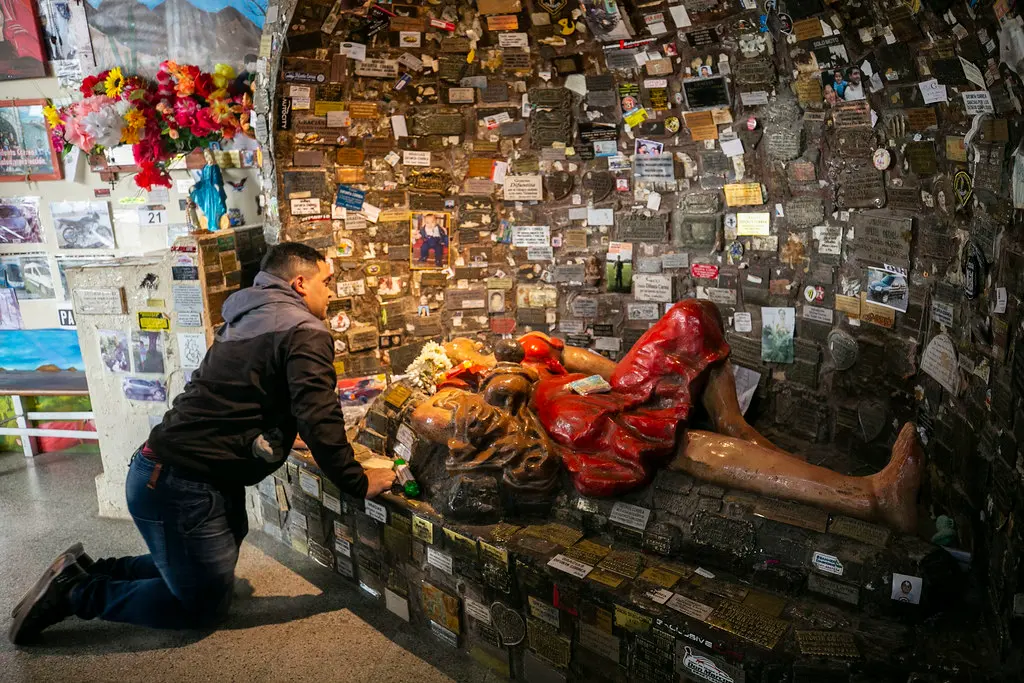
Candles are the most common offering and can be purchased near the basilica. Monetary donations welcomed. Ex-votos, small metal or wax figures representing body parts or situations for which help is sought, are a traditional offering.
During Masses, maintain silence and reverence. Do not block Bailes Chinos performances or procession routes. Be respectful of pilgrims fulfilling mandas. Some may be walking on their knees or performing other acts of physical devotion that should be honored with space and quiet attention.
The Fiesta Grande is extremely crowded. Accommodation in Andacollo is very limited and books months in advance. Many pilgrims camp. Plan to stay in La Serena and travel by bus. The December heat in the Norte Chico is intense. Bring sun protection and water.
Current practical details
Address
Plaza Videla, Andacollo, Coquimbo, Chile
Phone
Hours
Hours, fees, and access can change — verify on the official source before you travel. Practical details last checked Jun 2026.
Location
Map loads as you approach this section.
Pilgrim reflections
A portrait of encounter, not a score
Pilgrims describe what they felt, how present they could become, and whether the place would shape a journey. There are no stars and no ranking of traditions.
No reviewed reflections yet
The first pilgrims can help describe the character of being here.
Share a reflection
Available after an account-backed “Been there.” Every reflection is reviewed before publication.
Nearby sacred places
Explore other sacred places in the region. Proximity does not establish access or travel time; check each place’s guidance.


Share a photo
Help visitors recognize Andacollo, Basilica of Andacollo. Every submission is reviewed before publication.